Manual machines
Bringing a 1970s lever back to life
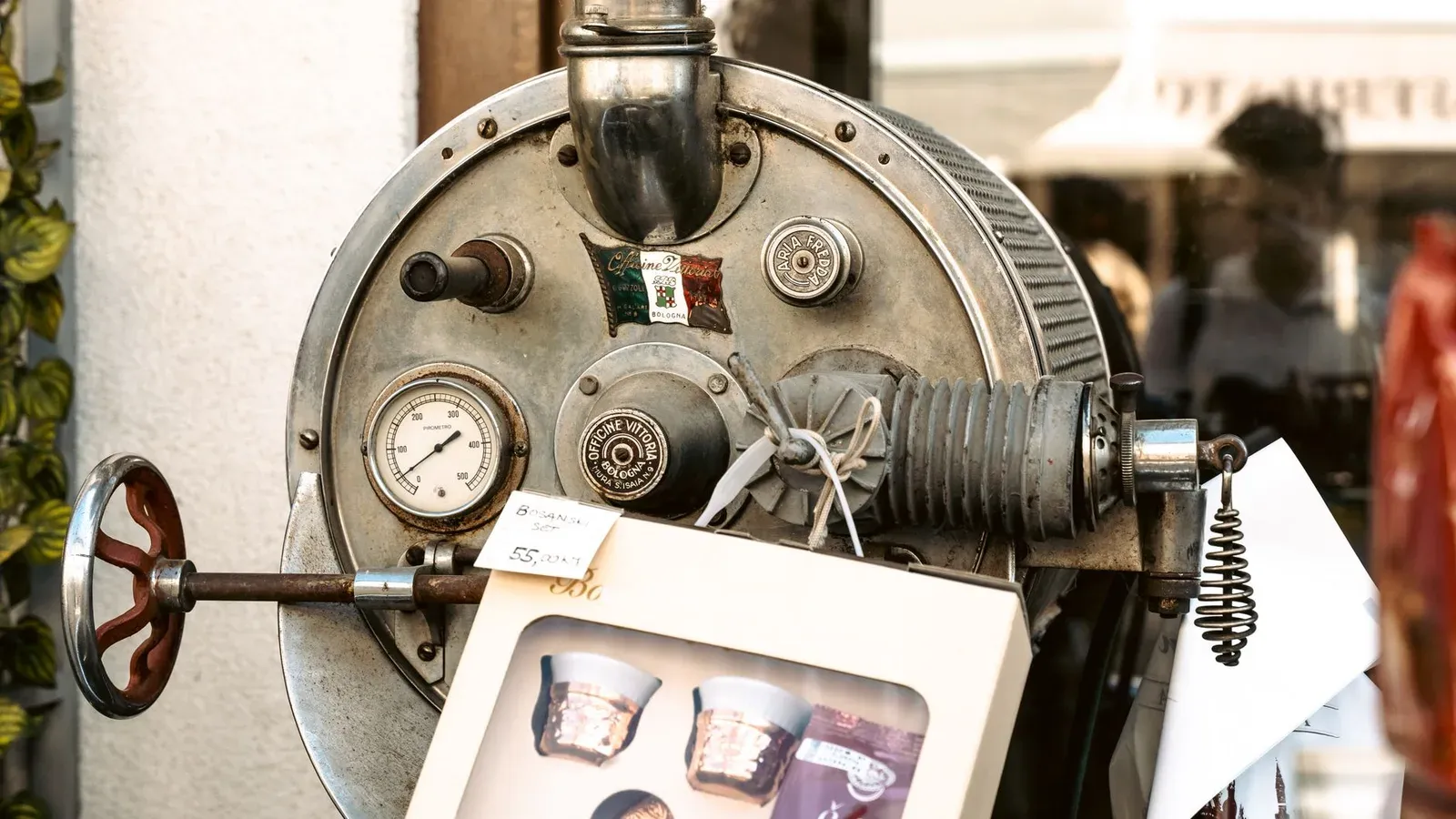
Why these machines survive
A lever from the 1970s has a brass boiler, a brass group, a spring, a piston and a handful of seals. No electronics, no pump, no board to go obsolete. The parts that wear are rubber, and rubber is cheap and still manufactured.
That is why a machine with fifty years on it is a weekend of work rather than a restoration project, provided the two hard faults are absent.
Before you buy: the two deal breakers
A corroded boiler. Look inside with a torch. Copper and brass darken and that is fine; what is not fine is white or green crust in sheets, or pitting you can feel. A boiler that has been sitting with water in it for a decade can be thin enough to fail under pressure, and that is not a thing to gamble on.
A cracked group or boiler casting. Look along the seams and around the threads. A hairline crack in brass can be brazed by a professional, and the cost of that will exceed the machine.
Everything else on the list below is normal wear.
The order of work
1. Strip it, photographing as you go
Take the group apart, remove the piston, pull the seals out, unbolt the boiler fittings. Photograph each step before you undo it. A 1970s machine has no manual you can download, and the photographs are your manual.
2. Descale, patiently
Fill the boiler with a descaler suited to brass and leave it for hours rather than minutes, refreshing it if it stops fizzing. Scale in these machines is often a hard shell rather than a film. Rinse until the water runs clear and then rinse twice more.
Do not put brass parts in a dishwasher, and do not use a descaler meant for aluminium boilers on brass, or the other way round.
3. Replace every seal
Group gasket, piston seals, boiler fittings, the sight glass washers, the steam valve packing. Buy the set rather than the one that failed: they are the same age, and the second one goes out three weeks later.
Silicone lasts longer than rubber and handles heat better. Food-safe silicone grease on assembly, sparingly.
4. Polish the cylinder
The piston runs in a brass cylinder. Any scoring or green deposit there will eat your new seals. Fine abrasive and patience, then clean out every trace of the abrasive.
5. Test on water, for a day
Assemble, fill, heat, and pull ten shots of nothing but water. Watch every seam, the sight glass, the group, the steam valve. Leave it under pressure for an hour and look again.
This is the step people skip. Finding a leak with an empty group costs a towel. Finding it with a full basket and a guest waiting costs the afternoon.
6. Then coffee
Expect to grind finer than your pump machine wanted. Start at 18 g in a double basket, pull, and taste. A restored lever usually wants a couple of days of shots before the seals seat and the temperature settles into a routine.
What it will never do
It will not give you a repeatable 93 °C, it will not steam while you brew, and it will not survive neglect: the same seals will need doing again in a few years.
What it gives instead is a machine you understand completely, which no modern machine offers at any price.
Frequently asked
- Is the old paint or chrome worth keeping?
- Usually yes. Pitting and patina are cosmetic, and a rechromed machine costs more than the machine. Clean it, polish it and leave it honest.
- Can I use it on modern coffee?
- Yes, and it will suit a medium roast best. These machines were designed around the roasts of their time, which were darker than a modern light roast and much easier to extract with a declining pressure curve.
Related reading
Lever machines: spring against direct
A spring lever pulls a curve the machine decides. A direct lever pulls the curve your arm decides. That single difference sorts every lever machine sold.
Buying a used espresso machine
Second hand is the cheapest route to a serious machine, and the fastest route to a boiler you cannot replace. What to check, what to walk away from.
Machine care: the jobs you only do once a year
Descaling on the interval your water actually dictates, gaskets, shower screens, a pump pressure check, and the point where a service costs less than a repair.