Brewing methods
Moka pot
The stovetop icon, how it actually brews, and the two changes that stop it tasting burnt.
Brew parameters
Grind
Medium fine
- Extra fine
- Fine
- Medium fine
- Medium
- Medium coarse
- Coarse
FinerCoarser
Water
95–99 °C
15 °C100 °C
Body
Full
LightFull
- Ratio
- 1:10
- Contact time
- 5 min
A moka pot pushes water through the bed at roughly one and a half bars, which is closer to filter than to espresso. Starting with hot water and pulling it off the heat at the first gurgle removes most of the bitterness people associate with it.
One and a half bars, not nine
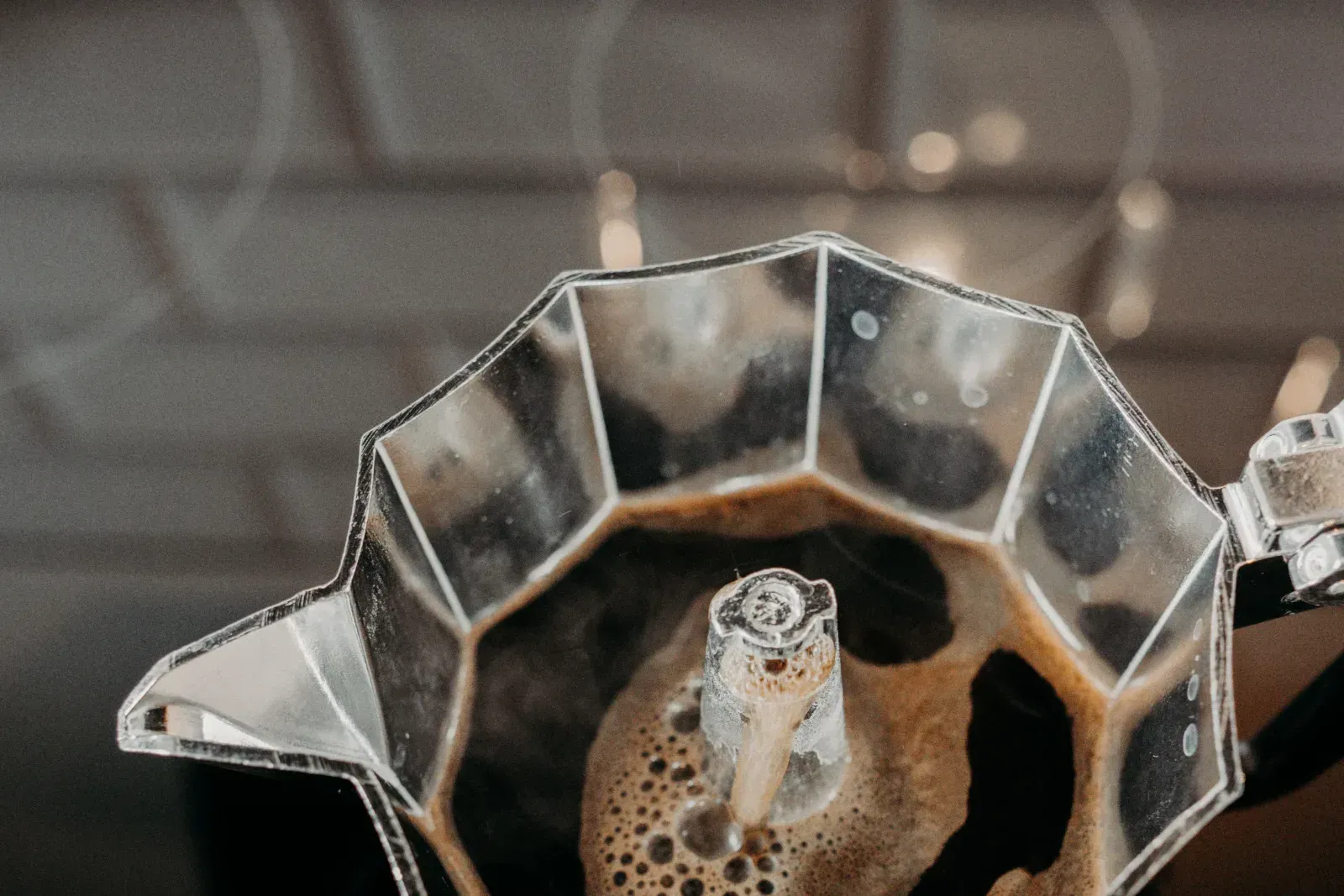
The bottom chamber is a boiler. As the water heats, steam pressure pushes it up through the basket and out of the column. That pressure peaks around 1.5 bar, which is closer to a percolator than to an espresso machine, so what comes out is a strong filter coffee rather than a short shot with crema.
Start with hot water
Fill the boiler with water already near boiling and the pot reaches brewing pressure before the metal roasts the grounds sitting above it. Start cold and the bed spends minutes heating, which is where the scorched, bitter note that people blame on the method actually comes from.
Fill, do not tamp
Level the basket and knock it flat. Tamping raises the resistance beyond what a moka can push through, so the pot either stalls or forces water round the edge of the puck. Grind between filter and espresso, closer to table salt than to flour.
Pull it off at the first gurgle
The gurgle is steam arriving behind the water, and everything extracted after it is bitter. Take the pot off the heat, run the base under a cold tap for a second, and pour. That one habit does more for a moka pot than any grinder upgrade.