Brewing methods
French press
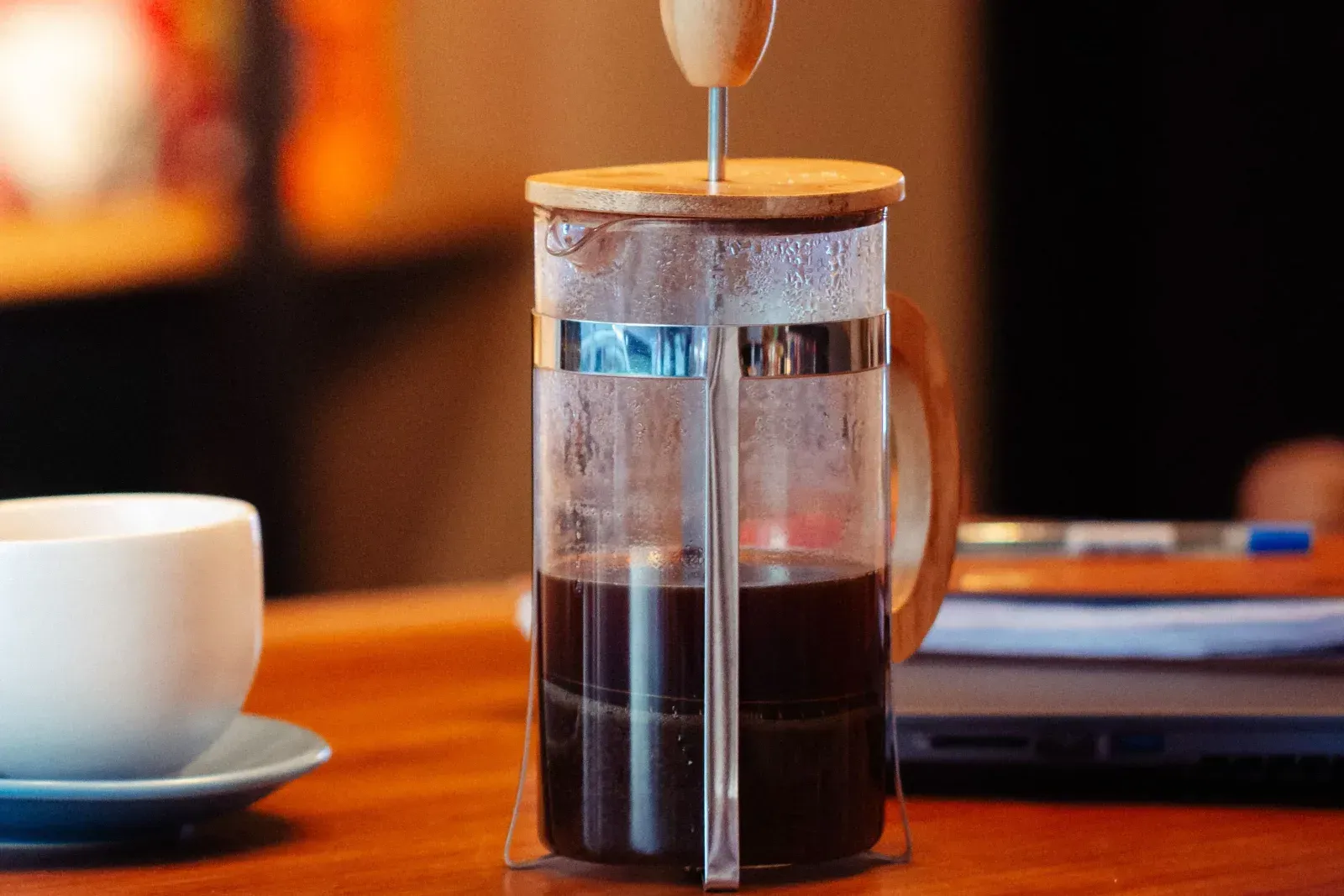
Full immersion through a metal filter: maximum body, and the decanting step most people skip.
Brew parameters
Grind
Coarse
- Extra fine
- Fine
- Medium fine
- Medium
- Medium coarse
- Coarse
FinerCoarser
Water
93–96 °C
15 °C100 °C
Body
Full
LightFull
- Ratio
- 1:15
- Contact time
- 4 min
A metal filter passes oils and fines that paper holds back. That is the body you came for and the silt you did not. Decanting after the plunge fixes the second without losing the first.
Full immersion, one variable at a time
Every ground sits in water for the same length of time, which removes the unevenness a pour over spends its whole technique fighting. What is left is a ratio, a temperature and a clock. That is why a press is the most repeatable brewer in the house and the easiest to teach.
The crust, and what to do with it
Four minutes in, the grounds float as a crust. Break it with a spoon, stir twice, then lift the foam and the floaters off the surface with two spoons. Most of the silt people blame on the metal filter is sitting in that layer, and removing it costs nothing in body.
The plunger only separates
Press slowly, and stop when you meet resistance rather than pushing the screen into the bed. Then decant everything into another vessel. Coffee left sitting on the grounds keeps extracting, and a cup poured ten minutes later is a different, harsher drink.
Grind and ratio
Coarse, 1:15, water at 94 °C, four minutes. Coarse is not a style choice: fines pass the mesh and go on extracting in the cup. If your press tastes muddy with a good coffee, the grinder is the suspect, not the method.
Recipes
French press for two
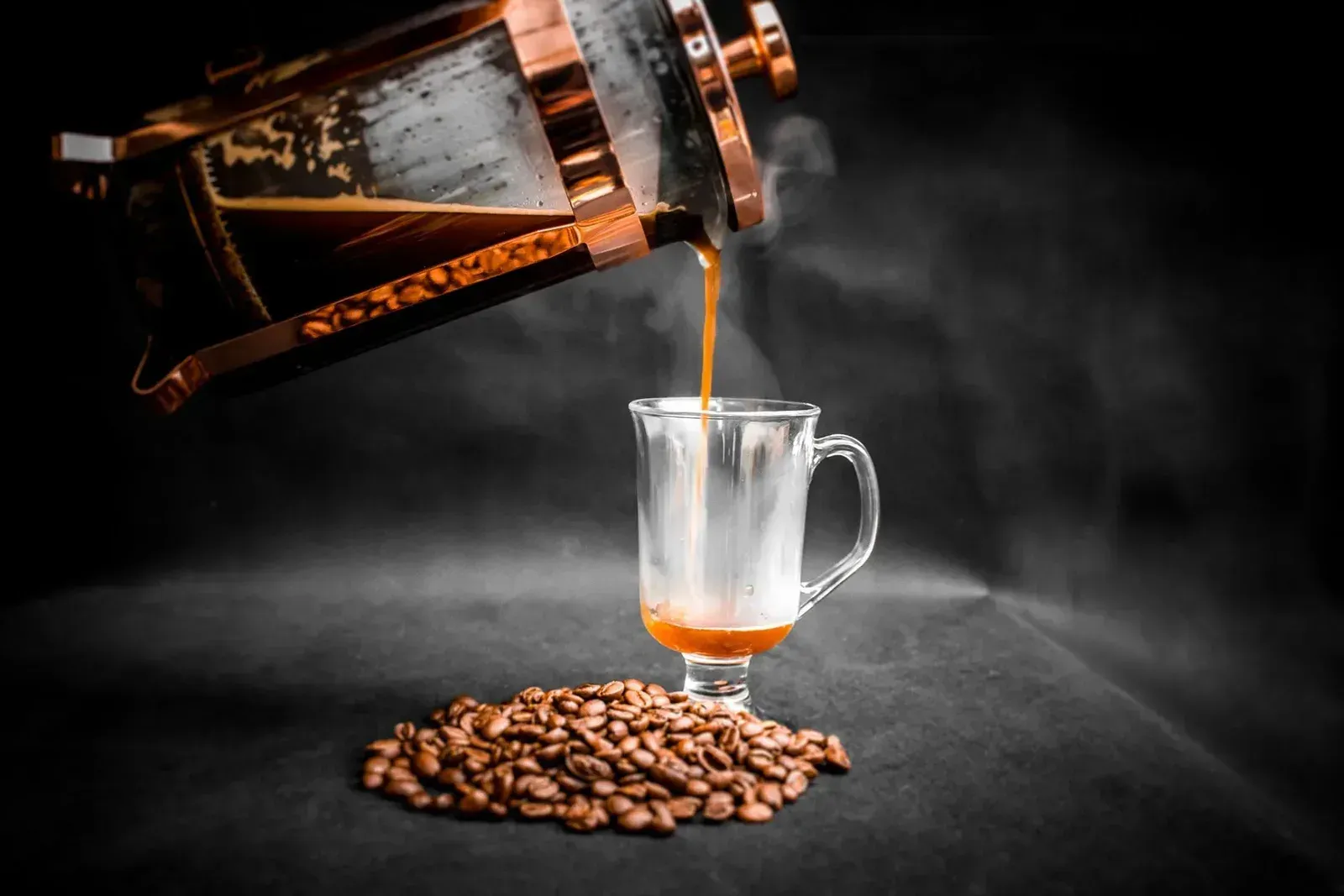
Sixty grams, a litre of water, four minutes and the trick that makes it clean: skim the crust instead of plunging through it.
- Time
- 10 min
- Difficulty
- easy