Brewing methods
Pour over
The family of methods where the pour itself is the variable you are controlling.
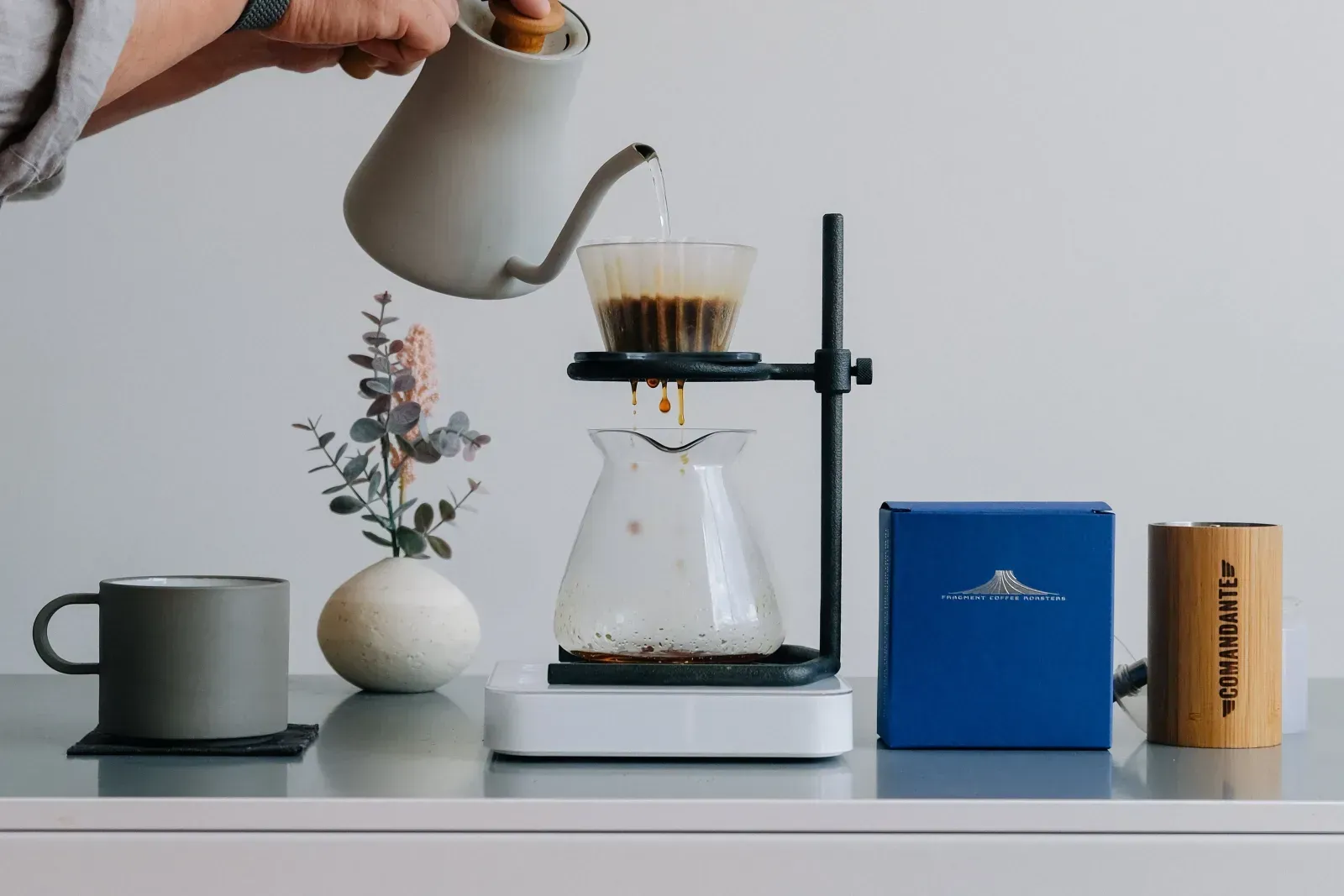
Brew parameters
Grind
Medium
- Extra fine
- Fine
- Medium fine
- Medium
- Medium coarse
- Coarse
FinerCoarser
Water
92–96 °C
15 °C100 °C
Body
Light
LightFull
- Ratio
- 1:16
- Contact time
- 3.5 min
Pour over is a category, not a device. What unites a V60, a Kalita and an Origami is that you are metering water by hand, which means agitation and flow are yours to control rather than the brewer’s.
Three shapes, three behaviours
- The cone (V60, Origami) drains fastest and rewards a careful pour. The bed is deep in the middle, so the water path is long and the cup is clear.
- The flat bottom (Kalita Wave, April) holds a shallow, even bed and drains through three small holes, so the brewer sets much of the flow rather than your hand. It is the forgiving one.
- The tapered hybrid (Chemex, Melitta) sits between them, usually slowed further by a thicker paper.
What you are actually controlling
Four things, in the order they change the cup: the grind, the ratio, the water temperature and the way you agitate. Everything else is preference. A recipe that names pour weights and times is really pinning agitation down, because it is the only one of the four you cannot measure at home.
The bloom is not a ritual
Carbon dioxide leaves fresh coffee for about thirty seconds after it gets wet, and while it does, it pushes water away from the grounds. Wetting everything with twice the coffee’s weight in water and waiting is what lets the real brew start on a saturated bed. Coffee older than a month barely blooms, which is itself a useful freshness test.
If you buy one thing
A gooseneck kettle, before a nicer brewer. Flow control is most of what separates an even bed from a channelled one, and no dripper compensates for a kettle that dumps.
Recipes
V60, single cup
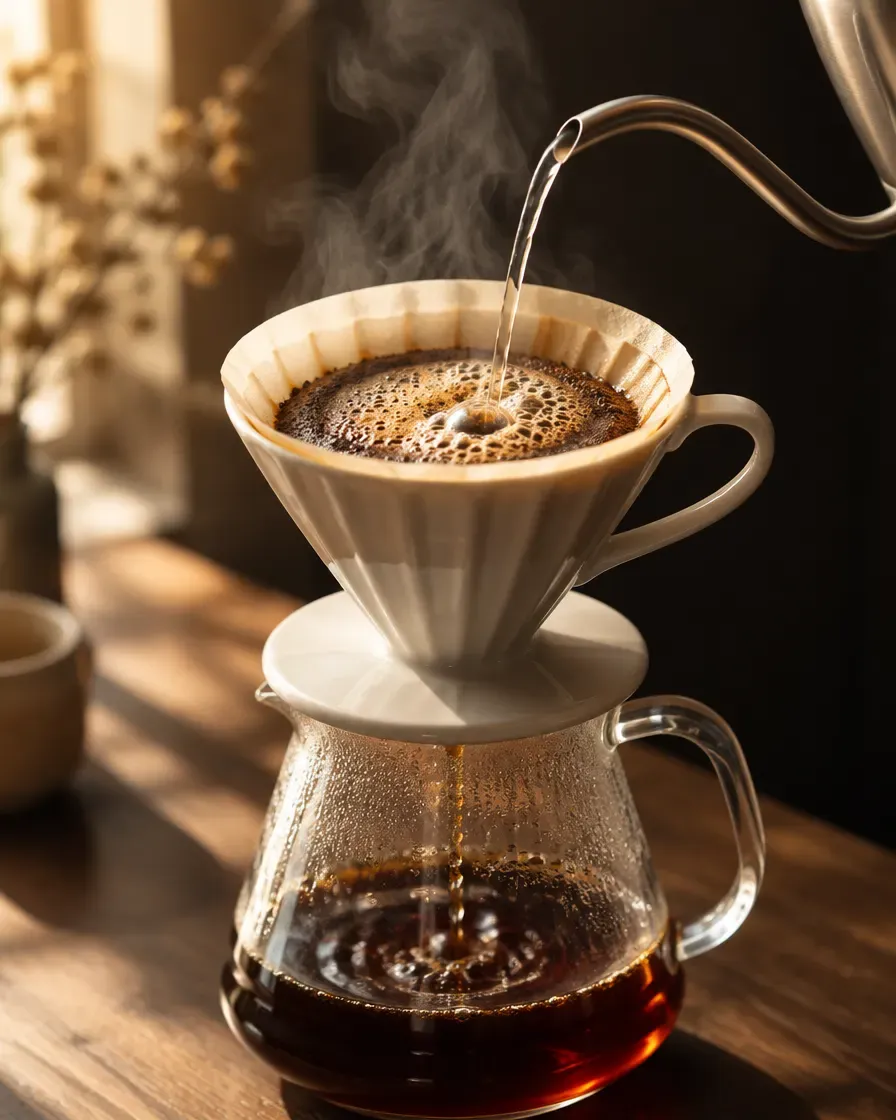
15 g of coffee, 250 g of water, four pours. The everyday V60 recipe we come back to after testing every other one.
- Time
- 4 min
- Difficulty
- medium