Brewing methods
Siphon
Two glass bulbs, a flame and a vacuum. How a siphon brews, why its temperature holds so steady, and the recipe that gets a clean, full cup.
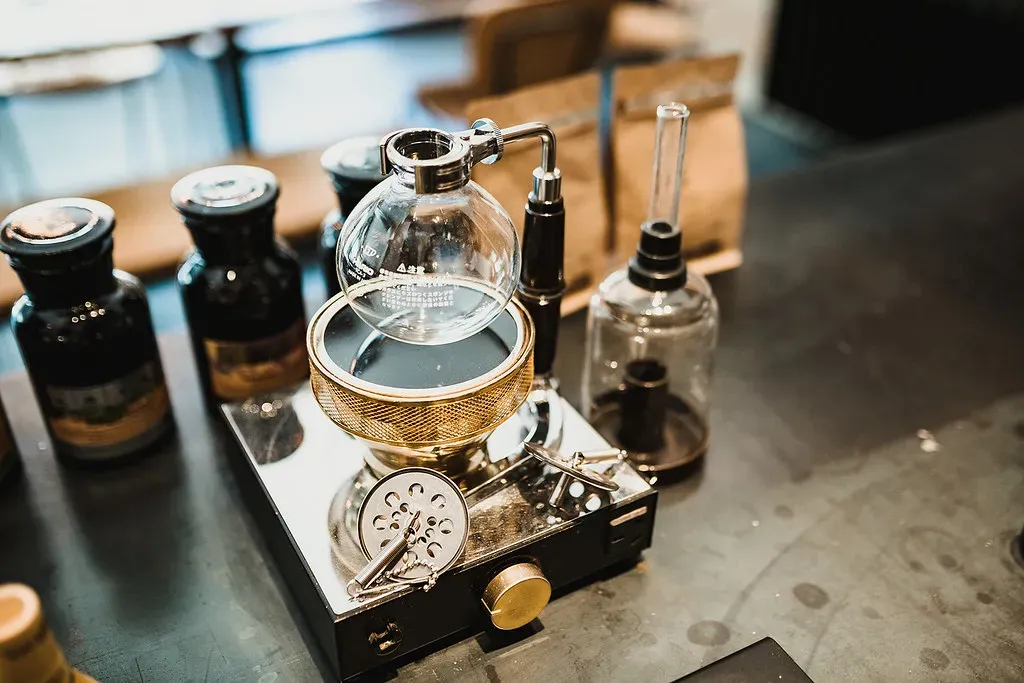
Brew parameters
Grind
Medium
- Extra fine
- Fine
- Medium fine
- Medium
- Medium coarse
- Coarse
FinerCoarser
Water
88–94 °C
15 °C100 °C
Body
Medium
LightFull
- Ratio
- 1:15
- Contact time
- 3 min
A siphon, or vacuum pot, looks like laboratory glassware because it more or less is. It was patented in Europe in the 1830s and 1840s, fell out of fashion almost everywhere, and survived in Japan, where it is still a fixture of the old coffee houses. What keeps it alive is not the theatre, although there is plenty of that. It is the most temperature-stable brewer you can put on a counter.
How it works
Water goes in the lower bulb, the upper bulb sits on top with a filter at the bottom of its tube, and heat goes underneath. As the water heats, the vapour above it expands and pushes almost all the water up the tube into the top chamber. A little stays below, and while the heat stays on, that little keeps steaming and holds the water above in place.
Coffee goes into the top chamber, is stirred in, and steeps. Then the heat comes off. The vapour in the lower bulb cools and condenses, the pressure drops, and the partial vacuum pulls the brewed coffee down through the filter. The grounds stay in the top bulb as a neat dome.
So a siphon is a full immersion brew, like a French press, with a filter at the end, like a pour over. That combination is the whole appeal.
Why the temperature holds
In a pour over the slurry cools as you brew. In a siphon the heat under the lower bulb keeps pushing vapour up, so the water in the top chamber sits at a steady 88 to 94 °C for as long as you want. Change the flame and you change the temperature, and it stays where you put it. That is what makes the method so repeatable once it is set up, and why water temperature is a variable you can actually control here.
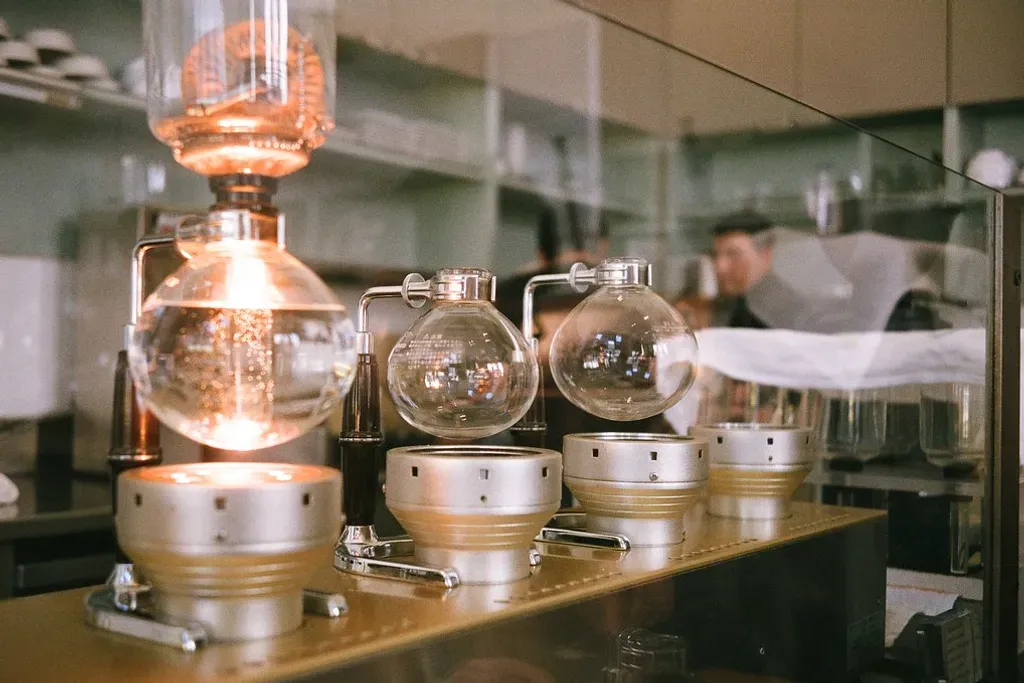
The heat source
Three are common. An alcohol lamp is cheap and slow, and struggles to bring a full pot up to temperature. A butane burner is fast and easy to adjust, and it is what most people at home end up using. A halogen heater is the café choice: quick, clean and precise, and expensive.
The filter
The traditional filter is a cloth stretched over a metal plate held in the tube by a spring and a hook. It lets through more oils than paper, which gives the siphon its rounded, full body. It also needs looking after: rinse it straight after brewing, keep it in water in the fridge, and replace it when it starts to smell stale. A dried-out cloth filter turns the coffee sour and musty.
Paper discs fit most modern siphons and give a cleaner, lighter cup with no maintenance. A few siphons use a glass rod with no filter at all, which lets the most through. The papers, cloth and metal piece explains what each one keeps back.
The brew
For two small cups: 20 g of coffee at a medium grind, a little finer than for a Chemex, and 300 g of water.
- Fill the lower bulb with hot water, not cold, to save five minutes on the burner. Dry the outside so it does not crack on the flame.
- Seat the filter, set the top bulb in loosely and bring the water to the boil.
- When most of the water has risen, lower the heat so it just holds, then seat the top bulb firmly.
- Add the coffee and stir gently, only enough to wet every ground.
- Steep for 60 to 75 seconds, give one more gentle stir, and take the heat away.
- The coffee should draw down in 45 to 60 seconds. Remove the top bulb and pour.
If the drawdown stalls, the grind is too fine or the filter is clogged. If the cup is thin and sharp, grind finer or steep longer, one change at a time.
What it is for
A siphon makes a cup with the clarity of a filter and more body than paper usually allows, at a temperature that stays put. It is slower to set up and clean than a V60, and fragile. It suits a weekend, two cups and a coffee you want to taste carefully, rather than a Tuesday morning.
Frequently asked
- Is siphon coffee stronger than pour over?
- Not by default. At the same ratio it extracts about as much, but the cloth filter lets through more of the oils, so it tastes rounder and fuller than a paper-filtered cup.
- Can I use paper filters in a siphon?
- Yes. Most modern siphons accept a small paper disc on the same filter plate. The cup is cleaner and lighter, closer to a V60, and there is no cloth to look after.