Origins
Guatemala
Eight distinct growing regions on one small country's volcanic spine, and a cup that changes with each.
- Cocoa
- orange
- spice
- full body
| Regions | Antigua, Huehuetenango, Atitlán, Cobán, Fraijanes, Nuevo Oriente |
|---|---|
| Altitude | 1300–2000 m |
| Harvest | December–April |
| Processes | Washed, Honey |
| Varieties | Bourbon, Caturra, Catuaí, Pache, Typica |
Guatemala is small and vertical, and the coffee changes every time the geology does. Anacafé, the national association, maps eight regions, and unusually for a marketing scheme the distinctions hold up on a cupping table.
The regions that change the cup
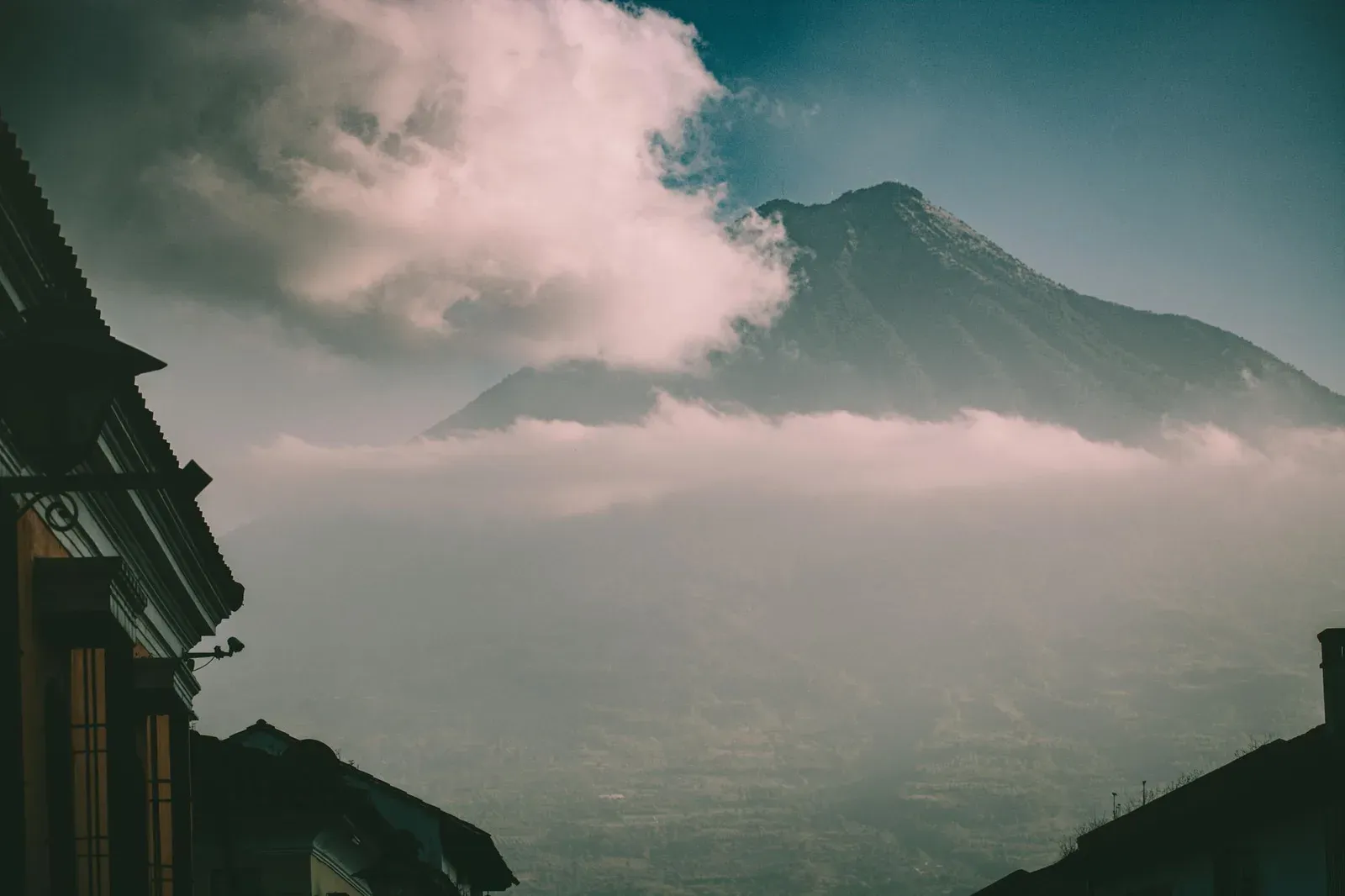
- Antigua sits in a high valley closed in by Agua, Fuego and Acatenango. Volcanic ash holds water, the nights are cold, and the cup is dense: cocoa, orange peel, spice.
- Huehuetenango, in the northwest, is dry, very high and limestone rather than volcanic. Its lots are the brightest and most floral in the country.
- Atitlán grows on lake slopes and gives a rounder citric acidity.
- Cobán is wet and cloudy, with a softer, fruitier profile.
- Fraijanes and Nuevo Oriente carry much of the everyday volume.
Shade, and why it matters here
Most Guatemalan coffee grows under gravilea and inga shade. Shade slows ripening, and slow ripening builds sugar and acidity in the seed instead of pushing the tree to yield. It also matters commercially: a shaded farm holds soil on a steep slope through a hurricane season that arrives most years.
What the cup does
The national profile is cocoa, orange, brown sugar and baking spice, with a full body and an acidity that stays polite. Huehuetenango breaks that mould with apricot, jasmine and a sharper line.
Brewing it
It is an easy origin to roast medium and hard to ruin. Filter at 1:16 and 93 °C. As espresso it is one of the best single origins going: 1:2, medium roast, cocoa and orange that hold their shape under milk. Antigua in particular was built for the flat white long before anyone called it that.