Professional machines
A commercial machine at home
What the machine asks for
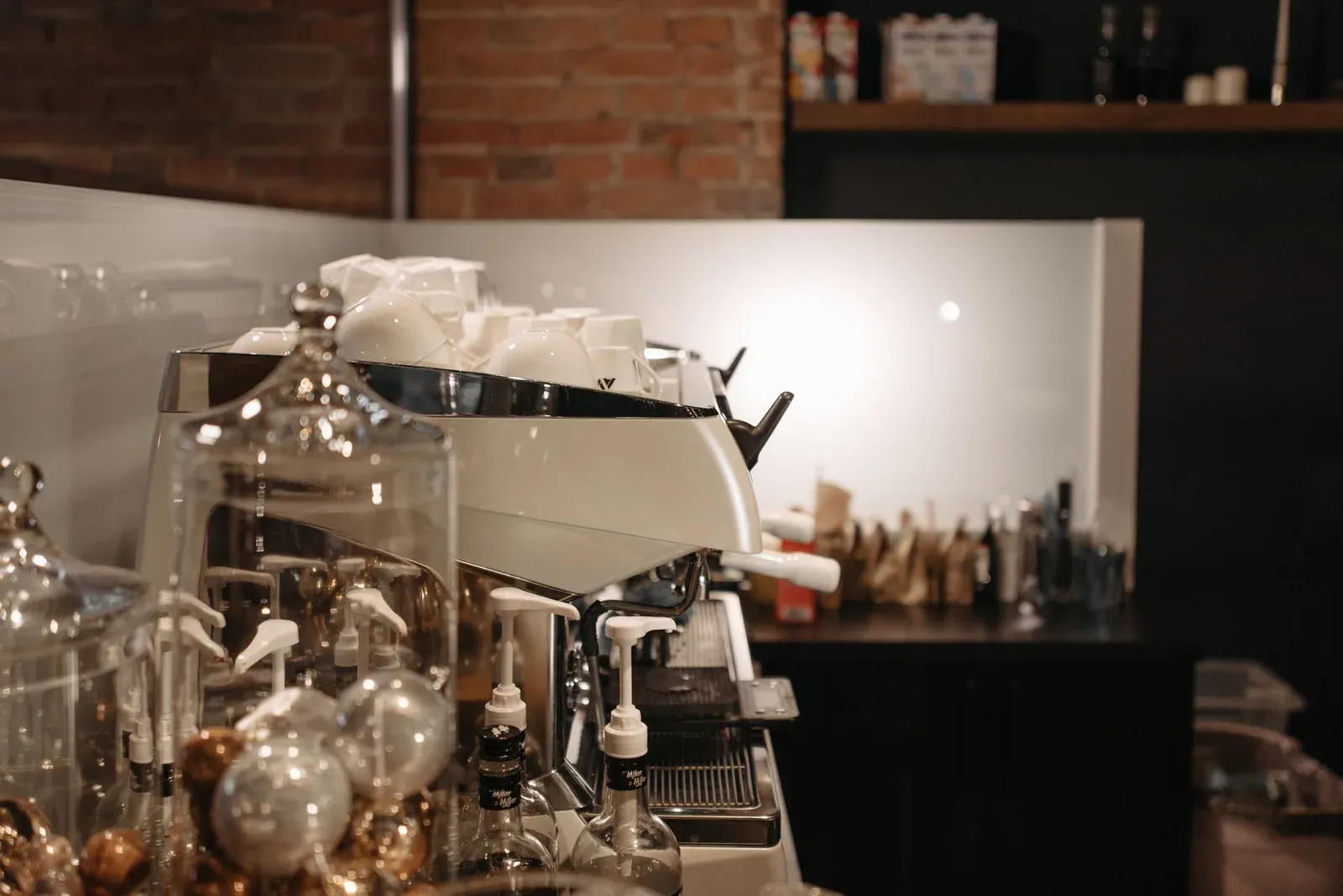
A bar machine is built to pull a hundred shots an hour for ten years. The engineering that makes that possible is also what makes it awkward in a kitchen.
Power. A single group commercial machine draws around 2 kW, which a normal circuit tolerates if it is not sharing with a kettle and an oven. Two groups typically want 3 to 5 kW, a dedicated circuit, and in some countries three phase supply. This is an electrician conversation before it is a coffee conversation.
Water in. Most are plumbed, with a 3/8 inch braided line, an isolation valve you can reach, and a softener or filter sized for your water. Skipping the filter on a plumbed machine is how a 5,000 euro boiler becomes scrap.
Water out. The drip tray drains rather than fills. That means a drain line to a waste pipe, with a fall the whole way, or a pump. A drain line that rises anywhere becomes a smell within a week.
Heat. A machine that idles at 1,200 watts is a small radiator you have installed in a room you cook in. In summer it is noticeable.
Weight and space. Sixty to eighty kilos for two groups, and a worktop depth most kitchens do not have. Add the height of the portafilter swing and the cupboard above suddenly matters.
The honest middle: one group
A one group commercial machine is the version of this idea that fits a home. It keeps what makes the category worth wanting, a saturated group, a real steam boiler, parts that are still made and a body built to be serviced, and it drops the demands that make two groups impractical.
Many take a reservoir. Most run on a normal circuit. They still weigh thirty kilos and still cost what a good prosumer dual boiler costs, but the architecture is designed to run for years rather than for a warranty period.
When the answer is no
If you make four drinks a day, a prosumer dual boiler gives you the same cup with a fraction of the installation. The difference between the two is duty cycle, not quality. A bar machine is not better at one espresso; it is better at the hundredth espresso in a row, which is not a thing your kitchen will ever ask of it.
If you go ahead
Budget the installation as part of the price: electrician, plumber, filtration, and a timer so the machine is not heating a kitchen at 3am. Then budget an annual service, because a machine built to be serviced expects to be.
Frequently asked
- Can a commercial machine run on a normal socket?
- A single group usually can, at around 2 kW on a 10 A circuit if nothing else shares it. A two group machine typically wants 3 to 5 kW, which in most European kitchens means a dedicated circuit and sometimes three phase.
- Do I need to plumb it in?
- Not always. Many single group machines offer a reservoir kit, and some can be switched between reservoir and mains. A two group machine assumes plumbing and a drain, and retrofitting a tank to one is usually more trouble than it is worth.
Related reading
Volumetric, paddle or button
How a bar machine decides when to stop a shot, why volumetric dosing drifts, and what a paddle gives back to the person holding it.
Lever machines: spring against direct
A spring lever pulls a curve the machine decides. A direct lever pulls the curve your arm decides. That single difference sorts every lever machine sold.
Single boiler, heat exchanger or dual boiler
The three ways a machine makes brew water and steam at once, what each one costs you in waiting, and which one suits how you actually drink.