Coffee
How to read a bag of coffee
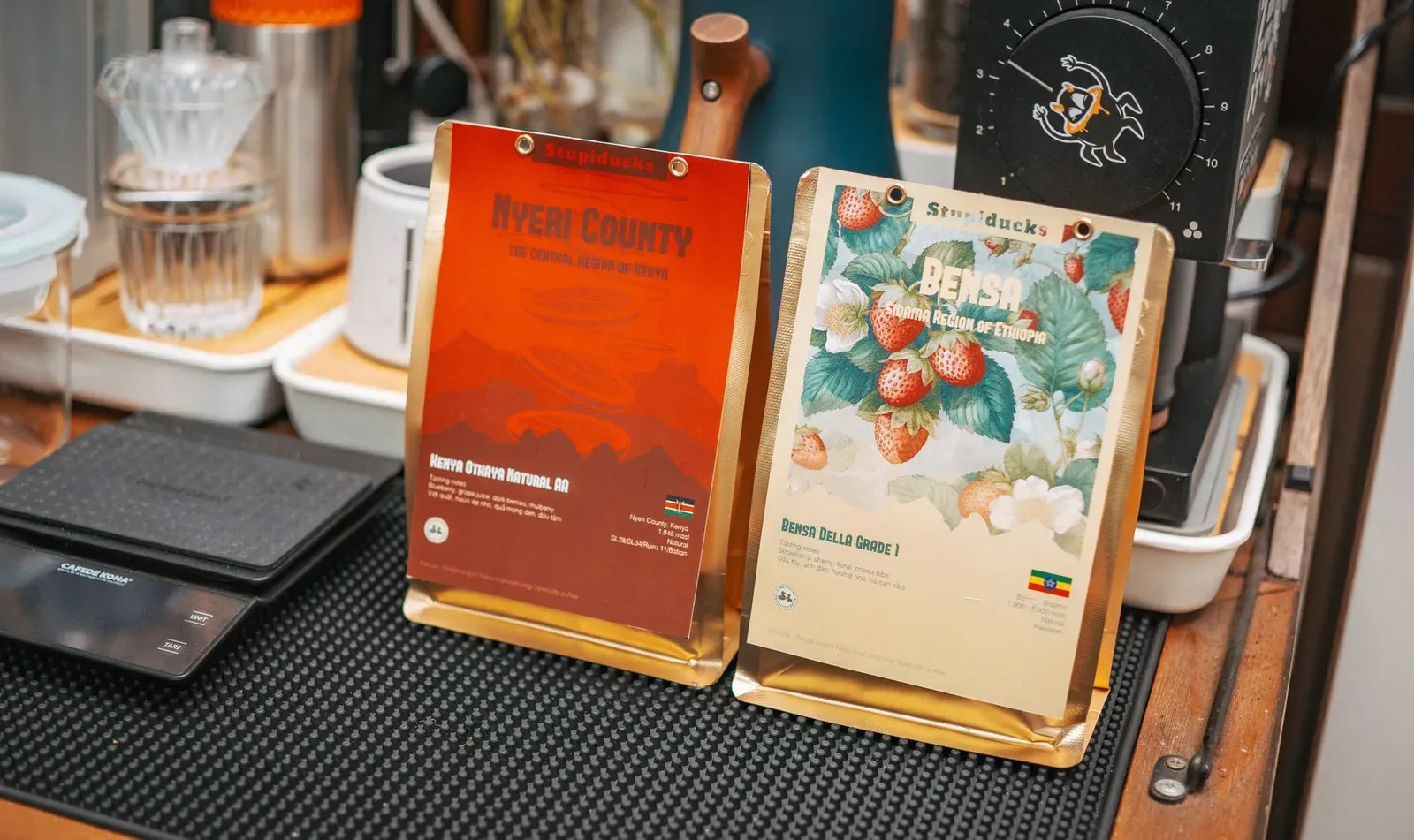
A bag of coffee carries between four and ten claims, and they are not equally useful. Some describe the coffee, some describe the farm, and one of them is the only line that changes while the bag sits there. Here is what each one means, in the order worth reading them.
Roast date, first and always
Coffee is a fresh product. Carbon dioxide leaves the bean for days after roasting, aromatics go with it, and the oils on a dark roast oxidise. A roast date tells you where in that curve the bag is.
For filter brewing, the window is roughly one to four weeks after roasting. For espresso, give the coffee seven to ten days to settle before pulling it, then use it within a month or so: a bag that is too fresh gushes and foams, and a bag that is too old pours fast and tastes flat.
A best before date is not the same thing. It is set by the roaster, it is often twelve months out, and it tells you nothing about the day the beans came out of the drum. If a bag carries only a best before date, assume the roaster is not proud of the roast date.
Origin, and how precise it is
“Colombia” is a country. “Huila” is a region. “El Mirador, Acevedo, Huila” is a farm. Each step up in precision means the roaster knows more about where the coffee came from, and usually that they paid more for it.
Precision is not the same as quality: a well chosen regional lot can beat a named farm. But a bag that says only “South America” is telling you the lot was bought on price.
Process, which is where most of the flavour difference lives
The process is what happened to the cherry after picking, and it changes the cup more than the varietal does.
- Washed: the fruit is stripped off before drying. Clean, bright, acidity to the front. The origin shows through most clearly here.
- Natural: the cherry dries whole around the bean. Heavier body, sweeter, with berry and fermented notes.
- Honey or pulped natural: some of the sticky mucilage stays on. Sits between the two, sweet with moderate acidity.
- Anaerobic or experimental: fermented in sealed tanks. Intense, divisive, sometimes barely tasting of the origin at all.
None of these is better than the others. They are different products, and a roaster choosing one is telling you what they wanted the cup to do.
Altitude, varietal and the rest
Altitude appears as a number in metres, often 1,200 to 2,200. Higher and cooler means the cherry matures more slowly, which tends to give a denser bean and more acidity. It is a useful signal, not a grade.
The varietal (Bourbon, Caturra, Gesha, SL28, Pacamara) is the plant. It sets a ceiling on what the cup can do and explains a price tag, but farm practice and process decide whether the coffee reaches it.
Roast level is worth more than the word printed on it. “Medium” is a roaster’s own scale, not a standard. The colour of the beans through the valve, and the absence of oil on a bag sold for filter, tell you more than the label does.
Tasting notes are a description, not an ingredient list
Nothing is added to the coffee. When a bag says blackcurrant and cocoa, the roaster is describing what they found on their cupping table, on their water, at their recipe. Read the notes as a direction: fruit and florals point to a light roast from a washed African lot, chocolate and nuts to a heavier Central American one.
If the notes read as a list of every pleasant flavour in existence, that is marketing copy. Three specific notes beat eight generous ones.
What to actually check in a shop
- Is there a roast date, and is it inside the window for how you brew?
- Is the origin precise enough to mean something?
- Does the process match the cup you want?
- Is the bag size one you will finish in three or four weeks?
Everything else on the label is context. Those four are the purchase.
Frequently asked
- How long after the roast date is a bag still good?
- For filter, roughly one to four weeks after roasting. For espresso, give it seven to ten days to settle first, then use it within about a month.
- Is a best before date the same as a roast date?
- No. A best before date is set by the roaster and tells you nothing about when the coffee was roasted, which is why a bag can carry one and still be six months old.
Related reading
Cupping at home
The protocol professionals use to taste coffee, stripped to what works on a kitchen table, and what it is actually good for.
How much caffeine is in your cup
A double espresso holds less caffeine than a mug of filter, and roast level barely matters. The numbers, and where the intuitions go wrong.
Storing coffee at home
Oxygen, heat, light and moisture are what stale a bag of coffee. Here is what each one does, and what actually protects against them.