Whole bean coffee
Storing coffee at home
Four things stale coffee
Roasted coffee goes flat for four reasons, in this order of importance: oxygen, heat, moisture and light. Every storage decision is about slowing one of them down.
Oxygen is by far the biggest. It oxidises the oils that carry most of the aroma, which is why a dark roast, with more oil on the surface, goes stale faster than a light one. Heat speeds up the same reaction. Moisture starts extraction early, in the bag, on beans you have not brewed yet. Light does the least damage of the four, but it is also the easiest to avoid.
The bag is usually the right container
Specialty coffee arrives in a bag with a one-way valve. That valve lets the carbon dioxide from roasting escape without letting oxygen back in, and the foil blocks light. It is a purpose-built container and it came free.
Roll the top down to push the air out, clip it, and keep it in a cupboard away from the oven and the kettle. That is better than most of the jars sold to replace it.
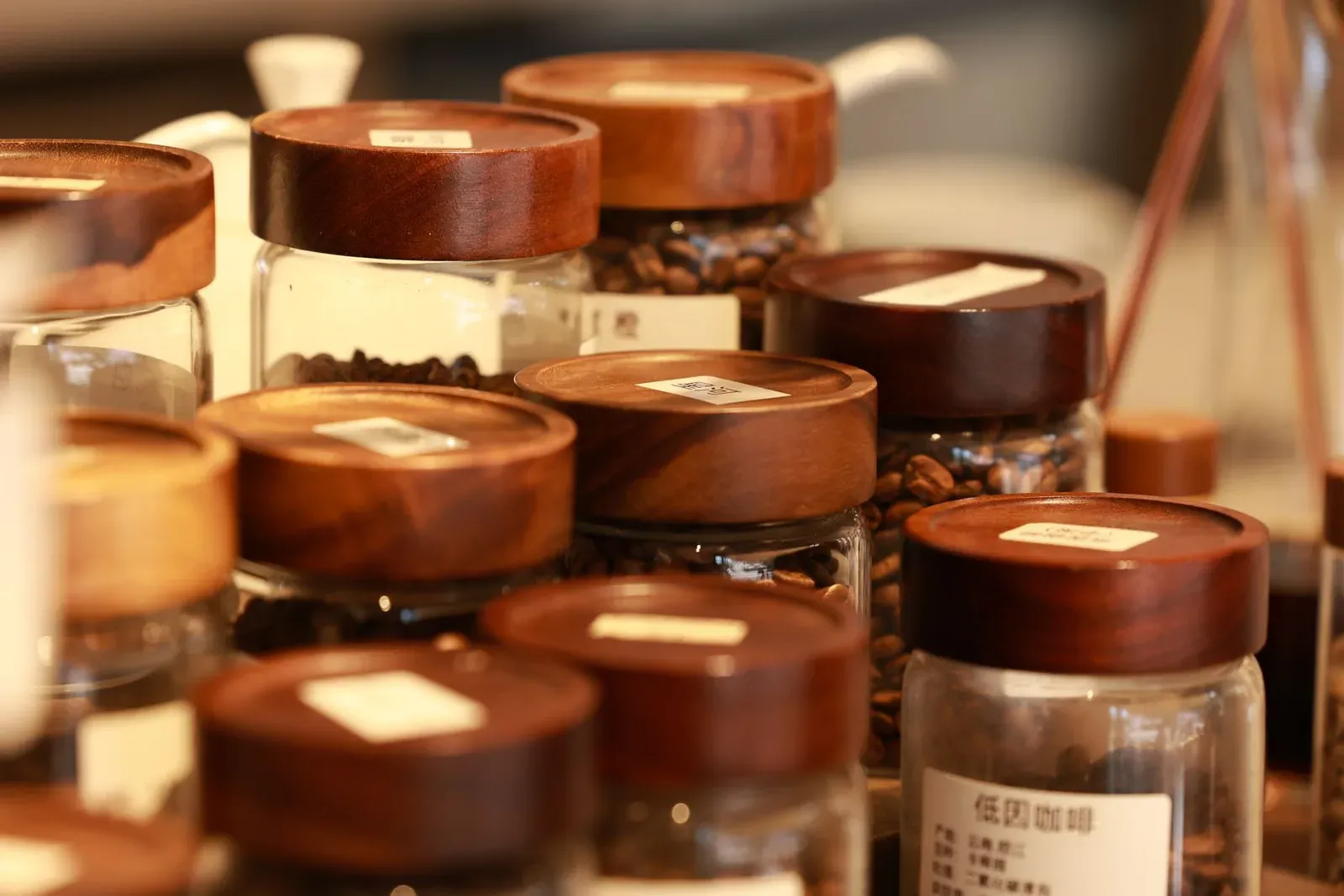
The one case for decanting is a bag that has no valve and no zip, or a vacuum canister that genuinely pulls the air out. A pretty clear jar on an open shelf is a downgrade.
Why the fridge is the wrong idea
A fridge is humid, it is full of strong smells, and coffee is an excellent absorber of both. Worse, every time you take the container out, the cold beans meet warm room air and water condenses on them. Do that twice a day for a week and you have been slowly brewing your own coffee in the bag.
Keep coffee at room temperature, in the dark, and buy a size you will finish.
Freezing, done properly
Freezing is different from refrigerating, and it does work. The cold nearly stops the oxidation, and there is some evidence that frozen beans shatter more evenly in a grinder.
The rules are strict: divide the coffee into small sealed portions before it goes in, take one portion out at a time, let it reach room temperature before opening it, and never refreeze what you took out. The damage comes from the temperature cycling, not the cold.
How long you actually have
- Whole bean, in its valve bag: at its best from one to four weeks after roasting for filter, and from a week to about a month for espresso.
- Ground: hours, not weeks. Grinding multiplies the surface meeting the air by a factor of a thousand.
- Frozen, sealed, undisturbed: several months, with the clock restarting once the portion is opened.
None of this makes stale coffee dangerous. It makes it dull, and dullness is harder to notice than a fault: the cup does not taste wrong, it just stops tasting of anything in particular.
Frequently asked
- Should I decant coffee into a jar?
- Only into an airtight one kept out of the light. A clear jar on a sunny shelf is worse than the original bag, because the valve bag blocks light and lets carbon dioxide out without letting oxygen in.
- Can I freeze coffee?
- Yes, in small sealed portions of a few days' worth each. Take a portion out, let it come back to room temperature before opening it, and never put it back.
Related reading
Resting coffee: why a fresh roast is not ready yet
Roasted coffee is full of carbon dioxide for days. How long to rest beans for filter and for espresso, and what a bag that is too fresh does to the cup.
Cupping at home
The protocol professionals use to taste coffee, stripped to what works on a kitchen table, and what it is actually good for.
How much caffeine is in your cup
A double espresso holds less caffeine than a mug of filter, and roast level barely matters. The numbers, and where the intuitions go wrong.