Cappuccino
Which milk foams best
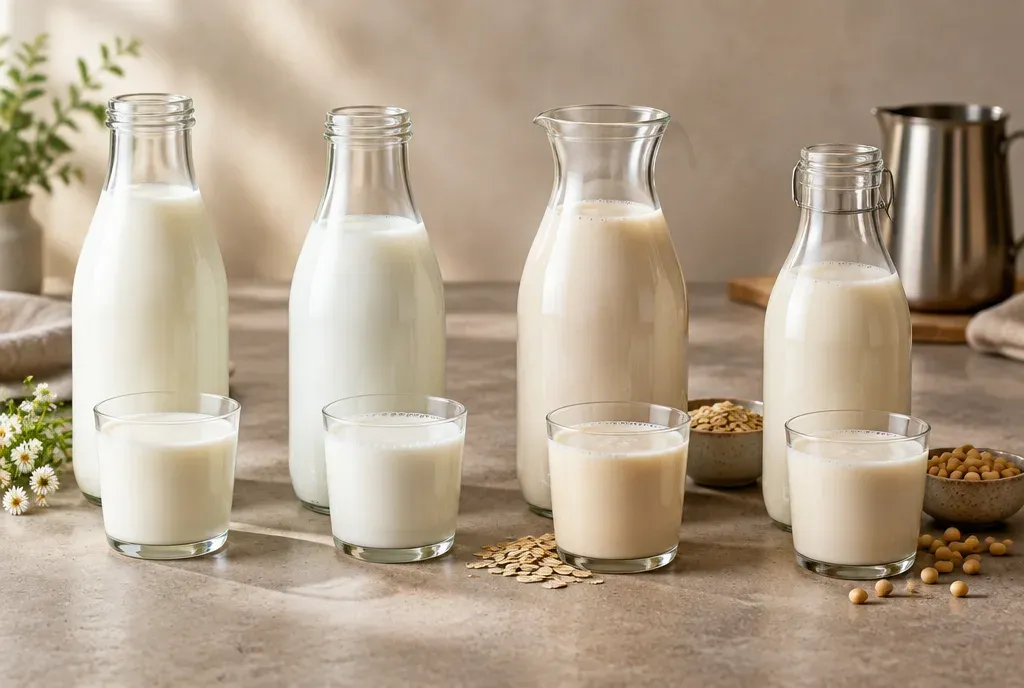
Three ingredients, three jobs
Milk foams because of what is dissolved in it, and each component does something different. Understanding which one is doing what turns every milk question on this page into an easy answer.
Protein builds the foam. When steam drives air into cold milk, the proteins unfold at the surface of each new bubble and link up into a film around it. That film is the foam. More available protein means more bubbles held, and it means they are held for longer.
Fat makes the foam soft, and shortens its life. Fat globules sit in those same protein films and interfere with them, which is why full-fat milk never whips up as tall as skimmed. What you lose in volume you gain in texture: the foam is denser, wetter and glossier, it pours as one thing with the liquid underneath it, and it feels round rather than dry in the mouth.
Sugar makes it taste sweet as it heats. Lactose is already sweet, and gentle heating makes the milk read as sweeter still, which is the flavour people associate with a well-steamed cappuccino. Push past about 65 °C and that turns into a flat, cooked, slightly boiled note that no amount of good technique recovers. The sweetness has a ceiling, and it is a temperature.
So the trade is simple. Anything that raises protein relative to fat gives you more foam and less texture. Anything that raises fat gives you less foam and better texture. And heat is a separate axis that ruins both if you overshoot it.
Whole, semi-skimmed, skimmed
Whole milk is the default for a reason. There is enough protein to build a stable foam and enough fat to keep it wet, so the microfoam pours as a single glossy mass and the drink tastes sweet. It is also the most forgiving: a couple of extra seconds of air still gives you something drinkable.
Skimmed milk is the trick answer to “what foams best”. It builds the tallest, stiffest head in the jug, because nothing is interfering with the protein films. Then it disappoints in the cup. The foam sits on top as a separate layer instead of folding in, the drink is thin, and the sweetness drops noticeably. It is a good choice for latte art practice on a budget and a poor one for the drink.
Semi-skimmed is a fair compromise and is what many bars pour by default. It aerates a little more readily than whole milk and keeps most of the body.
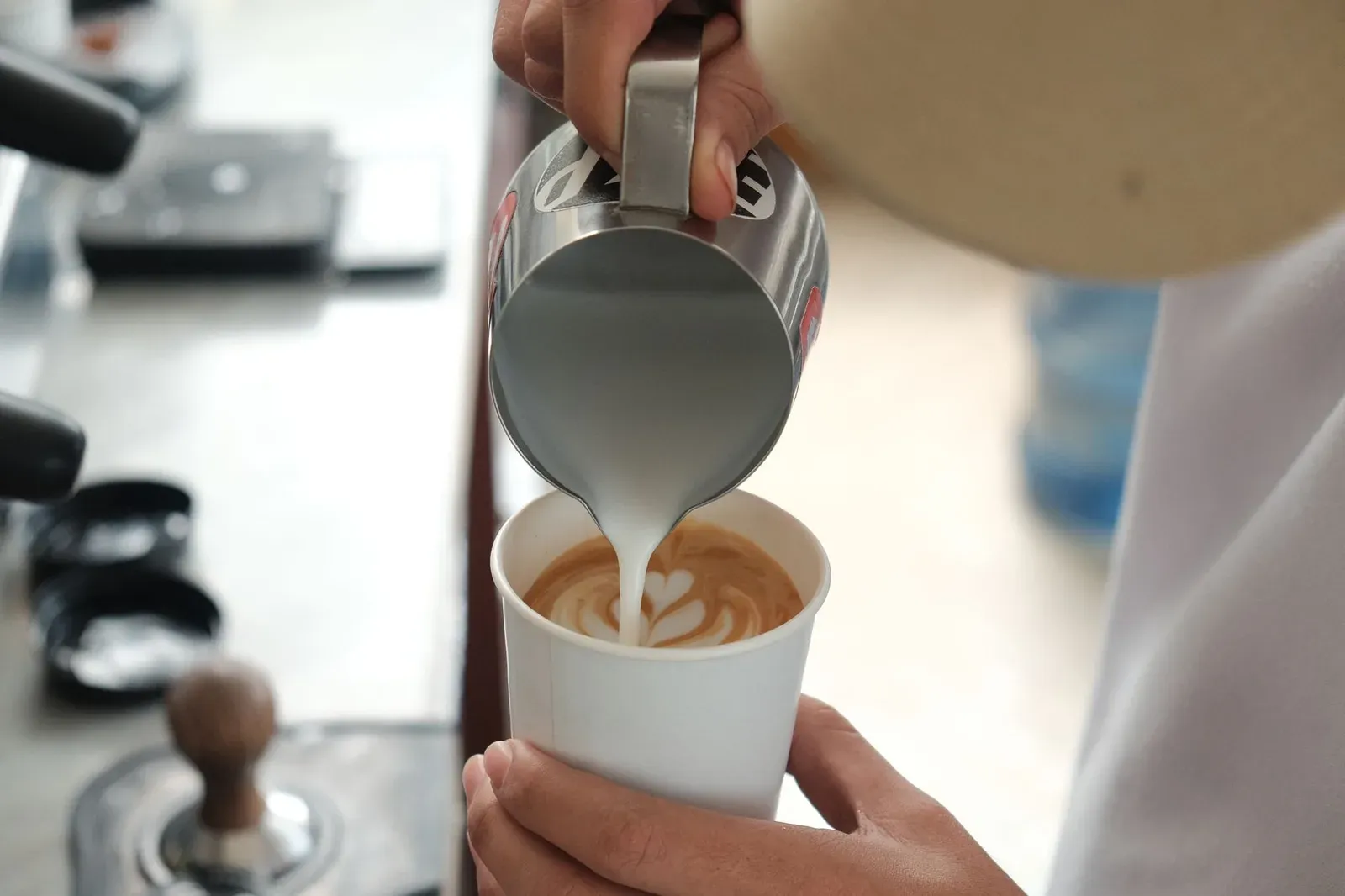
The plant milks, oat first
Oat milk foams well, which is why it took over. Its own protein is limited, so the foam comes largely from what the producer has added, and the best versions give a texture close to whole milk with a sweetness of their own from the enzyme-treated oats. That sweetness is the real reason it works next to espresso.
This is where barista formulations earn their name. A barista version is not the ordinary carton in different packaging. It carries added protein so there is something to build a film from, stabilisers so the bubbles hold while you pour, and a fat level chosen to survive steam rather than to suit a bowl of cereal. It is also buffered against the acidity of coffee, which is what stops the splitting and curdling you see when a standard carton meets a hot espresso.
| Milk | How the foam behaves | Practical note |
|---|---|---|
| Whole | Dense, glossy, folds into the drink | The default. Most forgiving of a long aeration window |
| Semi-skimmed | Slightly taller, a little drier | A fair compromise. Aerates a touch faster |
| Skimmed | Tall and stiff, sits as a separate layer | Good for practising art, thin to drink |
| Oat, barista | Close to whole milk, sweet | The strongest plant option. Standard cartons collapse |
| Soy, barista | Good volume, can curdle in acidic coffee | Pour into the espresso rather than the reverse |
| Almond | Thin, large bubbles, short lived | Aerate less and pour immediately |
| Coconut | Foams poorly, flavour dominates | Treat as a flavour choice, not a texture one |
What changes at the wand
The technique does not change. The numbers around it do.
With whole milk, aerate for the first three to four seconds while the milk is still cold, then drop the tip deeper and spin until the jug is uncomfortable to hold, around 60 °C. That is the reference every other milk is adjusted from.
With skimmed, cut the aeration short. It takes air readily, and four seconds of it gives you a jug of meringue. Two to three seconds is plenty.
With barista oat, keep the same window but stop cooler, closer to 55 °C. Plant milks lose their texture earlier than dairy and go thin and papery if you take them to the same temperature. With soy, the same lower ceiling applies, and it is worth pouring the milk into the espresso rather than the espresso into the milk. With almond, aerate for a second or two at most and pour straight away: whatever foam you build is already leaving.
Frequently asked
- Does skimmed milk really foam better than whole milk?
- It foams taller and stiffer, because protein does the foaming and fat does the softening. That is not the same as foaming better. Whole milk gives a glossier, wetter texture that folds into the espresso and tastes sweeter, which is what a cappuccino actually wants.
- Why does barista oat milk cost more than the ordinary carton?
- It is a different formulation, not the same drink in a smarter box. Barista versions carry more protein, a stabiliser to hold the bubbles, and a fat level chosen to survive steam. The ordinary carton is built to be poured on cereal, and it collapses in the jug.
- Can I re-steam milk I textured earlier?
- No. Once milk has been heated the proteins have already done their work, and re-steaming gives you thin bubbles and a cooked flavour. Steam only what the drink needs, which is about 120 ml for one cappuccino, and pour it within twenty seconds.
Related reading
Puck prep: WDT and distribution
What happens between the grinder and the group head decides the shot. Clumps, distribution tools, the WDT needle, and which steps are worth the time.
A cappuccino without an espresso machine
A moka pot or an AeroPress gives you concentrated coffee, not espresso. Here is how to build the drink around it, and three ways to foam milk with no wand.
Flat white or latte: what actually differs
Same two ingredients, two different drinks. The volume, the shot behind it and the milk texture all change, and each one follows from the first.