Techniques
Puck prep: WDT and distribution
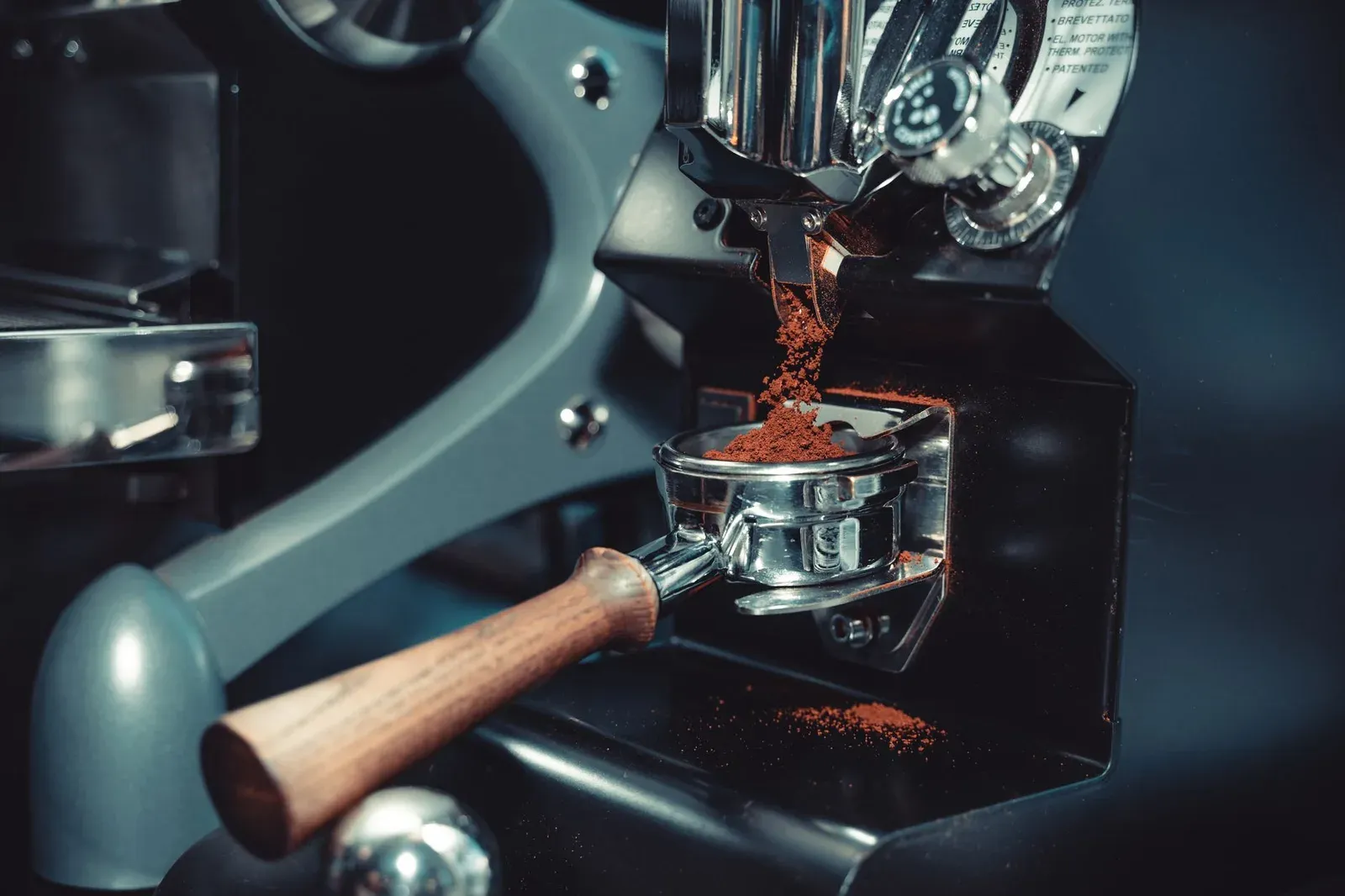
Why the puck is the whole game
Nine bars of water will go through the coffee by the easiest route available. If one part of the bed is looser than the rest, most of the water goes there, over extracts that channel and under extracts everything around it. The cup comes out sour and bitter at once, which is the signature of channelling rather than of a wrong grind.
Puck preparation is the work of making the bed uniform so that no route is easier than another.
Step 1: break the clumps
Grinders produce clumps. Static makes them worse, fine espresso grinds make them worse still, and a clump is a dense lump with loose gaps around it, which is exactly the fault above.
The Weiss Distribution Technique is the fix: stir the dry grounds in the basket with thin needles, right down to the bottom, in small circles, for five to ten seconds. Thin is the operative word. A toothpick pushes the grounds around, a 0.3 mm needle passes between them.
If your grinder throws static, a drop of water on the beans before grinding, the Ross Droplet Technique, cuts the clumping at the source.
Step 2: level the surface
Once the bed is loose and even, the top needs to be flat. Tap the portafilter gently on the bench, or use a distributor set just deeper than the coffee and turned a couple of times.
Be honest about what a distributor does. It flattens and lightly compresses the top few millimetres. It cannot reach an uneven density lower down, which is why it never replaces step 1. A distributor screwed down too far also compacts the top into a crust that the water then has to break through.
Step 3: tamp, once, level
Press straight down until the coffee stops moving. Level matters, force does not, past about 10 kg. Do not tap the side of the portafilter after tamping: it cracks the puck away from the basket wall and creates the ring channel you were trying to avoid.
Step 4: a screen, if you like
A puck screen on top spreads the first water and keeps the shower screen clean. It is a small, real improvement on machines with an aggressive water jet, and it does nothing on a machine that already pre-infuses gently. It is a convenience, not a cure.
What the bottomless portafilter tells you
Run the shot with a bottomless portafilter and watch the underside of the basket. An even, dark bloom across the whole surface that draws into one stream means the bed was uniform. A jet from one point, or a spray sideways, means the water found a channel, and no grind adjustment will fix what the puck prep let happen.
Frequently asked
- Do I need a WDT tool?
- You need something thin. Purpose-made tools are a bundle of 0.3 to 0.4 mm needles in a handle, but a single straightened paperclip does most of the job on a home grinder.
- Does a bottomless portafilter help?
- It does not improve the shot, it shows you the truth. Spraying or a squirt from one spot means channelling, and you cannot see either through a spouted basket.
Related reading
Resting coffee: why a fresh roast is not ready yet
Roasted coffee is full of carbon dioxide for days. How long to rest beans for filter and for espresso, and what a bag that is too fresh does to the cup.
Dialling in a new bag
A repeatable routine for the first four shots from a new coffee: what to fix, what to change, and how to know when you are done.
Pre-infusion and the bloom
Wetting the coffee before you brew it properly is the same idea on an espresso machine and on a pour over. What it fixes, and how long it should last.