Temperature
Water temperature, and what it actually changes
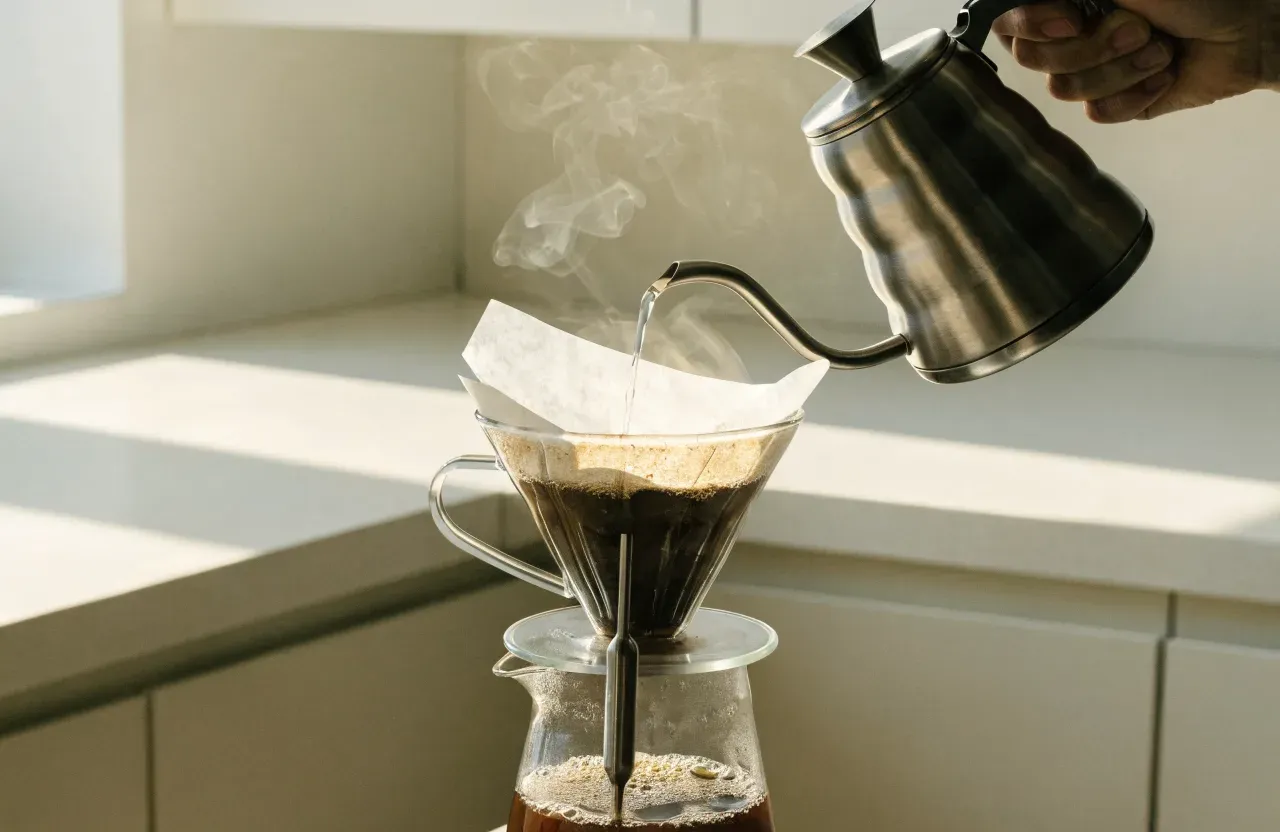
The window, and what moves inside it
Coffee is brewed between roughly 90 and 96 °C, and that range is not a compromise between competing authorities. It is where solubility and selectivity happen to line up. Below about 88 °C the water is too slow to dissolve the sugars and browning compounds that give coffee sweetness and body, so you get acidity without anything behind it. Above about 96 °C it dissolves them readily, and it also dissolves the harsher, drier compounds that the lower end leaves politely in the grounds.
Inside the window, what changes is which parts of the coffee come out most easily. Hotter water pulls more in total and pulls it sooner, so it pushes a cup towards sweetness first and then towards bitterness. Cooler water holds back, which keeps acidity bright but risks leaving the cup hollow. Two degrees is perceptible on a good coffee, and it is still a much smaller lever than grind.
The practical consequence is that temperature is a tuning control rather than a fixing one. If a brew is badly wrong, it is grind, dose or ratio. If a brew is nearly right and slightly sharp, or nearly right and slightly dry, that is where temperature earns its keep.
Roast level moves the target
The single most reliable rule about brewing temperature is that it should follow the roast.
A light roast has been in the drum for less time and at lower final temperatures, so its structure is denser and its soluble material is locked up more tightly. It resists extraction, and the usual symptom is a cup that tastes sour and thin at settings that work perfectly well on other coffee. Give it the top of the window, 94 to 96 °C, and often full boiling water on a filter brew.
A dark roast has already been partially broken down by the roasting itself. It gives up its material fast, and it carries more of the bitter, roasty compounds that heat brings forward. It wants the bottom of the window, 88 to 92 °C, and will tell you clearly when you have gone too hot by turning ashy.
Medium roasts sit in the middle at 92 to 94 °C, which is also why that band ends up as the default setting on almost every machine sold.
| Roast | Espresso | Filter | What too hot tastes like |
|---|---|---|---|
| Light | 94-96 °C | 96-100 °C | Rarely a problem. Drying at the very top |
| Medium | 92-94 °C | 93-96 °C | Slightly harsh finish |
| Dark | 88-92 °C | 88-92 °C | Ashy, burnt, drying |
Age pushes in the same direction as a lighter roast, so a degree or two upwards is a reasonable response to a bag you are trying to finish.
Stability beats the setting
If you have to choose between a machine that brews at exactly the temperature you asked for and a machine that brews at the same temperature every time, choose the second one, and it is not close.
A setting you can control is only useful if the water arrives at that temperature consistently. A single boiler machine without any active control cools measurably between the first shot and the third, and warms when you steam milk immediately before pulling. The result is a shot that tastes different each time for reasons you cannot see, which is indistinguishable from a technique problem and considerably more frustrating. This is the real argument for PID control, and the real argument for the warm-up time manufacturers are so quiet about: a machine that is electrically ready in three minutes is usually thermally ready in twenty.
The same logic applies without electronics. Preheating the portafilter, the cup and the filter cone is not fussiness. A cold metal basket takes several degrees out of the water in the first seconds of the shot.
Why filter cools and espresso does not
Espresso is over in under thirty seconds, and the water is in contact with the coffee for a few seconds of that. There is no time for it to lose meaningful heat, so a single brew temperature genuinely describes the whole extraction.
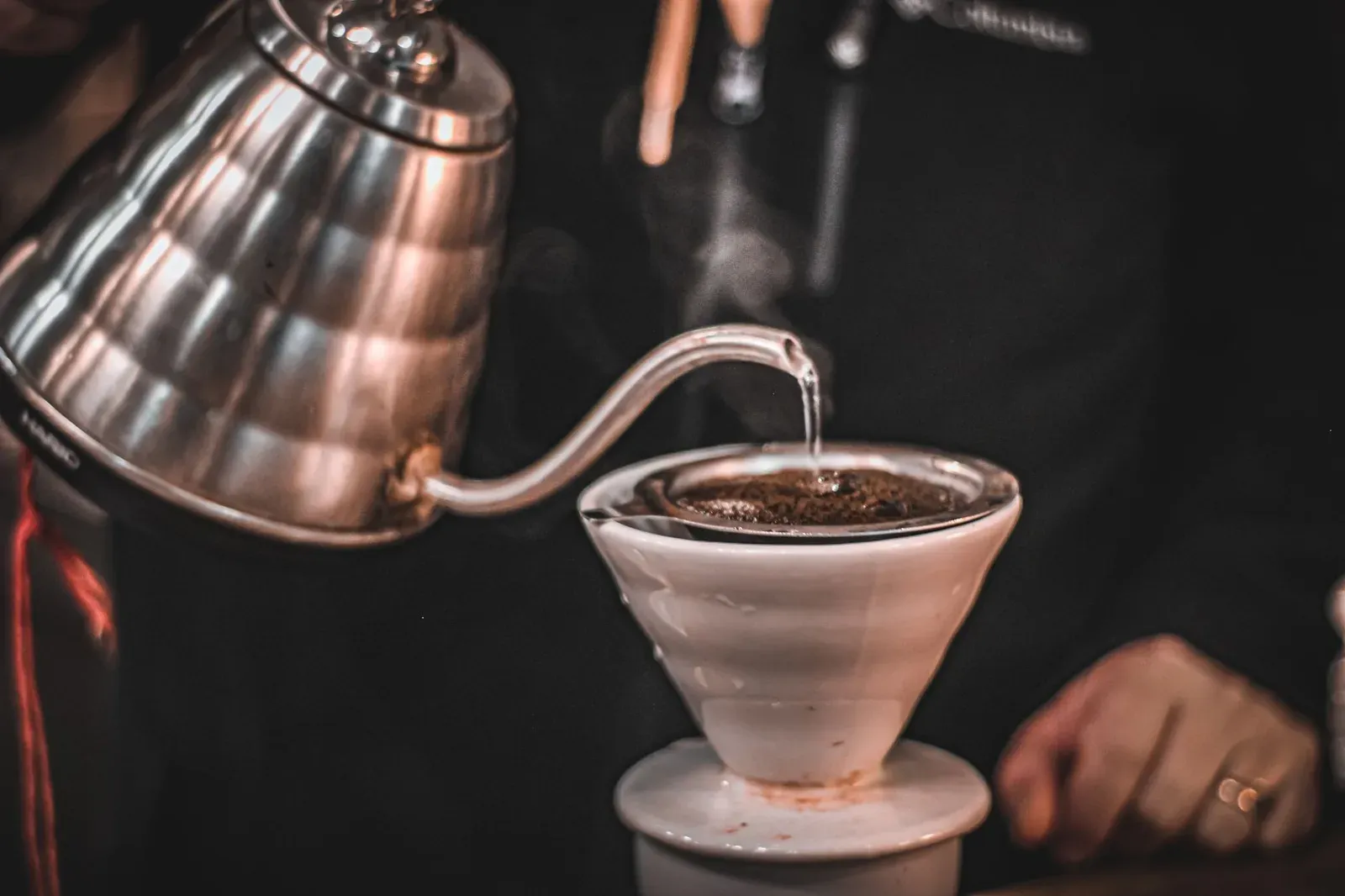
Filter brewing is the opposite. Water sits in an open cone or an open pot for two to four minutes, losing heat to the air, to the brewer and to the grounds the whole time. The temperature at the end of a V60 is often well below where it started, which means a filter brew is not brewed at a temperature. It is brewed across a curve. That is why filter recipes call for water hotter than the espresso window, why preheating the cone and rinsing the paper with hot water makes a measurable difference, and why a thick ceramic dripper behaves differently from a thin plastic one.
Testing it by taste
Forget the thermometer for a moment and run the test that matters. Brew the same coffee at the same grind, dose and ratio twice, changing only the temperature by two degrees. Taste them side by side rather than one after the other, because memory for coffee flavour is much worse than most people believe.
The cooler cup should taste brighter and possibly hollow. The hotter cup should taste sweeter and fuller, or dry and harsh if you have gone past the point. Take the direction that improved the cup, then one more step that way to find where it stops helping. Two or three pairs will tell you more than any specification sheet.
One caution before you blame the number: the water itself has to be right first. Mineral content changes what gets extracted at any temperature, and a brew made with the wrong water will not be rescued by two degrees. Water is the ingredient nobody tests covers what to check, and it is worth reading before you buy a machine on the strength of its temperature control. For where the setting sits in the queue of things to change, the ordered list in espresso troubleshooting puts it fourth, and that position is deliberate.
Frequently asked
- Does the kettle really need to be off the boil?
- For most coffee, yes, but not by much and not for long. Water off a rolling boil sits at 100 °C, which pushes filter brews towards bitterness on medium and darker roasts. Thirty seconds in an open kettle, or a short pour into a cold jug, brings it into range. For very light roasts, boiling water is a legitimate choice rather than a mistake.
- Is my espresso machine's displayed temperature the brew temperature?
- Rarely exactly. Most displays read a boiler or a group probe, not the water as it meets the coffee, and the offset between the two can be several degrees and is specific to the machine. This is why the number on the screen is useful for repeating yourself and close to useless for comparing machines.
- Can I fix a sour shot by turning the temperature up?
- Sometimes, but it should not be your first move. Sourness is under-extraction, and grind moves extraction much further than temperature does. Raise the temperature only when the grind and the ratio are already where you want them and the shot is still sharp, which happens most often with very light roasts.
Related reading
What a PID actually changes
A PID holds brew temperature to a fraction of a degree. That matters for a light roast and a repeatable shot, and much less for a dark roast in milk.
Single boiler, heat exchanger or dual boiler
The three ways a machine makes brew water and steam at once, what each one costs you in waiting, and which one suits how you actually drink.
Dialling in a new bag
A repeatable routine for the first four shots from a new coffee: what to fix, what to change, and how to know when you are done.