Origins
Brazil
A third of the world's coffee, and the origin that makes espresso blends work.
- Chocolate
- hazelnut
- low acidity
- heavy body
| Regions | Cerrado Mineiro, Sul de Minas, Mogiana, Matas de Minas, Bahia |
|---|---|
| Altitude | 800–1350 m |
| Harvest | May–September |
| Processes | Natural, Pulped natural, Washed |
| Varieties | Bourbon, Catuaí, Mundo Novo, Icatu, Obatã |
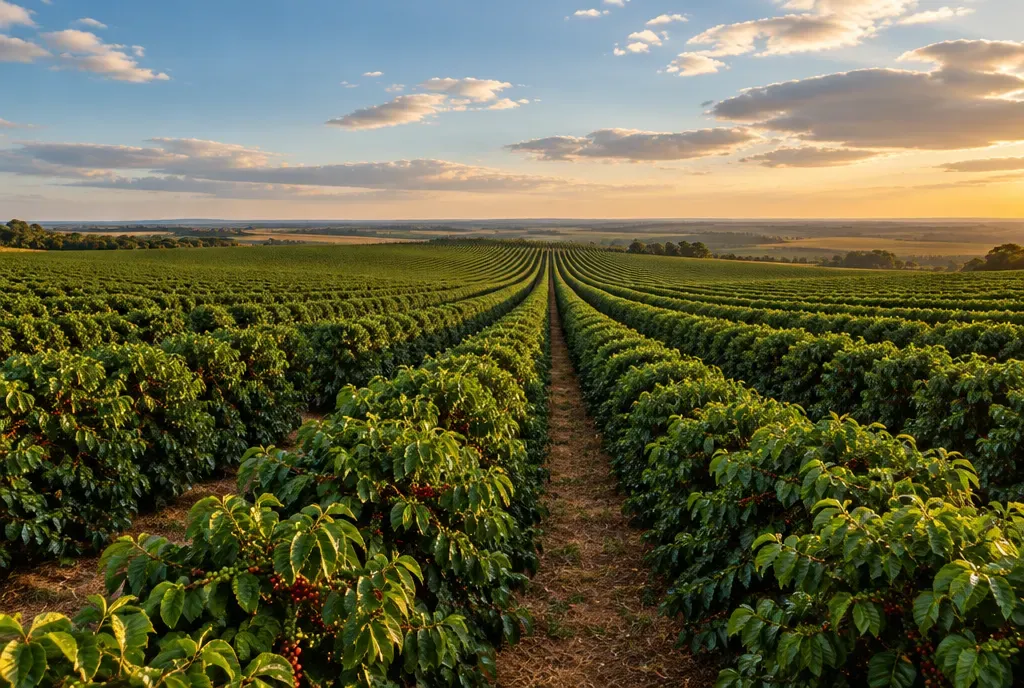
Brazil has been the largest coffee producer on earth since the 1840s, and no other origin comes close. Roughly one cup in three starts here. That scale is not an accident of size: it comes from flat plateaus where a harvester can drive between the rows, from an altitude band that ripens a whole field at once, and from a dry season that arrives exactly when the cherries need to dry.
Five regions, two personalities
The producing belt sits in the south and the centre, and the names on a bag carry real differences:
- Cerrado Mineiro, a flat high plateau with a sharp dry season, gives the most consistent lots in the country and a clean chocolate cup.
- Sul de Minas is hillier and cooler, with more Bourbon and more sweetness.
- Mogiana, on the São Paulo border, is the classic heavy, nutty profile.
- Matas de Minas is the mountain exception, hand picked, brighter, fruitier.
- Bahia splits into irrigated Cerrado lots and the higher Chapada Diamantina.
Why the processing tastes the way it does
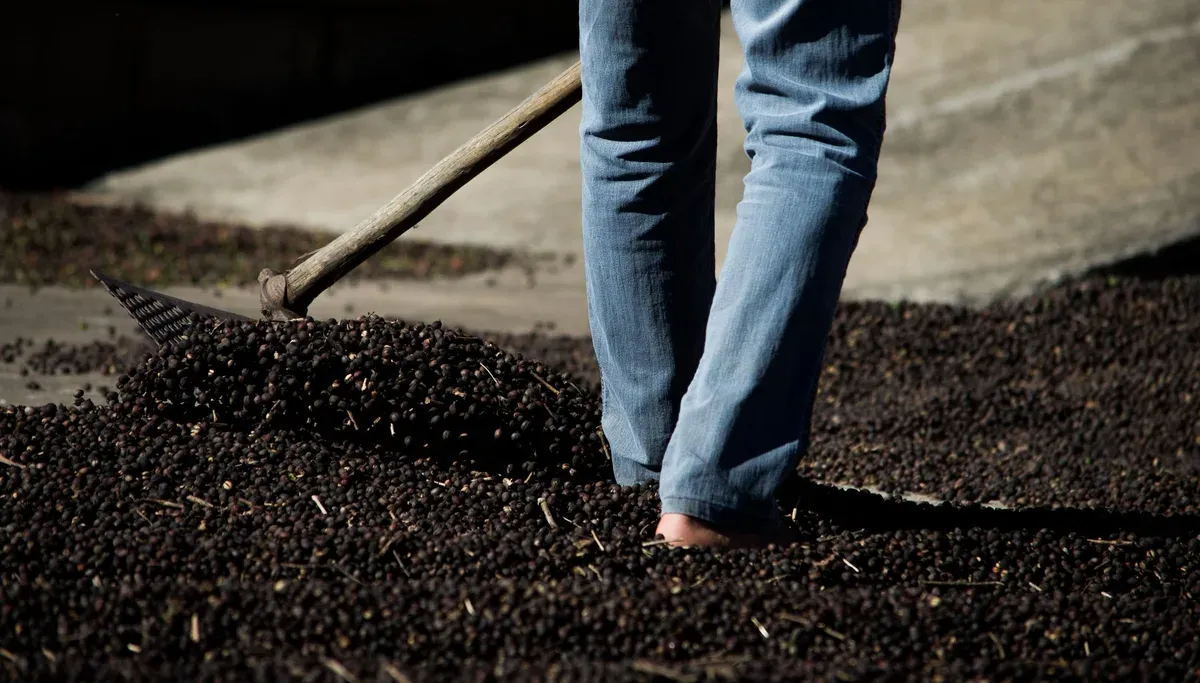
Brazil dries most of its crop as whole cherry on a patio or on raised beds, so the sugars in the fruit stay in contact with the seed. Pulped natural, developed here, removes the skin but leaves the sticky mucilage on. Both routes build body, sugar and nut, and neither leaves much of the sharp acidity that a washed Kenyan keeps.
What the cup does
At its best: milk chocolate, hazelnut, roasted almond, a thick body and an acidity you have to look for. At its worst, and Brazil produces plenty of it, the same profile goes flat, woody and faintly of cardboard. The difference is the drying, not the variety.
Brewing it
Brazil is the reason most espresso blends taste sweet under milk, and a 1:2 ratio at a medium roast is where that shows. As filter, keep the ratio tighter than usual, around 1:15, and the water at 92 °C: push a low acid coffee too hard and it turns to paper. As a single origin it rewards anyone who prefers cocoa to fruit.