Production
From cherry to green bean
Everything that happens before the roaster gets it
A coffee bean is a seed. It sits in pairs inside a small fruit, the cherry, wrapped in a sticky layer of mucilage and a papery husk called parchment. Turning that fruit into a hard, dry, stable green seed that can cross an ocean takes between two weeks and several months, and almost every flavour a roaster can later reveal has been decided during it. Roasting develops what is there. Processing determines what is there.
Picking: ripe, or fast
The first decision is the largest, and it has nothing to do with the processing styles people argue about. Coffee cherries on one branch do not ripen together. Selective picking means going through the same trees repeatedly across a harvest, sometimes six or eight times, taking only the cherries that are fully red or yellow. It is slow, it is expensive, it is done by hand on steep ground, and it is the reason a specialty lot costs what it does.
Strip picking runs a hand down the whole branch and takes everything: ripe, underripe, overripe and dry. Mechanical harvesting on flat terrain does the same thing with a shaker. The result is a mixed lot in which the green cherries contribute harsh, grassy, astringent flavours that no amount of sorting entirely removes, though flotation tanks and optical sorters catch some of it. This is also why the same farm, the same variety and the same altitude can produce completely different coffees for different buyers.
Washed, natural, honey
The processing choice is about one question: how much fruit is on the seed while it dries, and for how long.
In the washed process the skin and pulp are stripped off within hours of picking, and the seeds, still slippery with mucilage, go into tanks to ferment for roughly 12 to 36 hours until that layer breaks down and can be washed away. What dries is a clean parchment-covered seed. The fruit has been removed as a variable, so what you taste is the variety, the soil and the altitude, usually with a clear acidity and a lighter body.
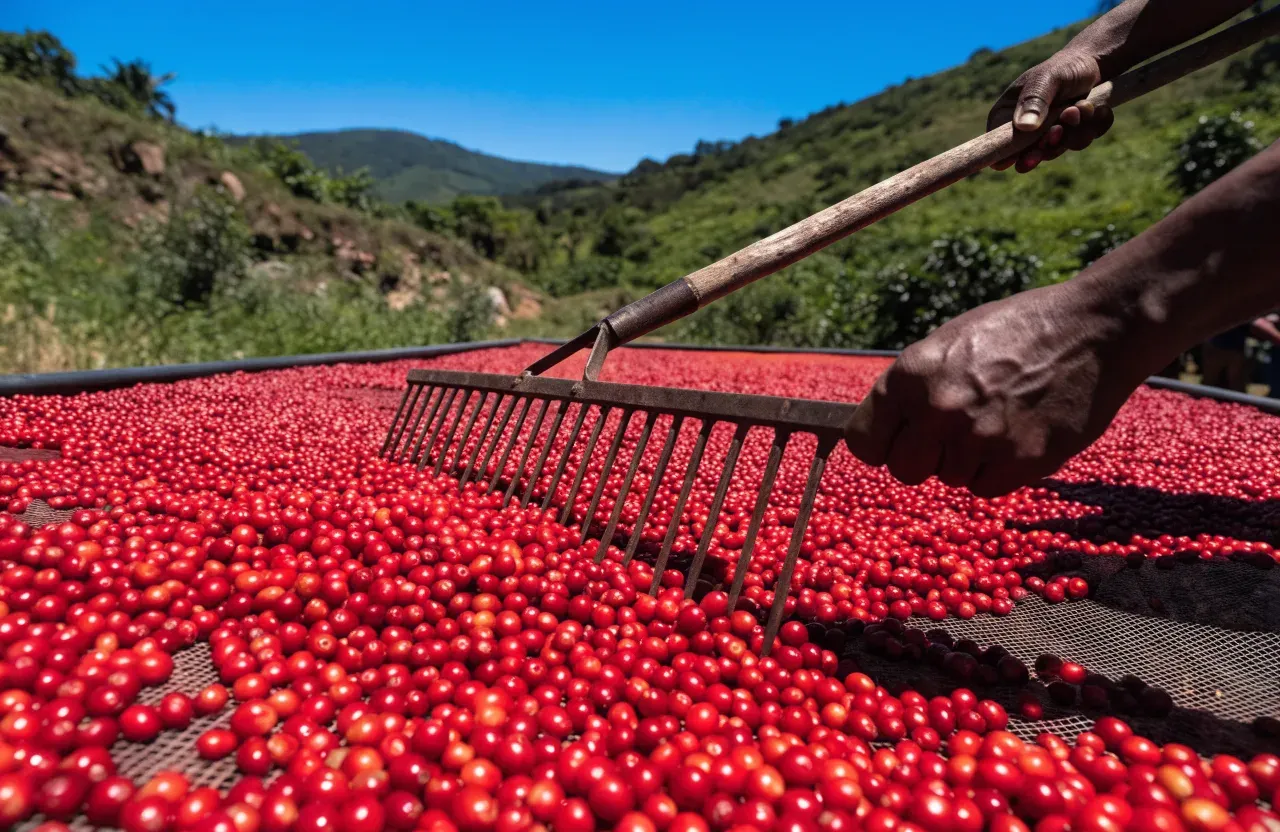
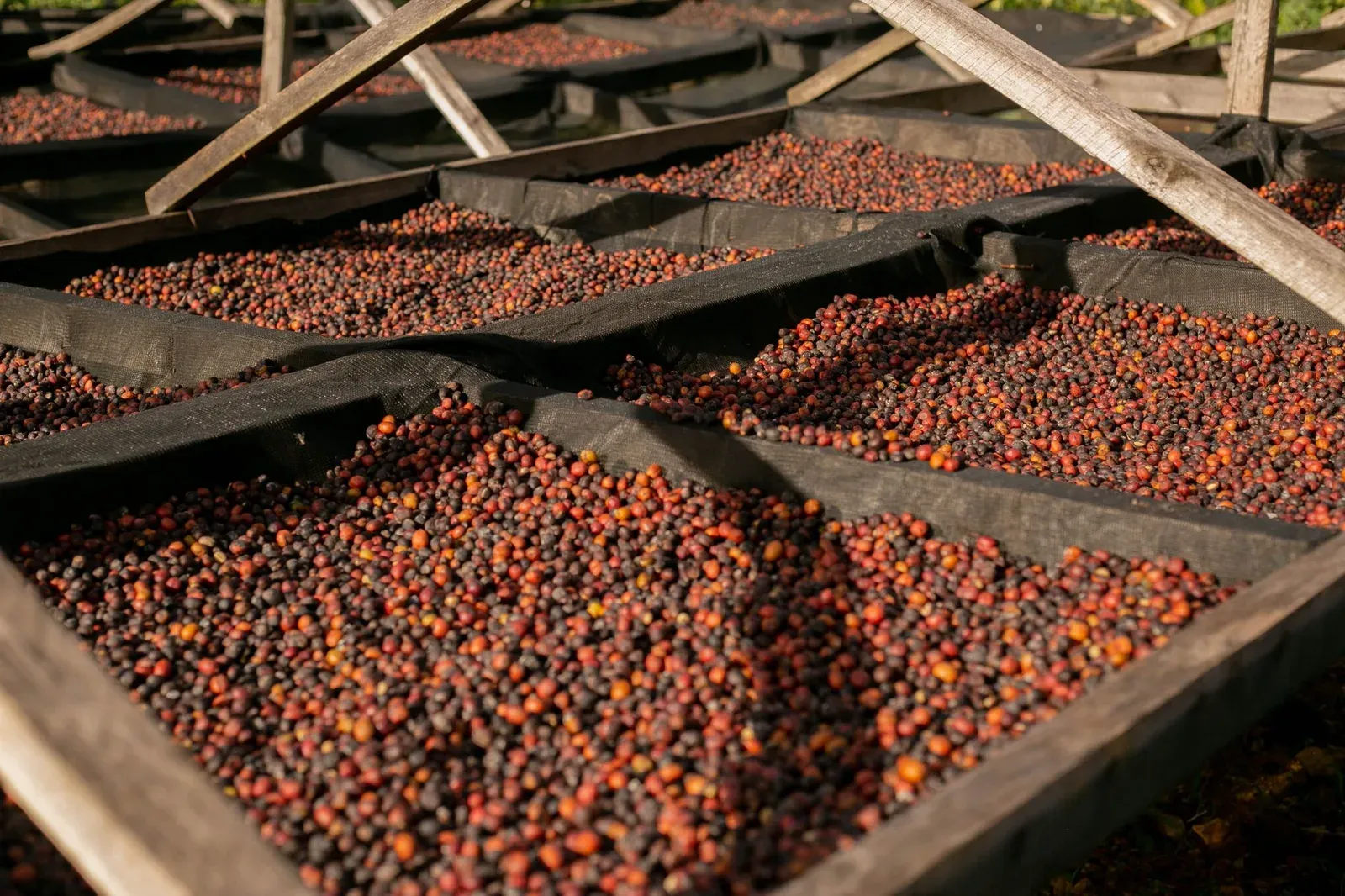
In the natural, or dry, process the whole cherry is laid out to dry intact, for anywhere from two to five weeks. The seed dries inside its own fermenting fruit and takes flavour from it. Done well it gives heavy body, low perceived acidity and pronounced berry and stone fruit character. Done badly it gives ferment, alcohol and mustiness, which is why the method needs constant turning and watchfulness rather than less work.
Honey processing, also called pulped natural, sits between the two. The skin comes off, the mucilage stays on, and the coffee dries sticky. Yellow, red and black honey describe increasing amounts of mucilage and decreasing amounts of sun, and therefore slower drying and more fruit character. The vocabulary is conventional rather than regulated.
| Process | What dries | Typical cup | Main risk |
|---|---|---|---|
| Washed | Parchment seed, fruit removed | Clean, defined acidity, lighter body | Needs a lot of clean water, and flat lots if fermentation is misjudged |
| Natural | Whole cherry | Heavy body, fruit and fermented sweetness, soft acidity | Mould and ferment taints if drying is uneven |
| Honey | Seed with mucilage attached | Between the two, rounded sweetness, medium body | Sticks and clumps on the bed, spoils if not turned |
Drying, resting, milling, grading
Whatever the route, the coffee has to reach a moisture content of roughly 10 to 12 per cent. Below that it becomes brittle and tastes hollow, above it, mould and staling follow in storage. Raised mesh beds give air underneath and allow frequent turning, which is why they have largely replaced patios wherever quality is the aim. Mechanical dryers finish lots in humid regions and in bad weather, and are easy to abuse by hurrying.
The coffee then rests, still in parchment, typically for 30 to 60 days. Moisture equalises through the seed, and harsh unsettled notes settle out. Only shortly before shipping does it go to a dry mill, where hulling removes the parchment, an optional polish takes off the silverskin, and the coffee finally becomes green coffee.
Grading follows, and it is worth knowing what it does and does not measure. Screens sort by size, expressed in sixty-fourths of an inch. Gravity tables and flotation sort by density, which correlates loosely with how slowly the seed grew and how well it filled. Then someone counts defects in a sample, because a single sour, insect-damaged or black bean is detectable in a whole cup. A grade is a description of uniformity and soundness, not a flavour score, which is why an actual cupping sits on top of it in the definition of specialty coffee.
Why any of this reaches your cup
Processing explains a surprising amount of what you taste in a bag whose origin and roast level you already know. Two lots from neighbouring plots, one washed and one natural, will differ more than two washed coffees from different countries. It also explains why the bag tells you: a roaster naming a process is telling you which of those trade-offs was made.
It matters at the machine too. Naturals and honeys carry more sugar and soluble fruit, tend to darken earlier under heat, and behave differently for the roaster reading colour and time. Washed coffees are the easier reference point when you are learning what a country or a species actually tastes like.
Frequently asked
- Is natural processed coffee lower quality than washed?
- No, though it used to be a fair generalisation. Natural processing was historically what you did where water was scarce, and careless drying gives ferment and mould taints. Carefully managed, on raised beds with frequent turning, it produces some of the most sought-after lots in the market. The risk of it going wrong is genuinely higher.
- What does honey processed mean?
- The skin is removed but some or all of the sticky mucilage is left on the seed during drying. Yellow, red and black honey describe roughly how much is left and how much shade the drying bed gets, with black being the slowest and the most fruit-forward. The terms are descriptive conventions, not a certified scale.
- Why is coffee rested in parchment before milling?
- Freshly dried coffee has uneven moisture through the seed and tends to taste harsh and unsettled. Thirty to sixty days in its parchment layer lets the moisture equalise and the flavour settle, and the parchment protects the seed in storage. Hulling is usually left until shortly before shipping for the same reason.
Related reading
The Ethiopian coffee ceremony, from green bean to third cup
Green beans roasted in a pan, pounded by hand, boiled in a clay jebena and poured three times. How buna is made, and why it takes an hour.
Cupping at home
The protocol professionals use to taste coffee, stripped to what works on a kitchen table, and what it is actually good for.
How much caffeine is in your cup
A double espresso holds less caffeine than a mug of filter, and roast level barely matters. The numbers, and where the intuitions go wrong.