Origins
Kenya
Double-washed processing, SL varieties, and the blackcurrant acidity nothing else reproduces.
- Blackcurrant
- tomato
- grapefruit
- dense
| Regions | Nyeri, Kirinyaga, Embu, Murang'a, Kiambu |
|---|---|
| Altitude | 1400–2000 m |
| Harvest | October–December |
| Processes | Washed (double soak) |
| Varieties | SL28, SL34, Ruiru 11, Batian |
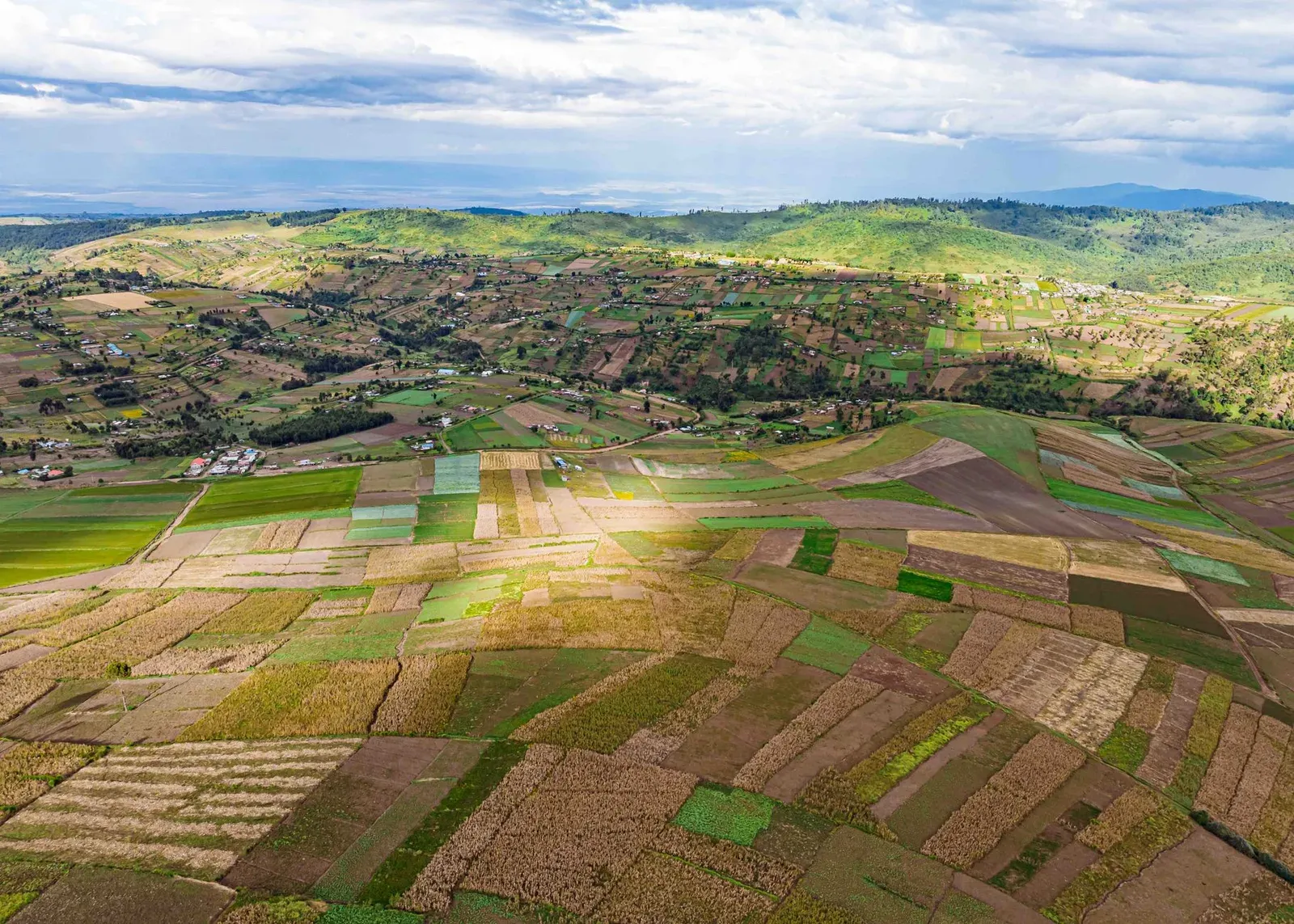
Experienced tasters identify Kenyan coffee blind, which is not something you can say about many origins. The reason is a stack of decisions that happen to compound: two varieties bred for the place, volcanic soil on the slopes of Mount Kenya and the Aberdares, and a processing protocol nobody else bothered to copy.
SL28 and SL34
Scott Laboratories selected both in the 1930s, SL28 for drought tolerance and SL34 for higher rainfall. Neither is disease resistant, both yield modestly, and both taste extraordinary. Ruiru 11 and Batian came later to fight leaf rust and berry disease, and while Batian is closing the gap, the old SLs are still what a good Kenyan lot is made of.
The double soak
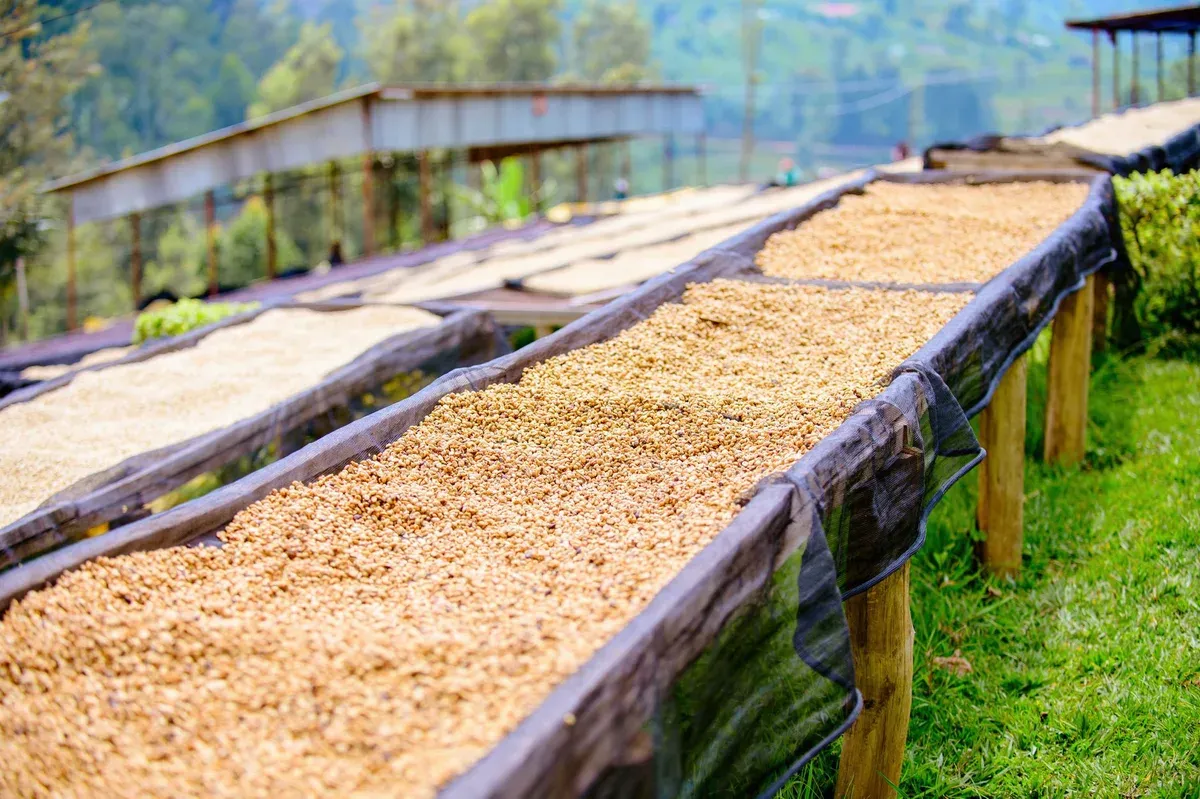
After pulping, the parchment ferments, is washed, then soaks again in clean water for a further twelve to twenty-four hours. That second soak is expensive in water and time, and it is what gives Kenyan coffee its glassy clarity and its blackcurrant. The factories, run by smallholder cooperatives, compete on it.
Grades, and what they are not
AA, AB, PB and C describe screen size. A bigger bean is not a better bean, and plenty of AB lots outcup the AA from the same factory. What the grade does affect is roasting: mix sizes in one batch and they develop unevenly, which is why they are sold separately in the first place.
What the cup does
Blackcurrant, grapefruit, tomato, sometimes a savoury edge that reads as tamarind. The acidity is high, structured and occasionally aggressive, and the body is denser than the brightness suggests.
Brewing it
Light roast, filter, 1:16 at 94 °C, and grind a touch finer than you would for an Ethiopian: the density is real. It punishes hard water, which flattens the acidity into something sour and metallic. As espresso it works at a longer ratio around 1:2.5, and it takes milk better than most people expect.