Origins
Papua New Guinea
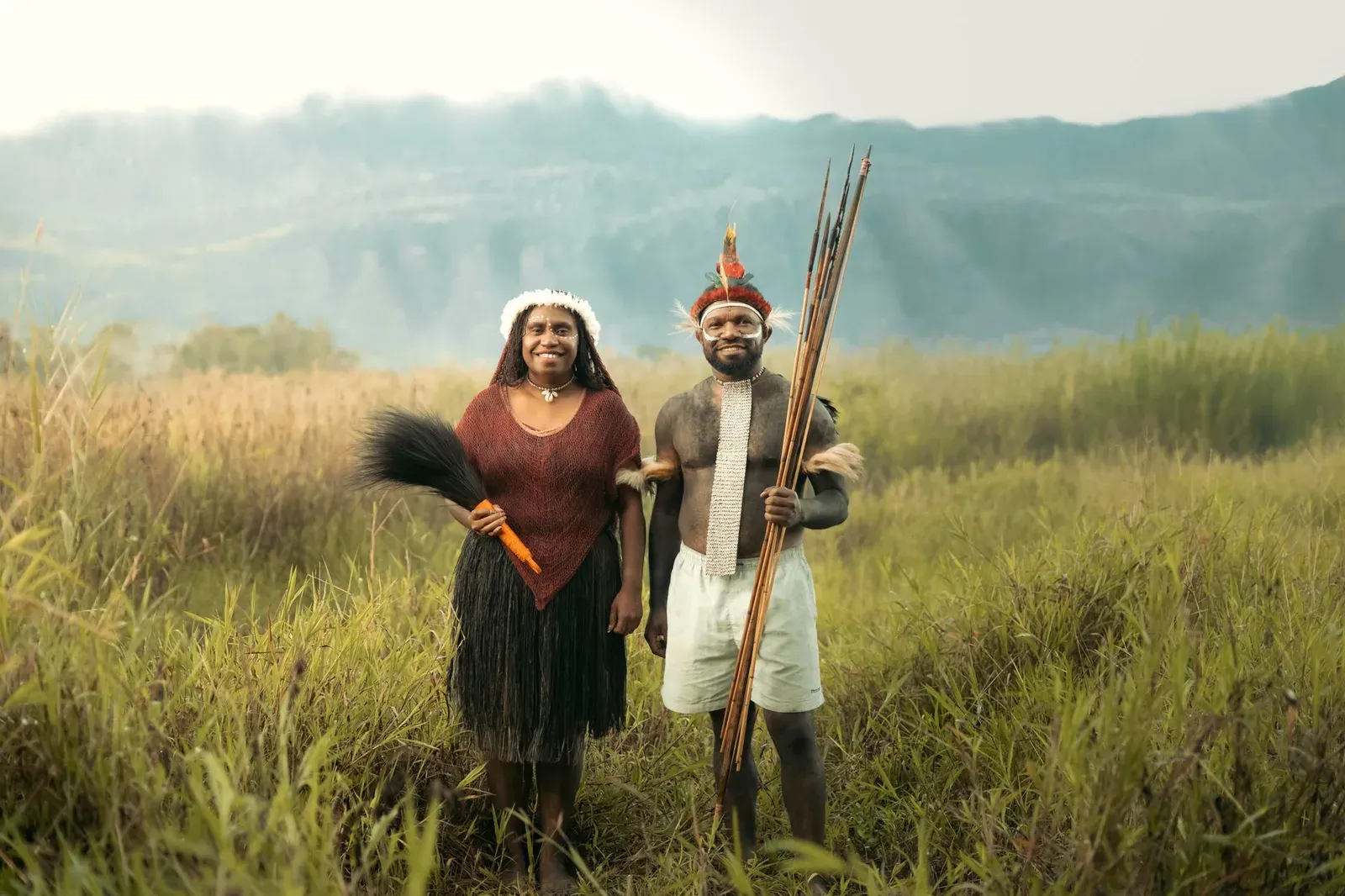
Garden-grown Typica in the highlands, sold in small lots, and one of the last places old varieties survived.
- Tropical fruit
- brown sugar
- herbs
- syrupy
| Regions | Eastern Highlands, Western Highlands, Simbu, Jiwaka, Morobe |
|---|---|
| Altitude | 1300–1900 m |
| Harvest | April–September |
| Processes | Washed, Natural |
| Varieties | Typica (Blue Mountain lineage), Arusha, Bourbon |
Coffee in Papua New Guinea is a garden crop. Around 85 percent of production comes from families growing a few dozen to a few hundred trees beside the food garden, pulping the cherry at home with a hand crank, fermenting it overnight in a bucket and drying it on a tarpaulin. The result is traceable in an unusual way: to a village and a clan rather than to an estate.
Blue Mountain, replanted
Seed was brought from Jamaica in the 1920s, which means the Typica growing in the highlands descends from the Blue Mountain line. It is a low yielding, disease prone, old fashioned variety that most origins replaced decades ago, and it is a large part of why the cup tastes the way it does: syrupy, tropical, with a soft acidity and a sweetness that does not need to shout.
The logistics problem
The highlands are steep, the roads are bad and the rain is constant. Parchment that sits wet on a truck for two days arrives with mould, and a village lot that cupped beautifully can be worthless by the time it reaches Lae. Everything good that has happened in PNG coffee over the last twenty years, the cooperatives, the mobile pulpers, the local mills, has been an answer to that single problem rather than to anything agronomic.
The plantation minority
A handful of colonial-era plantations still operate, mostly in the Western Highlands, and they can process to a standard a garden plot cannot. Their lots are the most consistent coffee the country makes, and they are also the smaller half of the story.
What the cup does
Papaya and pineapple, brown sugar, a green herbal note, and a body that coats. It sits closer to an Indonesian coffee than to a Latin American one, but with more fruit and far more clarity than a wet-hulled Sumatra.
Brewing it
Medium roast. Filter at 1:16 and 93 °C, medium grind, and let it cool a little before judging it: the tropical fruit arrives as the cup drops below 60 °C. It makes a heavy, sweet espresso at 1:2 and is an underrated blend component when you want body without the earthiness of a Sumatra.