Origins
Rwanda
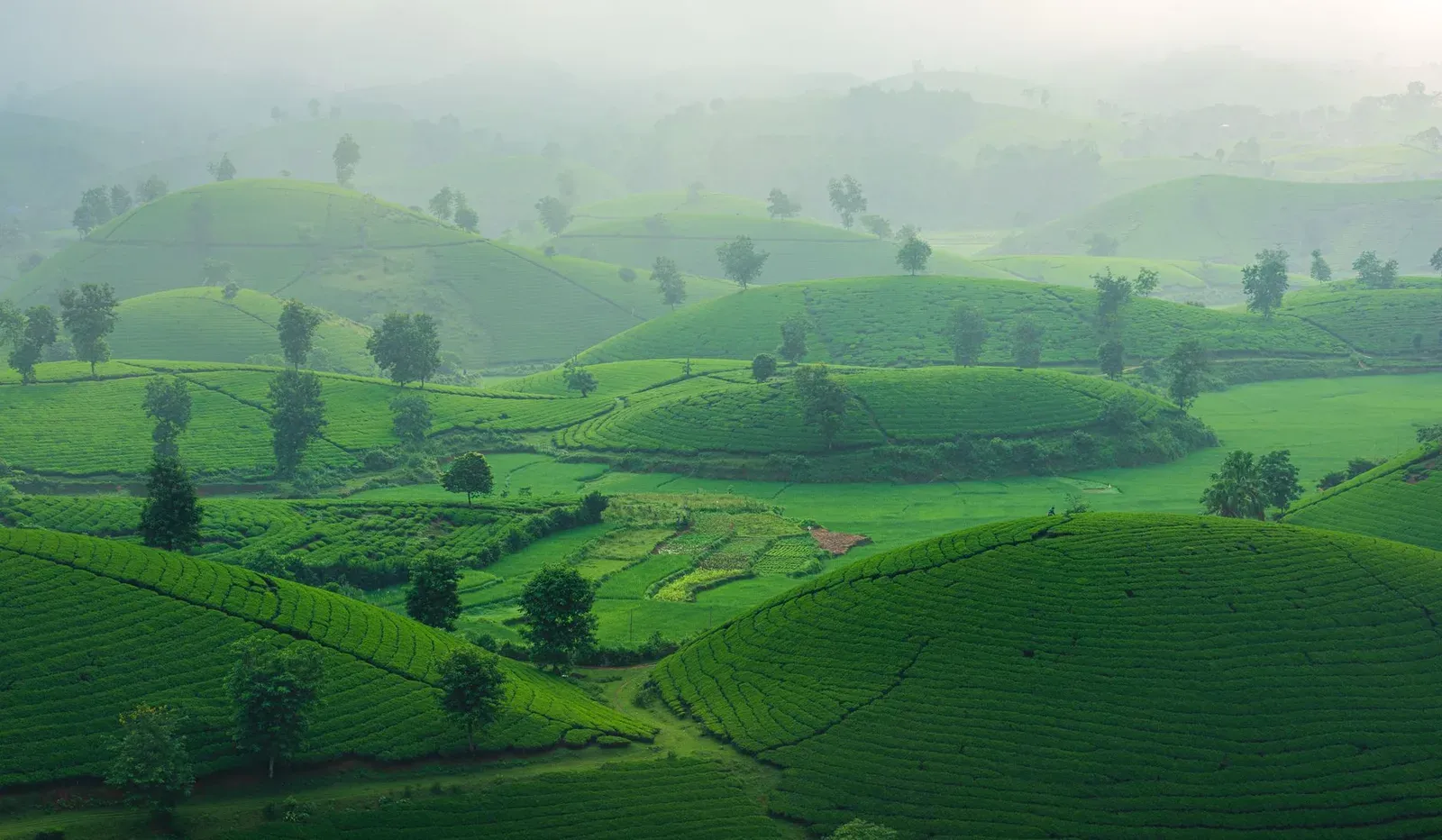
Bourbon grown on a thousand hills, washed at cooperative stations, and a floral, tea-like cup that rewards a gentle filter recipe.
- Orange blossom
- red apple
- black tea
- silky
| Regions | Nyamasheke, Huye, Gakenke, Rulindo, Lake Kivu |
|---|---|
| Altitude | 1500–2200 m |
| Harvest | March–July |
| Processes | Washed, Natural, Honey |
| Varieties | Red Bourbon, Jackson, Mibirizi |
Rwanda grows almost nothing but Bourbon, on hillsides between 1,500 and 2,200 metres, and processes it at washing stations that serve hundreds of smallholders each. That combination, one variety and centralised processing, makes the country unusually consistent from lot to lot.
The washing station is the producer
Almost no Rwandan farmer processes their own coffee. Cherry is carried, often on foot, to a cooperative station that pulps, ferments and dries it. So a Rwandan lot is named after the station rather than a farm, and the quality of that station’s fermentation and drying is most of what you taste.
The best stations ferment for 12 to 18 hours, soak the parchment in clean water afterwards, and dry it slowly on raised beds for two to three weeks.
What the cup does
Expect a lighter body than a Kenyan and more perfume than a Burundian: orange blossom, red apple, black tea, and a clean, silky finish. The acidity is present but rounded rather than sharp.
Rwanda is also where the potato defect appears, a bacterial fault that makes one bean in a batch taste of raw potato. It is a defect of a minority of lots, it is harmless, and the only cure at the roaster’s end is sorting.
Brewing it
This is filter coffee. A V60 at 1:16, water at 93 °C, a 45 second bloom and a total brew of three minutes leaves the florals intact. As espresso it needs a long ratio, 1:2.5 or beyond, or the acidity arrives before the sugars do.
Buying
Look for a named washing station, a harvest year and a roast date within the month. Rwandan coffee peaks about four to eight weeks after harvest arrives in Europe, which usually means buying between September and February.