Espresso
Americano
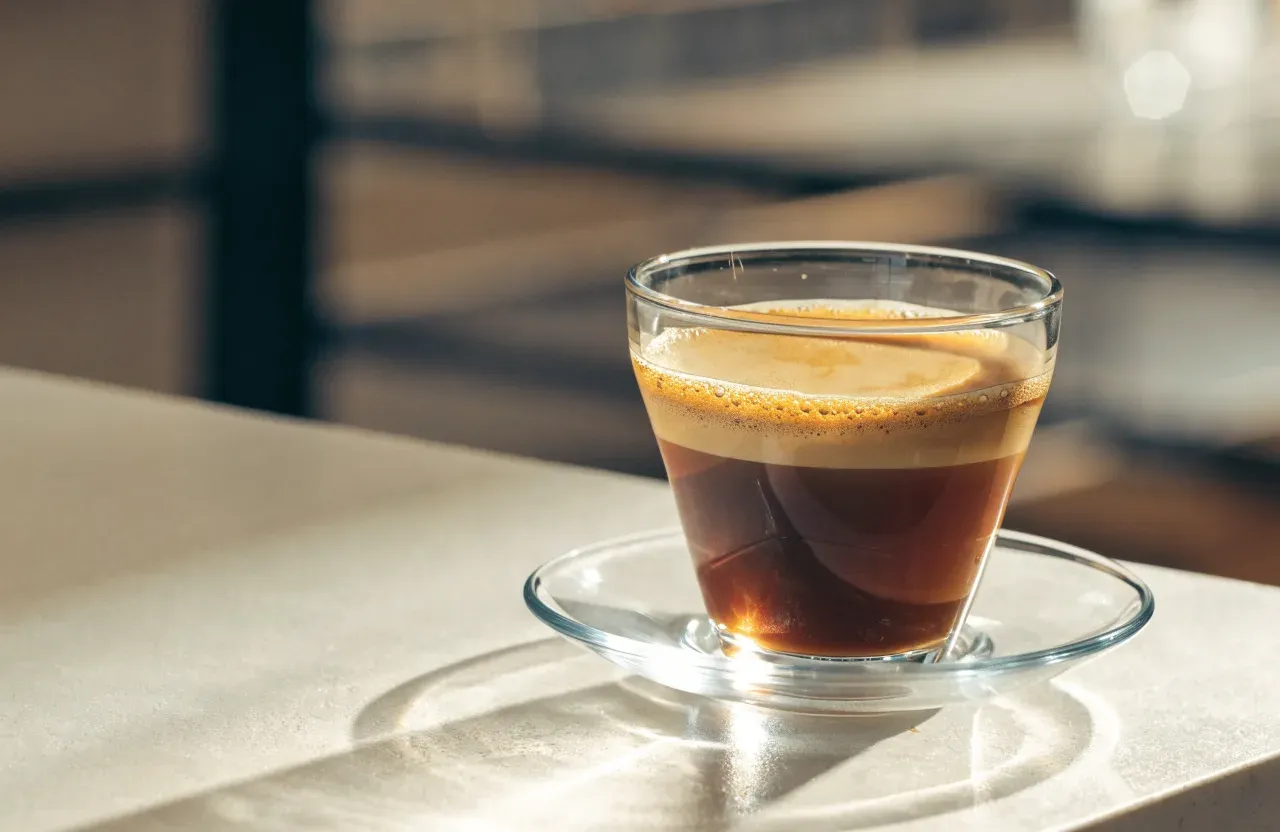
A double espresso lengthened with hot water. The order you pour in decides whether the crema survives, and the water temperature decides whether it tastes flat.
At a glance
- Total
- 3 min
- Difficulty
- Easy
- Yield
- 1 cup
- Ratio
- 1:2
- Dose
- 18 g
- In cup
- 36 g
In the cup
- Crema8%
- Hot water62%
- Espresso30%
Equipment
- Espresso machine
- Kettle or hot water tap
- Cup, 180–220 ml
- Scales
- Thermometer, optional
Ingredients
- Coffee, medium roast
- 18 g
- Hot water, off the boil
- 120 ml
Method
Heat the cup with hot water and tip it out. A 200 ml ceramic cup takes several degrees off the drink otherwise.
20sDraw 120 ml of water and let it sit until it is around 90 °C. Straight off the boil it scalds the crema the moment the shot lands.
45sPour the water into the warmed cup first. This is the whole trick: the espresso goes in last.
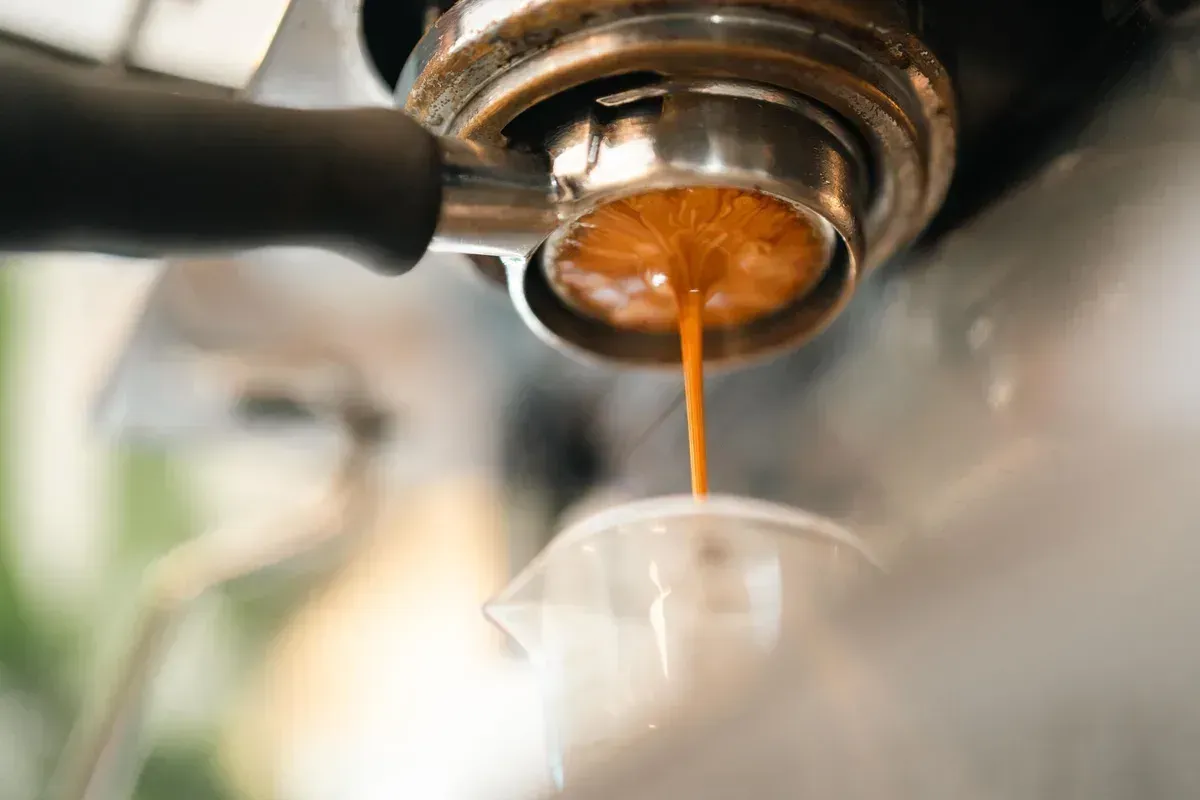
Pull a double espresso, 18 g in to 36 g out, in 25–30 seconds, straight into the water.
30sServe without stirring. The crema settles into a thin ring on its own, and a spoon through it collapses the foam you just protected.
Espresso into water, not water onto espresso
The americano has two ingredients and one technique, and the technique is the order. Put the hot water in the cup first and pour the espresso through it, and the crema floats up and reforms on the surface as a thin tan layer. Pour the water on top of a finished shot and the stream punches straight through that layer, folds it into the body of the drink, and what is left looks like black filter coffee.
That matters for more than appearance. Crema is a foam of carbon dioxide held in a film of coffee oils and soluble fibre, and it carries a lot of the drink’s aroma. Break it and the aromatics leave in the first minute, on the steam, which is exactly when nobody is drinking yet. The drink that survives to the table has noticeably less smell and reads as flatter on the palate, even though the same 36 grams of coffee are in the cup. Building the drink in the right order costs nothing and keeps that.
Water off the boil, not boiling water
Boiling water is too hot for coffee that has already been extracted. There is nothing left to dissolve, so the heat can only degrade what is there: it drives off the volatile aromatics and it destabilises the crema on contact. Around 90 °C is a sensible target, which for a kettle means waiting thirty to forty seconds after it clicks off, or a minute in a cold kitchen. If you already own a thermometer for milk, use it here for a week and you will stop needing it.
The machine’s own hot water tap deserves suspicion. On most heat exchangers and dual boilers it is fed from the steam boiler, which sits well above 100 °C under pressure, and some designs inject a little live steam as they dispense. The water that lands in your cup can be hotter than anything a kettle produces. Draw it into a jug, let it stand, and pour from there. It is also worth remembering that the water is now most of the drink by volume, so whatever is dissolved in it is tasted directly. If your tap water is heavily chlorinated or very hard, this is the drink where you notice. Water is the ingredient nobody tests covers what to do about that.
The long black, and what an americano is not
A long black is the same drink assembled the same way round, usually with less water: roughly 60 to 90 ml under a double shot rather than 120. Because the ratio is tighter and the pour is the same order, the crema layer is thicker and the drink tastes closer to espresso. If an americano reads as watery to you, a long black is not a different recipe to learn. It is this one with the water reduced.
What an americano is not is a lungo. This is worth saying plainly, because menus blur the two. A lungo is an extraction change: you run 50 or 60 grams of water through the same 18 grams of coffee, so the bed gives up compounds it would not have given up at 36 grams, and most of those late arrivals are bitter and dry. An americano leaves the brew ratio exactly where it was and adds clean water afterwards. Same extraction, lower concentration. That is why an americano made from a good shot tastes like a good shot, only longer, and a lungo made from the same coffee tastes like a different, harsher drink.
Questions about this recipe
- Is an americano the same as a lungo?
- No, and the difference is where the water goes. A lungo runs more water through the coffee bed, so the extraction itself changes and the extra yield carries the bitter, papery compounds that come out late. An americano pulls a normal 1:2 shot and dilutes it afterwards with water that never touched the grounds. The extraction is identical to an espresso; only the strength in the cup is lower.
- How much water should I add?
- Start at 120 ml to a 36 g double, which is roughly one part espresso to three parts water, then adjust to the cup you are using rather than to a rule. More water lowers strength without changing flavour balance, so if the drink tastes thin as well as weak, the shot underneath it is the problem.
- Can I use the hot water tap on my espresso machine?
- You can, but check it first. Many machines draw that water from the steam boiler at 95 °C or above, and some blend it with a jet of steam, so it arrives hotter than a kettle ever gets. Water that hot scorches the crema and brings out a dry, ashy note. Drawing it into a jug and letting it stand for half a minute is usually enough.