Ratio
Brew ratio, explained
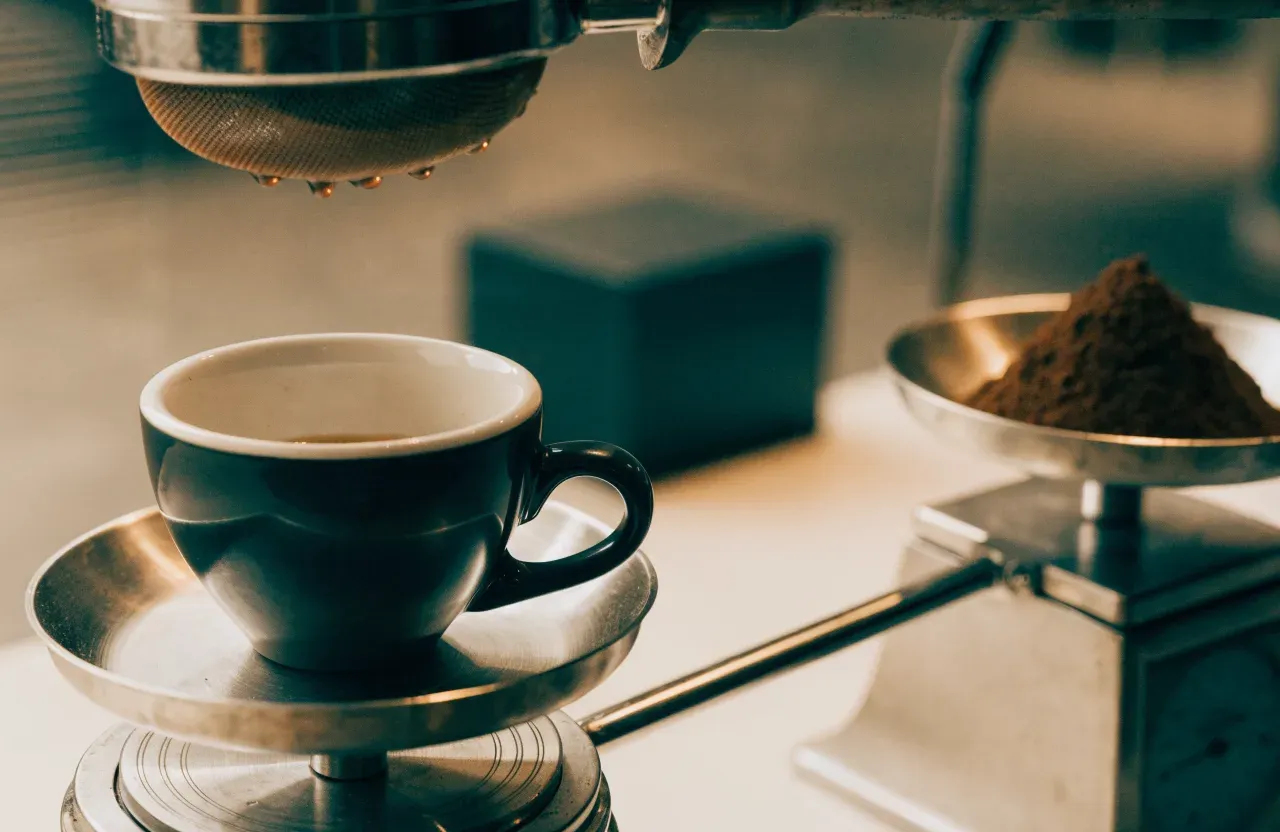
Dose in, liquid out, both in grams
A brew ratio is one number described by two: how much dry coffee went into the basket, and how much liquid espresso came out of it. Both are weighed in grams. Write the dose as 1 and scale the yield against it, and you get the familiar shorthand. Eighteen grams of coffee giving thirty-six grams in the cup is 1:2. The same eighteen grams giving twenty-seven grams is 1:1.5. Giving forty-five, it is 1:2.5.
That is genuinely all the arithmetic there is, and almost every espresso recipe you will ever read is a ratio plus a time. The reason the ratio is written first is that it is the part that holds. Time is an outcome: it tells you whether your grind matches your ratio, and it drifts as beans age, as the room changes temperature and as the burrs wear. The ratio is a decision you make about the drink.
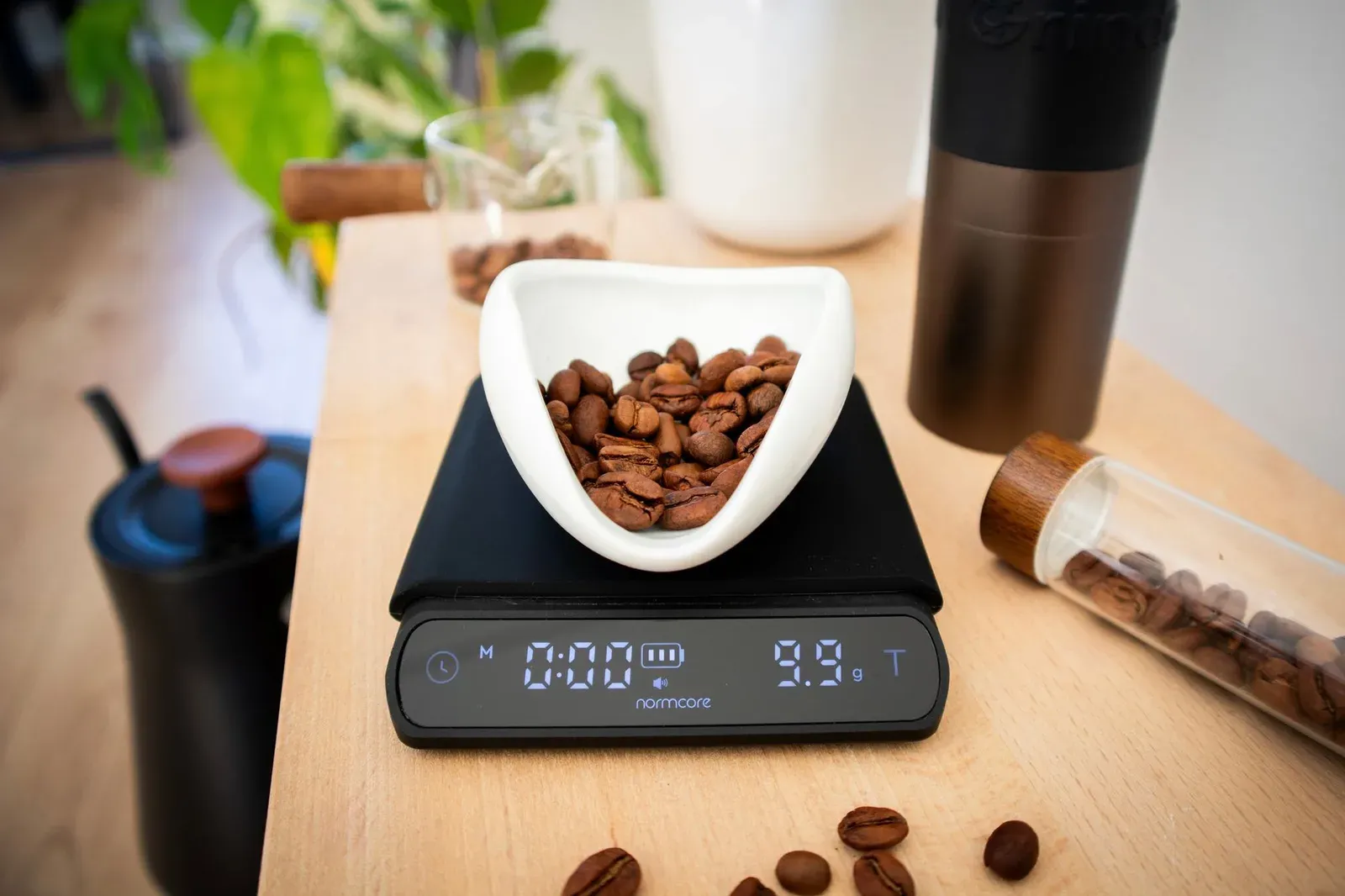
Two practical points follow. Weigh the yield rather than filling to a line on the cup, because crema is gas and its volume varies with how recently the coffee was roasted. And keep the dose fixed while you learn a coffee. A moving dose and a moving yield give you a ratio that technically stays the same while every other property of the shot changes.
What changes as you go shorter or longer
Shorten the ratio and you are asking for less water through the same bed. Less water dissolves less coffee in total, and it dissolves it into a smaller volume, so the cup arrives more concentrated and less complete. The texture thickens, the sweetness comes forward, and the acidity gets sharper and shorter. Push it far enough and the shot turns hollow: there is plenty of intensity but the back half of the flavour never arrives, because the water left before it had dissolved what makes it.
Lengthen the ratio and the reverse happens. More water keeps dissolving, reaching the sugars and the browning compounds that need time and volume, and the cup gets sweeter and rounder while getting thinner. Push that too far and you cross into the dry, drying, papery territory of over-extraction, where what the water is now pulling out is the part you would rather leave behind.
Roast level moves where the sweet spot sits. Darker roasts are already soluble and give up their material early, so they usually want a shorter ratio before they turn harsh. Lighter roasts hold on to theirs and often want a longer one to taste complete at all, which is why so many specialty bars pull at 1:2.5 or beyond.
Strength and extraction are different things
This is the distinction that makes the rest of it make sense, and it is the one most often collapsed into a single word.
Extraction is how much of the coffee you dissolved, expressed as a percentage of the dry weight. A shot that extracted 18% took less of the bean than one that extracted 22%. It is a property of the coffee that left the puck.
Strength is how concentrated the liquid is: how much dissolved material there is per millilitre in the cup. It is what people mean by strong, and it is measured as TDS.
The two move independently, which is exactly why they need separate words. A ristretto is strong and under-extracted at the same time: a small amount of water, heavily loaded, that never reached the far half of the coffee. A long filter brew is weak and well extracted: plenty of water, thinly loaded, that reached almost everything. Ratio is the main dial for strength. Grind, time and temperature are the main dials for extraction. When someone says a shot is too strong, ask whether they mean intense or over-extracted, because the fixes point in opposite directions.
The ratios that name the drinks
The Italian vocabulary that sits over all this is simply a set of ratio bands, and the names are older and looser than the numbers people now attach to them.
| Name | Typical ratio | What it does to the cup |
|---|---|---|
| Ristretto | 1:1 to 1:1.5 | Thick, sweet, short. Intense but incomplete |
| Normale | 1:2 | The modern default. Balanced strength and extraction |
| Lungo | 1:3 to 1:4 | Thin, sweeter, more extracted. Can turn bitter |
| Americano | 1:2, then hot water | Espresso strength diluted after the fact |
The last row is there to make a point. An americano and a lungo end up at similar volumes and taste nothing alike, because diluting a finished shot changes strength without touching extraction, while pulling a longer shot changes both. The water you add afterwards never goes through the coffee.
Ristretto is worth understanding properly rather than treating as a small espresso, and the ristretto base explained covers why it works so well under milk. That is also where ratios stop being an abstraction: a flat white is defined by a short, concentrated base holding its own against a small volume of milk, and the flat white recipe gives the dose and the yield to hit rather than a button to press.
Choosing one and staying there
Start at 1:2 with a dose that fills your basket properly, adjust the grind until the shot takes roughly 25-30 seconds, and drink it. If it tastes hollow and sharp, go longer before you go finer. If it tastes thin and washed out, go shorter. Move in steps of about 0.25 on the ratio, which is four or five grams of yield on a normal dose, and change nothing else that shot. One number at a time is slower for an afternoon and faster for a month.
Frequently asked
- Should I measure yield in grams or millilitres?
- Grams. Espresso carries a variable head of crema, so the volume in the cup depends on how much gas is in the coffee, which changes with roast date. Weight does not. A cheap set of scales under the cup is the single most useful upgrade most home setups can make.
- Does a longer ratio always taste weaker?
- Weaker, yes, in the sense of less dissolved material per millilitre. Not necessarily worse. A longer ratio also extracts more of the coffee, which is why light roasts often taste sweeter and more complete at 1:2.5 or 1:3 than at 1:2, even though the cup is thinner.
- Does the ratio change what grind I need?
- Yes, and this is the most common way people confuse themselves. Pulling a longer shot at the same grind takes more time and extracts more. If you want to isolate the ratio, you have to adjust the grind to hold the contact time roughly steady, and change only one of the two per shot.
Related reading
Volumetric, paddle or button
How a bar machine decides when to stop a shot, why volumetric dosing drifts, and what a paddle gives back to the person holding it.
Resting coffee: why a fresh roast is not ready yet
Roasted coffee is full of carbon dioxide for days. How long to rest beans for filter and for espresso, and what a bag that is too fresh does to the cup.
Dialling in a new bag
A repeatable routine for the first four shots from a new coffee: what to fix, what to change, and how to know when you are done.