First look
AeroPress Original: first look
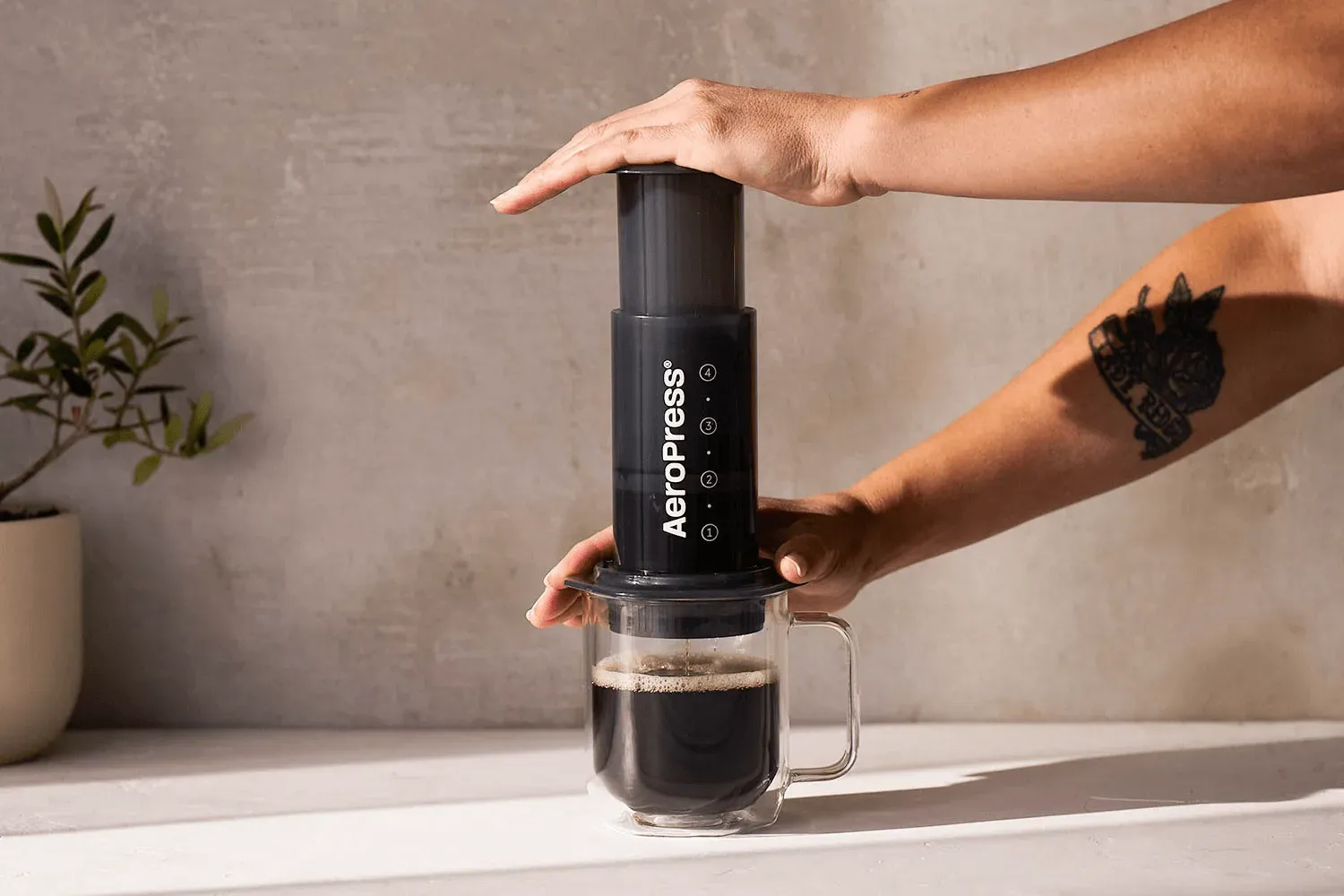
Not tested yet This is a presentation built from the manufacturer’s specification and how the product is meant to be used. We have not had it on the bench, so there is no score.
For one person who brews one mug at a time and wants a forgiving, portable brewer; a household that wants a carafe should start elsewhere.
What it promises
- Immersion with a plunger: the brew ends when you press, not when the bed drains
- Polypropylene, BPA free and about 220 g with scoop and stirrer, so it travels
- A paper micro-filter in the cap gives a clean cup with no grit
- The silicone seal, the one part that wears, comes off and is sold separately
What to weigh first
- Ten ounces at most: one mug per press, or a concentrate to dilute
- Uses a paper filter every brew unless you buy the stainless one separately
- The popular inverted method is one the maker strongly discourages
What it is
The AeroPress Original is a plastic chamber, a plunger with a silicone seal on its end, and a screw-on cap that holds a small round paper filter. Coffee and water go into the chamber and steep, then the plunger pushes the liquid through the paper into the mug underneath. AeroPress lists it at $39.95, with a 10 oz chamber (about 295 ml), a polypropylene body and a weight of 7.75 oz, about 220 g, including the scoop and stirrer that come with it.
It is also the product the company is named after. Alan Adler introduced it at Coffee Fest Seattle in November 2005, and the shape has barely moved since. The plastic has changed: the maker dropped polycarbonate in 2009 over concerns about BPA, and the Original has been made of polypropylene since 2014.
How the design works
The AeroPress method page covers the technique. For a buying decision, what matters is the principle. In a filter cone, gravity decides when the brew ends, and the grind decides how fast gravity works. In an AeroPress the water sits on the coffee until you press, so contact time is a number you choose. That is why it forgives a grind that is slightly off, and why it copes with a modest grinder or pre-ground coffee better than a V60 does.
The paper does the rest. It holds back the fines and most of the oil, so the cup is cleaner and lighter in body than a French press, while the immersion keeps it rounder than most pour-overs. AeroPress sells the idea as part French press, part pour-over, part espresso. The first two hold up. The third does not: a hand on a plunger produces a small fraction of the pressure an espresso machine works at, and what comes out of a short, strong brew is a concentrate, not espresso with crema. It makes a good base for a milk drink, and that is the fair way to describe it.
Ten ounces, one mug
The 10 oz figure describes the chamber, not the cup. The maker’s own answer is that the Original brews one 10 oz serving, or up to three shots of concentrate if you prefer to dilute. In practice that means one mug per press. Brewing for two means a concentrate and a kettle, or pressing twice.
This is the main thing to weigh before buying. AeroPress sells the Original XL at $79.95, with a 20 oz chamber and a carafe, rated for two to four cups. For a household that wants coffee for more than one person every morning, that or a pour-over cone is the better place to start.
The cap takes the standard-size paper filter, so you will need a supply. The company also sells a stainless steel filter as an accessory. It removes the consumable and lets more oil and fines through, which moves the cup toward a French press.
Built to travel
Polypropylene is why this is the brewer people pack. AeroPress describes it as shatterproof and gives a travelling weight of 6.5 oz, about 185 g, for the chamber, plunger, cap and filters, leaving the scoop and stirrer at home. Pressed together, the two main parts measure 5.25 by 4.2 inches, about 13 by 11 cm.
Check your mugs. The Original presses onto a mug with a top inner diameter between 67 and 95 mm, and the maker warns against pressing into a thin-walled glass. The wear part is the seal on the plunger: AeroPress sells it on its own and suggests storing the press with the plunger pushed all the way through, so the seal is not left compressed. It is dishwasher safe on the top rack, though a rinse is usually enough because the plunger wipes the chamber on its way down. The warranty is one year.
The inverted method
A popular variation builds the press upside down, fills it, and flips it onto the mug before pressing, so nothing drips through during the steep. The maker’s FAQ strongly discourages it: an inverted press full of hot water is less stable and can tip. The standard way gives a few drips and a very similar cup, and our standard recipe is written for it.
Who it suits, and who it does not
It suits one person who brews one mug at a time and wants something hard to get wrong: a first brewer, an office brewer, or the one that goes in a bag. It suits someone without a good grinder better than a V60 does, and someone who likes to experiment, because dose, grind, steep time and filter all change without buying anything else.
It does not suit anyone who wants a carafe for the table, anyone hoping for espresso without a machine, or anyone who would rather not buy filters. Within the range, the Clear costs $49.95 for the same size in Tritan, a transparent plastic, so the extra money buys a view of the brew rather than a different cup. Outside it, a moka pot makes a stronger, heavier coffee for a similar price and needs no paper. The trade is less control, a stove, and the bitterness that comes with getting the heat wrong.