Automatic machines
Automatic dosing against doing it yourself
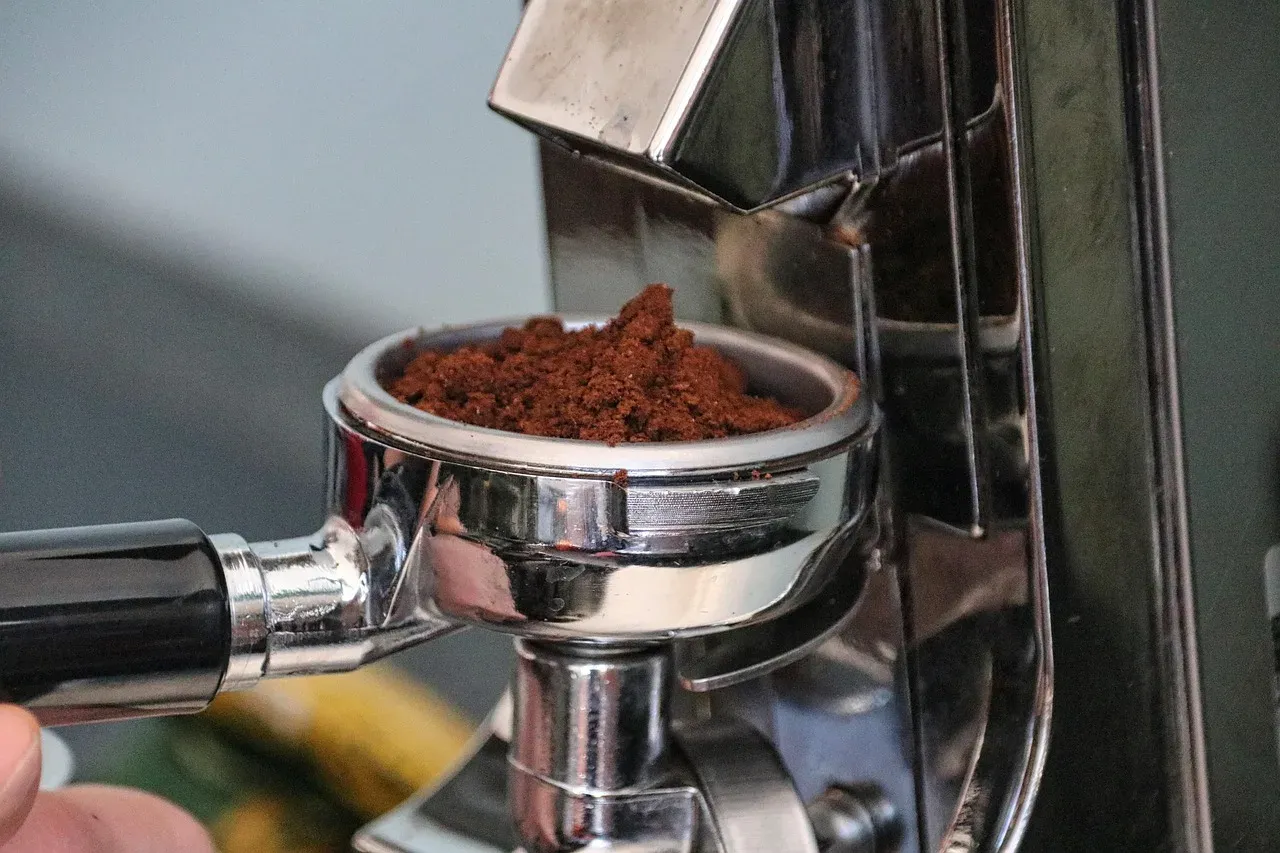
Three ways to get 18 grams
By time. The grinder runs for a set number of seconds. Most bean to cup machines and most affordable electric grinders work this way.
By weight. A load cell under the grinder or the cup stops the burrs at a target mass.
By hand. You put the portafilter on a scale, grind, and adjust.
What drifts, in each case
Timed dosing drifts constantly, and the causes are all normal.
- A fresh bag of a denser bean delivers more grams per second.
- A darker roast is lighter per bean and less dense in the chute.
- Oily beans slow the flow. Very fresh beans sometimes speed it up.
- A hopper that is nearly empty feeds the burrs less consistently than a full one, which is why the last three doses in a hopper are often light.
- A finer setting slows everything, so re-dialling the grind moves the dose too.
None of that is a fault. A timed grinder is repeating a duration, faithfully.
Grind by weight removes almost all of that, and introduces two of its own: the load cell drifts with temperature and needs occasional calibration, and grounds or static on the platform read as mass. Both are minor and both are real.
Weighing by hand has no drift, and costs you a step every morning.
What actually matters at home
Ask how much your dose can move before you would notice.
A double basket tolerates maybe half a gram either side before the shot time shifts enough to taste. Timed grinders typically hold within 0.3 to 0.5 g when nothing changes, and slide by a gram or more across a new bag.
So: if you brew the same coffee for weeks, a timed grinder is fine and you re-time it when you open a new bag. If you change coffee often, or you chase a recipe precisely, weight wins.
The setup that has always made sense
A timed grinder, a cheap 0.1 g scale under the portafilter, and the discipline to look at the number rather than trust it. You get the convenience of a button and the honesty of a measurement, for thirty euros.
The expensive grind-by-weight grinder is a genuine convenience, not a genuine improvement to the cup. Buy it when the step annoys you daily, not because the espresso will be better.
Related reading
Temperature surfing on a single boiler
A single boiler machine without a PID swings several degrees around its set point. Temperature surfing is the routine that lands every shot in the same place.
Real espresso in twenty centimetres
Small machines used to mean bad espresso. The compact category grew up, and the compromises moved somewhere more sensible.
What a PID actually changes
A PID holds brew temperature to a fraction of a degree. That matters for a light roast and a repeatable shot, and much less for a dark roast in milk.