Espresso machines
What a PID actually changes
What the old thermostat did
A mechanical thermostat is a switch. It turns the heating element on when the boiler drops below a threshold and off when it rises above another. Between those two points the temperature swings, typically by several degrees, and the shot you pull lands wherever that swing happens to be.
That is why an espresso from a thermostat machine can taste different at 8am and at 8.05am with nothing else changed.
What a PID does instead
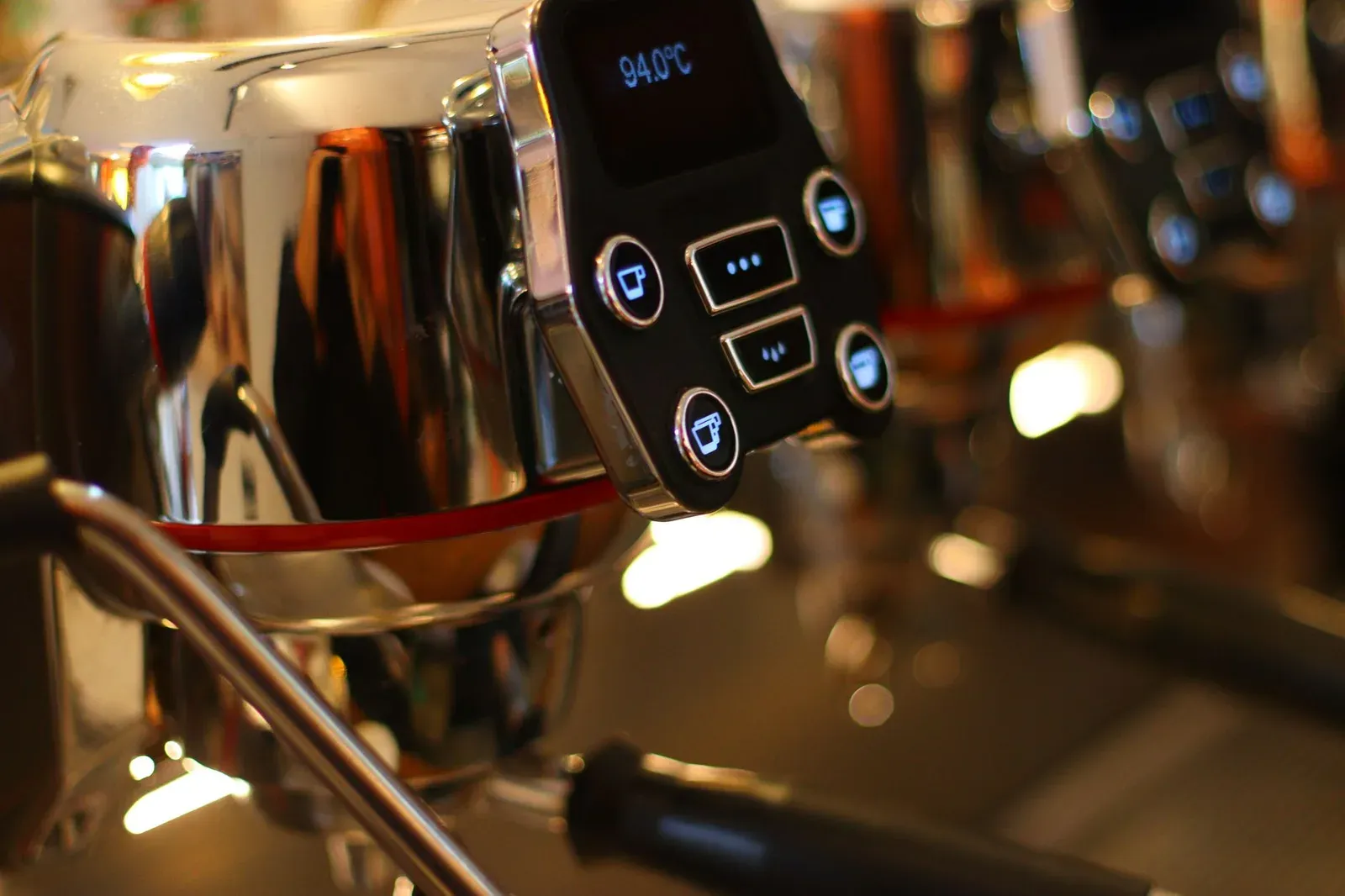
A PID controller reads the boiler temperature many times a second and modulates the element rather than switching it. The three terms it is named after are the three things it looks at: how far off it is now, how long it has been off, and how fast it is moving.
The result is a temperature that holds within a few tenths of a degree, and a number you can set rather than a range you inherit.
When that matters
It matters a lot if you drink light roasts, which are less soluble and need both heat and consistency to extract properly; if you dial in new coffees often, because a moving temperature hides what your grind change did; and if you want today’s shot to taste like yesterday’s.
It matters little if you drink one dark roast in a large milk drink. A latte forgives a degree and a half. The milk is louder than the difference.
The part people miss
A PID controls the boiler, not the group head. On most machines the water still crosses a large lump of brass on its way to the coffee, and that brass has its own temperature and its own thermal inertia.
Which is why a PID machine still needs a warm-up: twenty to thirty minutes for the group to reach equilibrium, whatever the display says after ninety seconds. The display is telling you the truth about the boiler and nothing about the metal the water touches last.
A timer plug that switches the machine on before you wake solves that better than any controller.
Reading the number
Set it and change it deliberately, one degree at a time:
- Light roast, tasting sharp or thin: go up, 94 to 96 °C.
- Dark roast, tasting harsh: go down, 90 to 92 °C.
- Medium roast: 93 °C is the sensible middle, and most recipes assume it.
Then leave it alone and change the grind instead. Temperature is a trim, not a steering wheel.
Frequently asked
- Is a PID worth retrofitting?
- On a machine you intend to keep, often yes: kits exist for most common models and cost a fraction of a new machine. On a machine you plan to replace within a year, put the money towards the replacement.
- Does a PID make better espresso on its own?
- No. It makes the same espresso twice, which is what lets you improve a recipe deliberately instead of guessing. The improvement comes from you, the repeatability comes from the PID.
Related reading
Real espresso in twenty centimetres
Small machines used to mean bad espresso. The compact category grew up, and the compromises moved somewhere more sensible.
Single boiler, heat exchanger or dual boiler
The three ways a machine makes brew water and steam at once, what each one costs you in waiting, and which one suits how you actually drink.
Buying a used espresso machine
Second hand is the cheapest route to a serious machine, and the fastest route to a boiler you cannot replace. What to check, what to walk away from.