Moka pot
Fixing a moka pot: bitter, sputtering, leaking or weak
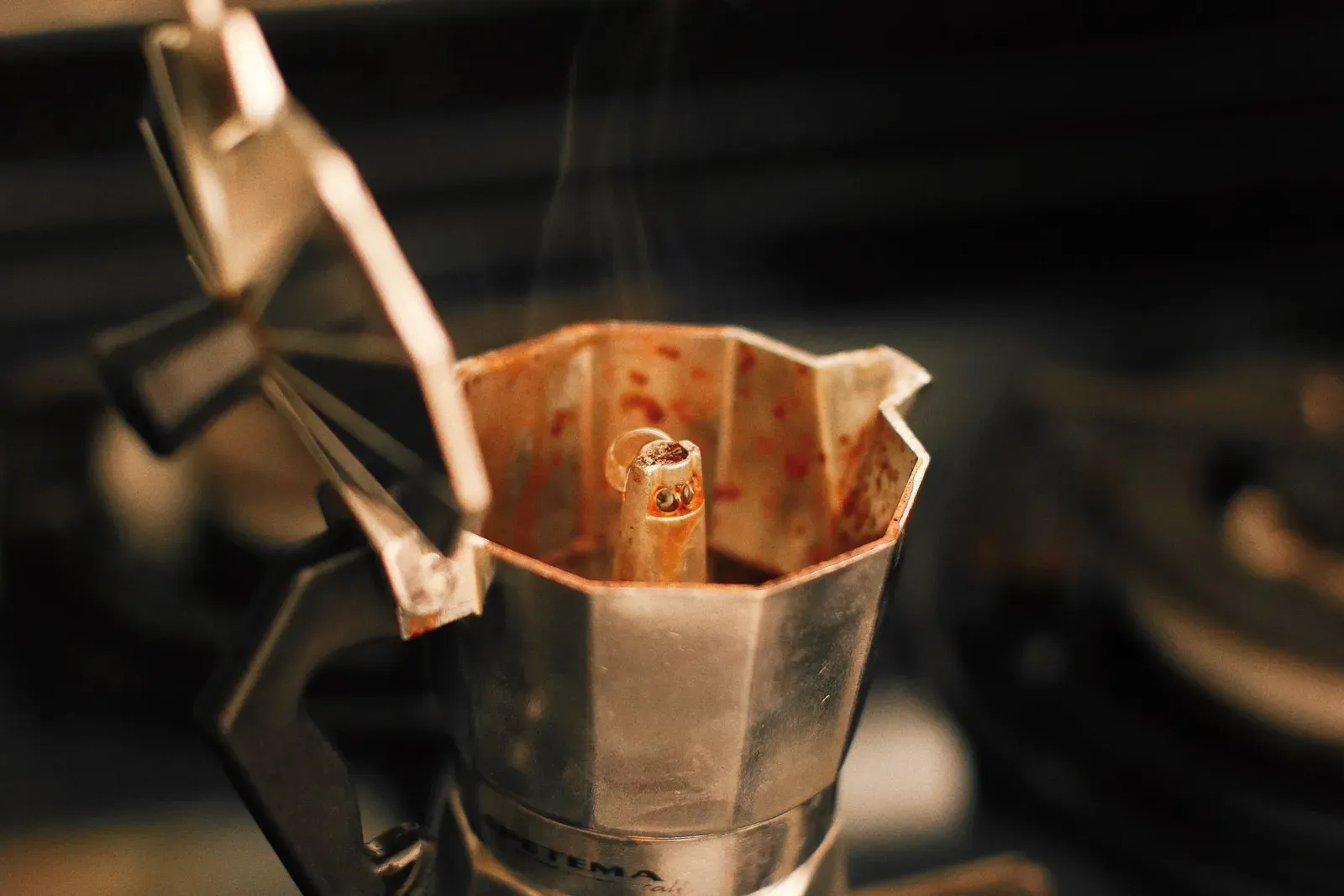
The moka pot is simple enough that people blame the coffee when it goes wrong. Usually it is something mechanical: heat, grind, the gasket or the way the basket was filled. Here are the common complaints, in the order I see them.
Bitter, burnt or metallic
Cause: too much heat for too long. The water in the base keeps boiling after it has pushed most of the coffee up, and the last part to come through is steam and very hot water forced through an over-extracted bed. That is where the burnt, ashy taste comes from.
Fix:
- Fill the base with hot water from the kettle, up to just below the safety valve. The pot spends less time on the stove before brewing starts.
- Use medium heat. On gas, the flame must not reach past the base.
- Leave the lid open and watch. When the coffee turns pale and starts to sputter, take it off the heat and cool the base under a cold tap or on a wet cloth to stop it.
Sputtering and spraying from the start
Cause: heat too high, or a grind so fine the pressure builds until the coffee bursts through.
Fix: lower the heat and grind a little coarser. Moka wants a grind slightly coarser than espresso, finer than a filter. Our table of grind settings by method has a starting point.
Weak, thin, watery
Cause: grind too coarse, basket underfilled, or the coffee is stale.
Fix: fill the basket fully and level it off with a finger, grind a touch finer, and use fresher beans. A moka pot is designed around a full basket; half a basket will always taste thin. If you want less coffee, buy a smaller pot, which is one of the points in our guide to choosing a moka pot.
Nothing comes up, or very slowly
Cause: the basket was tamped, the grind is far too fine, or the filter plate is clogged.
Fix: never press the coffee down. Fill loosely and level. If that is not it, take out the filter plate under the top chamber and hold it up to the light: if the holes are blocked with old coffee, soak it in hot water and scrub with a brush. The safety valve is there for exactly this situation; if it is hissing, take the pot off the heat.
Leaking between the two halves
Cause: coffee grounds on the thread or the rim of the basket, a hardened gasket, or a pot not screwed tight.
Fix: wipe the rim and thread clean before closing. Screw it firmly, holding the body rather than the handle. If it still leaks, replace the rubber gasket; it hardens with heat and time, and a new one costs a few euros.
Tastes of metal or old coffee
Cause: coffee oils left in an aluminium pot turn rancid, and harsh cleaning strips the inside.
Fix: rinse with hot water and dry after every use. Avoid the dishwasher. If a new pot tastes metallic, brew two or three pots with cheap coffee and throw them away. Water matters too, and our piece on water, the ingredient nobody tests explains why hard water leaves a chalky taste and scale in the base.
What a moka pot cannot do
It will not make espresso. A moka pot brews at around 1 to 2 bar, against 9 bar for an espresso machine. It makes a strong, heavy, concentrated coffee that is very good on its own terms. If you want crema and the texture of espresso, our espresso method page is the next step. If you want to understand where moka sits among brewers, see immersion against percolation.
Frequently asked
- How often should I replace the moka pot gasket?
- When it hardens, cracks or no longer seals, which with daily use is often once or twice a year. Gaskets and filter plates are sold by size and cost a few euros. Take the old one to match the size.
- Should I wash a moka pot with soap?
- Rinse with hot water and dry it after each use, especially aluminium ones. An occasional wash with mild soap is fine. Never put an aluminium moka pot in a dishwasher: it oxidises and turns dull and grey.
Related reading
Cold drip is not cold brew
Both use cold water and both take hours, but one drips and one soaks. How cold drip and cold brew differ in method, taste and effort, and which to make at home.
Immersion against percolation
Every brewer either soaks coffee in water or runs water through it. How the two families extract, why they taste different, and where each brewer sits.
Pouring: spiral, centre or pulses
How you pour over coffee changes agitation, bed height and drawdown. The three main pouring styles, what each one does, and which to use with your brewer.