Cold brew
Cold drip is not cold brew
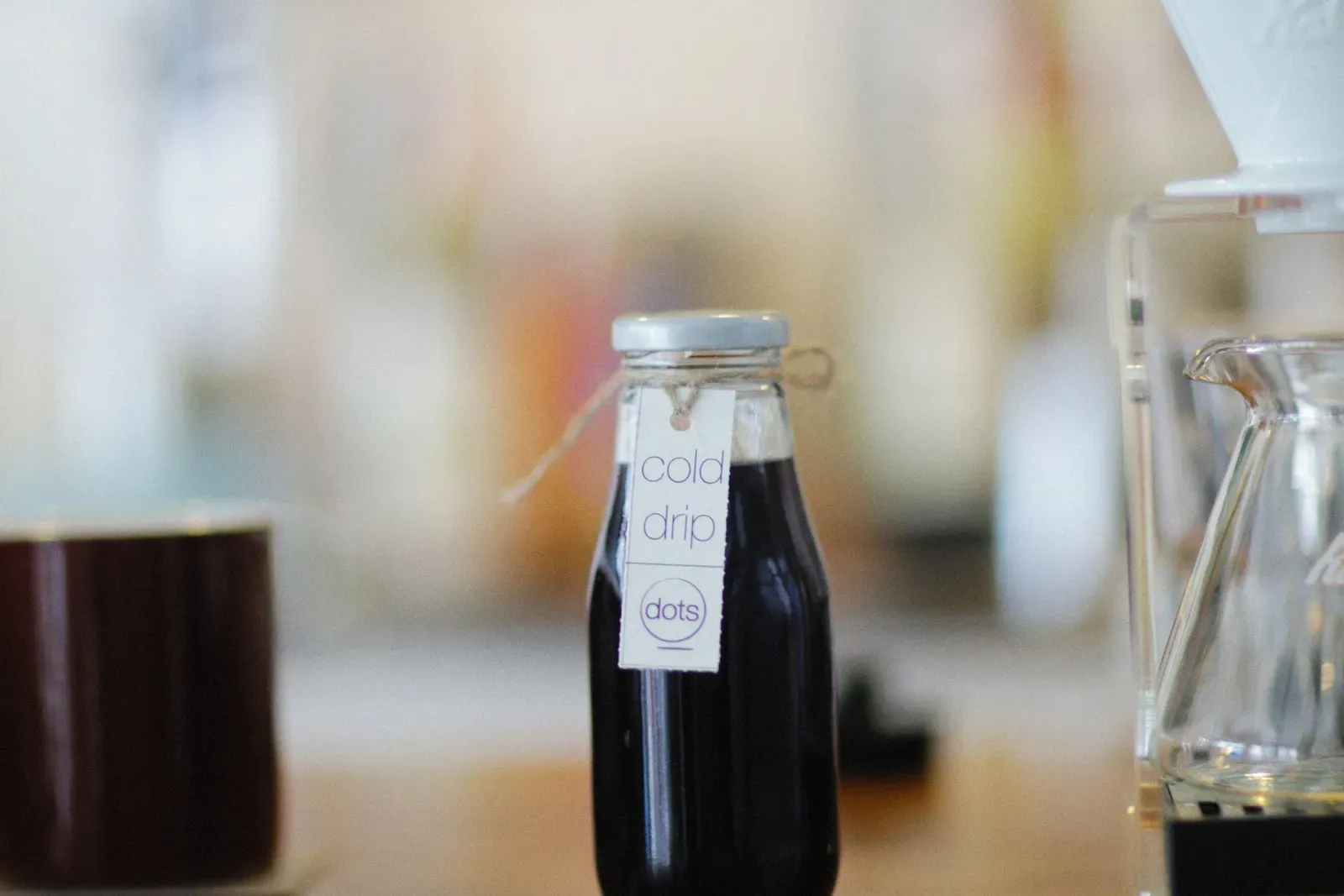
Café menus use “cold brew” for almost any coffee made with cold water. In fact there are two quite different drinks behind the name, and they belong to the two families described in immersion against percolation.
Cold brew: immersion
Coarse ground coffee is mixed with cold or room temperature water and left to steep, usually 12 to 24 hours, often in the fridge. It is then filtered through paper, cloth or a fine mesh. Our cold brew method page and our cold brew concentrate recipe give the details.
Taste: round, heavy, low in perceived acidity, with chocolate and nutty notes. Cold water extracts acids and aromatics slowly and some barely at all, which is why cold brew tastes mellow, and why it can taste flat if the ratio or steep is off. Our article on why cold brew tastes flat covers the fixes.
Effort: almost none. A jar, a fridge and a filter.
Cold drip: percolation
Also called Kyoto style, after the city where tall glass drip towers became a café fixture. Ice water sits in a top chamber and drips, one drop every second or two, onto a bed of coffee in the middle chamber. The coffee slowly drips through a filter into a carafe at the bottom. A brew takes anywhere from 3 to 12 hours.
Taste: clearer and more aromatic than cold brew, with more of the coffee’s fruit and floral notes, often described as winey or liqueur-like. Because fresh cold water keeps passing through the bed, it extracts more efficiently than a steep.
Effort: more. The drip rate has to be set with a valve and checked, because it slows as the water level drops. A tower costs more and takes space.
Side by side
| Cold brew | Cold drip | |
|---|---|---|
| Family | immersion | percolation |
| Time | 12–24 hours | 3–12 hours |
| Grind | coarse | medium to medium-fine |
| Taste | round, heavy, mellow | clear, aromatic, winey |
| Kit | jar and filter | drip tower |
Which beans
Cold brew tends to flatten delicate coffees, so medium roasts with chocolate and nut notes work well. Cold drip shows off fruit and florals, which suits lighter roasts; our light roast explainer covers what to expect from them.
Caffeine
Both are usually brewed strong, as concentrates, and diluted. Per glass, the caffeine depends far more on the recipe and dilution than on the method. Our article on how much caffeine is in your cup has the usual ranges.
Which to make at home
Start with cold brew: it is cheap, forgiving and needs no special kit. If you find you like iced coffee with more definition, try the hybrid that most cafés use in summer, a hot pour over brewed directly onto ice, before investing in a tower. It takes five minutes and gets you much of the clarity of cold drip.
Frequently asked
- Is cold drip stronger than cold brew?
- Both are usually made as concentrates and diluted to taste, so strength depends on the recipe. Cold drip is often served undiluted or lightly diluted, which can make it seem stronger.
- Can I make cold drip without a tower?
- Roughly. A dripper with a filter, topped with a container of ice water that has a pinhole in it, imitates the slow drip. It is less controllable than a tower with a valve, but it shows you the style.
Related reading
Fixing a moka pot: bitter, sputtering, leaking or weak
Most moka pot problems come from heat, grind, a tired gasket or a packed basket. Symptom by symptom, what is going wrong and how to fix it.
Immersion against percolation
Every brewer either soaks coffee in water or runs water through it. How the two families extract, why they taste different, and where each brewer sits.
Pouring: spiral, centre or pulses
How you pour over coffee changes agitation, bed height and drawdown. The three main pouring styles, what each one does, and which to use with your brewer.