Robusta
Robusta in an espresso blend
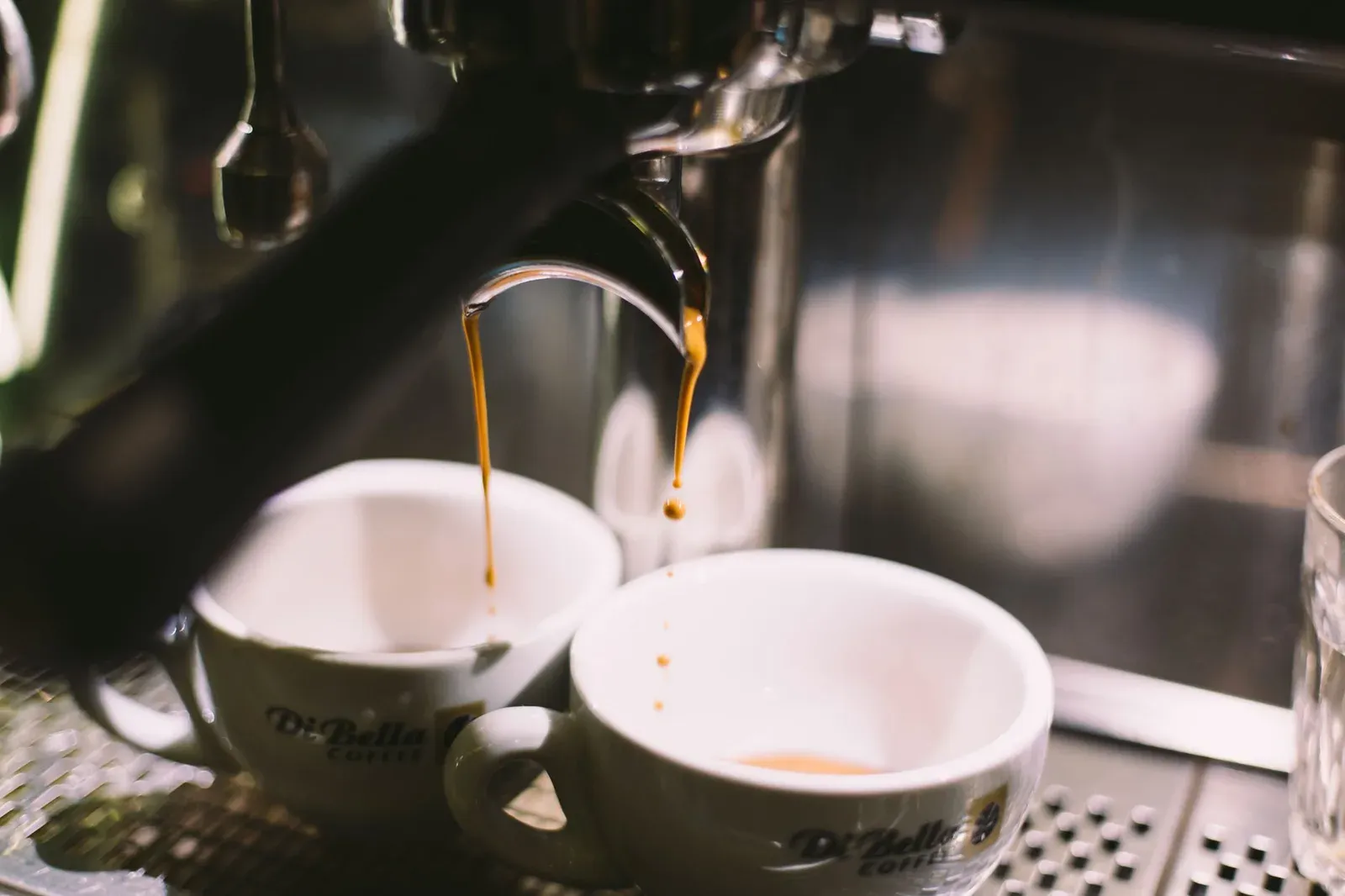
A bar in Naples, and an argument I lost
I once spent twenty minutes explaining to a bar owner in the Vomero that his blend would be better without the robusta. He let me finish. Then he pulled two shots, one from his blend and one from a hundred per cent Brazilian arabica he kept for people like me, and put both in front of me with a glass of water.
The arabica shot was nicer to drink on its own. It was also gone from the palate in fifteen seconds, and when he made the same two as cappuccini, the arabica one simply disappeared into the milk. His blend did not.
That is the whole case for robusta in espresso, and it has almost nothing to do with taste in the abstract.
What the species brings to a shot
Three things, and they are physical rather than aromatic.
Crema. Canephora carries more soluble solids and, more importantly, more of the compounds that stabilise foam. A blend with 15 per cent robusta gives a thicker, darker, slower-collapsing crema than the same roaster’s pure arabica. Whether crema tells you anything about quality is a separate argument, but it tells you plenty about mouthfeel.
Body. More dissolved material per gram means a heavier liquid. In a 25 to 30 ml shot, that is the difference between something that coats the tongue and something that rinses off it.
Persistence in milk. Milk is sweet, fatty and cold, and it buries delicate aromatics without effort. Cocoa, cereal and roasted nut survive it. Jasmine and bergamot do not. If a café’s signature drink is a cappuccino, the blend has to be built for the cappuccino.
And a fourth, less often admitted: robusta is more forgiving in a busy bar. It tolerates a wider brew temperature window and a rougher grind adjustment without turning sharp, which matters when four people share one machine on a Saturday.
Where the habit came from
It is worth knowing that the Italian blend was not designed, it was improvised. Robusta entered Italian roasting in volume after the Second World War, when arabica was expensive, foreign currency was scarce and the colonial supply lines that had fed the trade were gone. Roasters bought what they could afford.
What happened next is the interesting part. A generation of bar customers grew up on that cup, the espresso machine of the same period got faster and hotter, and the drink and the blend settled into each other. By the time arabica was affordable again, the thick, cocoa-heavy shot was not a compromise anybody wanted to correct. It was what espresso tasted like.
Northern Italian houses tend to sit at 10 to 20 per cent robusta, southern ones at 30 to 50. That is a map of where the money was in 1955 as much as a map of taste, and both regions will tell you theirs is the correct one.
What it costs you
Acidity and top notes, first. Whatever bright fruit the arabica component had, a robusta fraction pushes it down. That is why a 30 per cent Neapolitan blend tastes of chocolate and toast rather than of anything in particular from a farm.
Caffeine, if you care: roughly double per gram, so a 20 per cent robusta blend carries maybe 15 to 20 per cent more caffeine than the pure arabica version.
And risk. Bad robusta is genuinely bad, and the cheap end of the market uses it because it is cheap rather than because the blend needs it. A supermarket brick at 70 per cent robusta is not making a Neapolitan argument. It is making a margin argument.
Reading the percentage
| Share | What it usually means |
|---|---|
| 0 % | Modern specialty house, built for the shot rather than the cappuccino |
| 10 to 15 % | Body and crema added deliberately, arabica character still leading |
| 20 to 30 % | Classic Italian bar blend, chocolate-forward, built for milk |
| 40 to 60 % | Southern Italian style, or a price decision |
| Over 70 % | A price decision, with very rare exceptions |
The percentage on its own settles nothing. A 30 per cent blend using a fine Indian robusta and a 30 per cent blend using the cheapest available Vietnamese grade are different products that print the same number.
How to judge one
Pull it as a straight espresso first, even if you will drink it with milk.
- Bitterness that arrives late and stays is the signature of poor robusta. Good robusta reads as cocoa and roasted nut, and it finishes.
- A rubbery or medicinal edge is a defect, not a species trait.
- Crema that is dark brown and holds for a minute is the effect you were paying for. Crema that is pale and gone in ten seconds means either stale coffee or a robusta doing nothing for you.
- Then make it as a cappuccino. If the coffee is still identifiable through the milk, the blend is doing its job. This is the test that matters, and the one people skip.
Where I landed
I do not keep a robusta blend for espresso I drink black. For that I want a washed Central American, single origin, medium roast, and no help from anywhere.
I do keep one for milk drinks, and I stopped apologising for it some time around that morning in Naples. The blend is a tool built for a specific drink. Judging it by how it behaves on its own is like judging a stock by tasting it from the spoon.
Related reading
Seasonal blend or house blend
One holds a flavour steady all year. The other follows the harvests and changes when they do. Two honest answers to the same problem, and how to pick.
How a roaster builds a blend
Base, middle and top, roasted together or apart, and rebuilt every few months as the harvests move. The craft behind a bag that tastes the same all year.
Fine robusta exists now
A protocol, a grading scale and a handful of serious producers turned the cheap species into something worth cupping. What changed, and what to buy.