Whole bean coffee
Whole bean or ground: what you actually lose
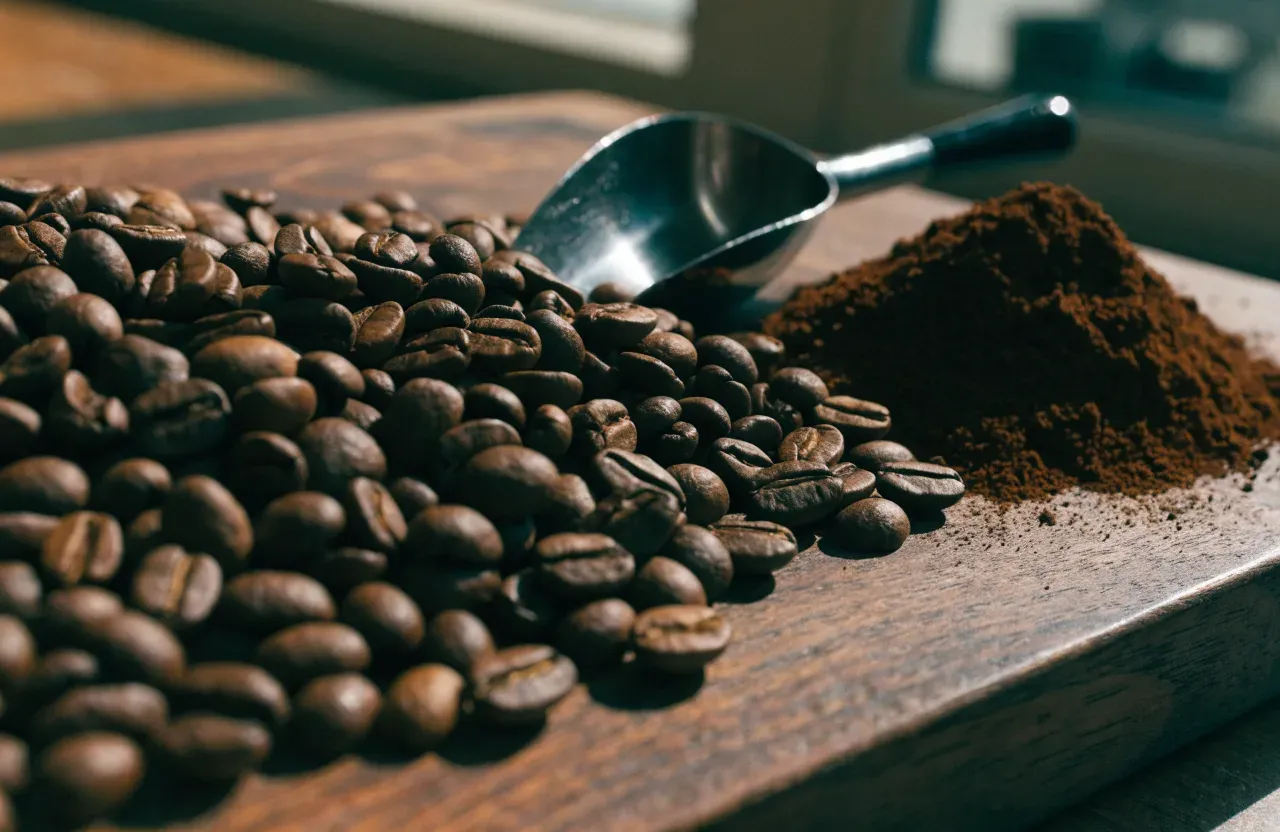
The whole argument is surface area
A roasted bean is a sealed container. Roasting builds a rigid, porous cellular structure and traps hundreds of aromatic compounds and a quantity of carbon dioxide inside it. The skin of that bean is a small surface, so the rate at which anything escapes is slow.
Grinding destroys the container. Break one bean into a few thousand particles and the area exposed to air goes up by several hundred times. Every process that was happening slowly now happens quickly: carbon dioxide vents, volatile aromatics evaporate, oxygen reaches the oils, and moisture from the room reaches the particle surfaces.
That is the entire case for whole bean, and it is worth stating plainly because everything else in this article is a consequence of it. Nothing chemical goes wrong when you grind coffee. You simply start a clock that was previously running very slowly.
What leaves in the first fifteen minutes
Aroma, which is most of what you experience as flavour. Coffee’s smell comes from several hundred volatile compounds, and volatile means exactly what it sounds like: they want to be in the air rather than in the grounds. The lightest and most distinctive of them, the ones responsible for the fruit, the florals and the sweetness at the top of the cup, have the lowest boiling points and leave first.
The smell of fresh grounds hitting your kitchen is not a pleasant side effect of grinding. It is the coffee leaving. Within roughly fifteen to thirty minutes the majority of that top layer has gone, and what is left is the heavier, more roast-derived material: the caramel, the cocoa, the woody and the bitter.
Carbon dioxide goes at the same time, and it matters for a different reason. CO2 is what makes a bed of fresh grounds bloom on a pour-over and what produces a thick crema on espresso. It also actively repels water during the first seconds of brewing, which is why very fresh coffee extracts differently from coffee ground yesterday. Stale grounds do not bloom, and a flat bloom is a reliable visual signal that the coffee is old, not a technique failure.
Oxidation is the slower process and the one that eventually makes coffee taste cardboard-like and dull. It takes days rather than minutes, and by the time you notice it, the interesting part of the loss already happened.
| Whole bean | Ground, fresh | Ground, a week old | |
|---|---|---|---|
| Aroma intensity | held until you grind | peak | markedly reduced |
| CO2 and bloom | retained | strong | little to none |
| Espresso crema | full | full | thin, short-lived |
| Grind control | any method, any size | fixed at purchase | fixed at purchase |
| Realistic window | 2-5 weeks from roast | drink within the hour | still drinkable, flat |
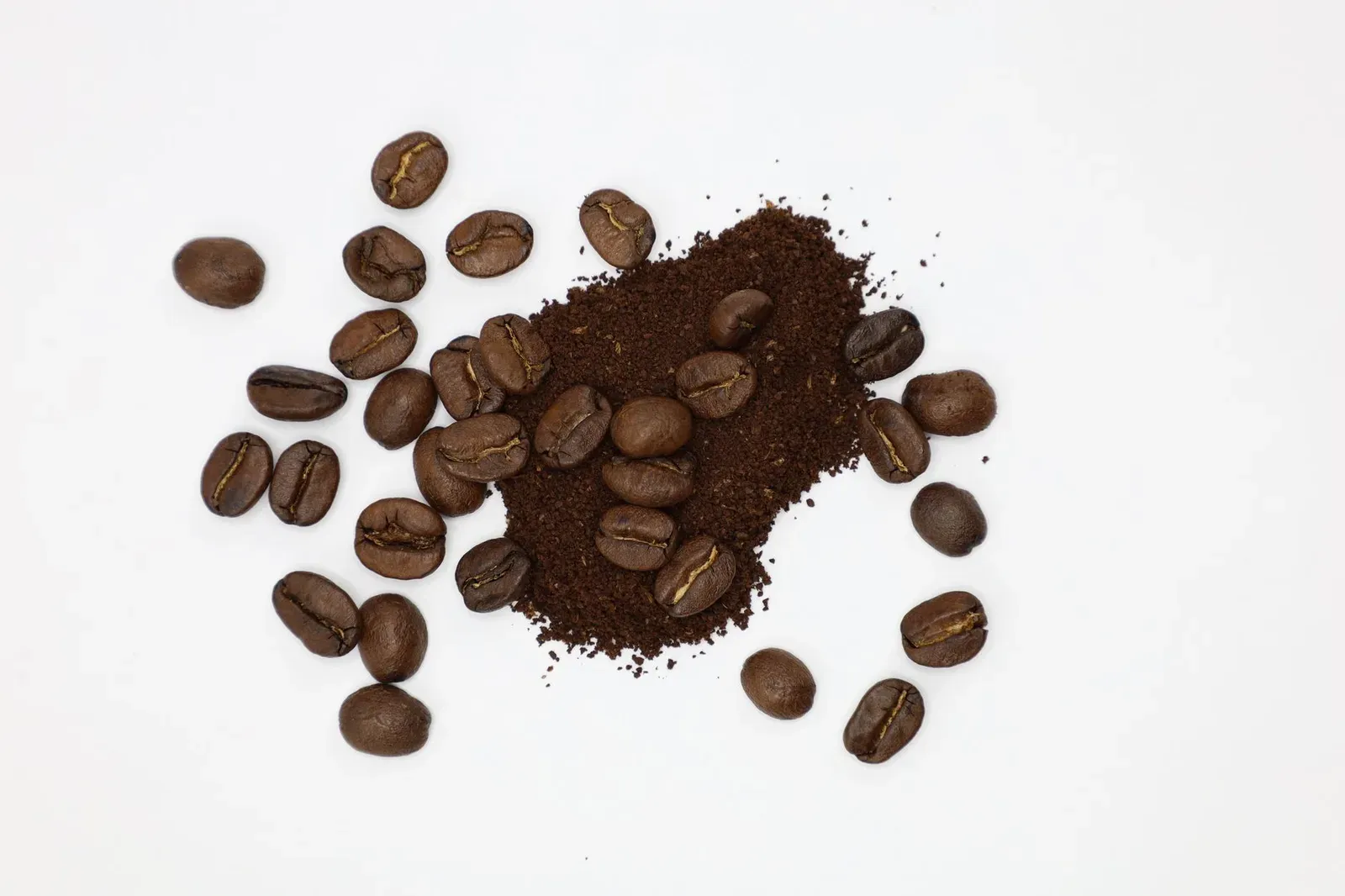
What pre-ground still does well
More than the purist line admits. Anything that does not depend on volatile aromatics survives grinding perfectly well: body, the caramel and cocoa notes from the roast, the caffeine, and the basic pleasure of a hot dark drink.
Method matters here. Immersion brewing forgives staleness better than pressure brewing does, because it is not relying on a gas-rich bed to build resistance. A French press or a moka pot made with decent pre-ground coffee produces a genuinely good cup. Espresso is the least forgiving: the crema thins, the shot channels more readily, and the grind size in the bag was chosen by a roaster who does not know your machine. Filter sits in between, and a pour-over made with week-old grounds tends to run fast and taste hollow because the bloom that should have slowed the first pour never happened.
The other real limitation is that the grind size is decided for you. Grind is the single most powerful variable you have, and a bag labelled “for filter” is one setting rather than a range, which is why the adjustments described in grind size explained are simply unavailable to you. If your coffee is consistently too fast or too slow, a bag of pre-ground gives you nowhere to go.
Storage that actually helps, and when to buy ground anyway
Four things help, and they are all about excluding air, light, heat and moisture. Keep coffee in an opaque, genuinely airtight container, ideally one with a one-way valve. Keep it in a cupboard rather than next to the hob or on a sunny worktop. Buy quantities you will finish in two to four weeks. And do not keep it in the fridge, where it will pick up the smell of everything else in there and condense moisture every time you open it.
Freezing works, with conditions. Freeze whole beans, divided into portions you will use in one go, in something properly sealed, and grind them straight from frozen without letting the bag warm up and sweat. Repeatedly opening one big frozen bag is worse than not freezing at all.
And the honest case for buying ground: if no grinder is coming, buy ground. A person drinking decent pre-ground coffee daily is better off than a person who bought whole beans, never bought a grinder, and is now using a blade chopper that produces dust and boulders at once. In that situation, buy small bags, ground for your specific method, from a roaster who prints a roast date, and finish each bag within two weeks. When a grinder does become possible, it is the highest-value purchase in the whole setup, ahead of the machine, and the grinder guide is where to start. What you buy after that, a single lot or a blend, is a separate question we take up in single origin or blend.
Frequently asked
- How long does ground coffee actually stay good?
- The aroma peak is measured in minutes rather than days. Most of the volatile compounds that carry the smell have escaped within about half an hour, and what remains declines steadily over the following week or two. It stays drinkable for months. It stops being interesting long before that.
- Can I grind a week's worth at once to save time?
- You can, and it costs you more than you save. A week-old grind loses the top notes entirely and flattens into a generic roasty flavour. If time is the constraint, grinding the night before is a far smaller compromise than grinding on Sunday for Friday.
- Does freezing ground coffee help?
- Freezing whole beans in small, properly sealed, single-use portions works well and is well supported. Freezing ground coffee is less useful, because the damage that matters has already happened, and repeatedly opening a bag in a warm kitchen condenses moisture onto the grounds. If you freeze, freeze beans, in portions you will use in one go.
Related reading
Resting coffee: why a fresh roast is not ready yet
Roasted coffee is full of carbon dioxide for days. How long to rest beans for filter and for espresso, and what a bag that is too fresh does to the cup.
Cupping at home
The protocol professionals use to taste coffee, stripped to what works on a kitchen table, and what it is actually good for.
How much caffeine is in your cup
A double espresso holds less caffeine than a mug of filter, and roast level barely matters. The numbers, and where the intuitions go wrong.