Origins
Costa Rica
The country that invented the micromill revolution and made honey processing mainstream.
- Honey
- citrus
- clean
- syrupy
| Regions | Tarrazú, West Valley, Central Valley, Brunca, Tres Ríos, Orosi |
|---|---|
| Altitude | 1200–1900 m |
| Harvest | November–March |
| Processes | Washed, Honey (white, yellow, red, black), Natural |
| Varieties | Caturra, Catuaí, Villa Sarchí, Geisha, Venecia |
Costa Rica made two decisions that no other producing country made at the same time. It banned robusta planting outright in 1989, a ban only lifted in 2018, and in the early 2000s its growers stopped selling cherry to cooperative mills and started building their own.
The micromill revolution
Before it, a farmer sold cherry by weight into a regional mill where it was blended with everyone else’s. A micromill costs a fraction of an industrial one and lets a single farm depulp, dry and sell its own lot under its own name. The consequence is the country’s current catalogue: hundreds of small traceable lots where there used to be a handful of regional averages.
Honey, and what the colours mean
Honey processing removes the skin and leaves some or all of the mucilage on the parchment to dry. How much stays on, and how much shade the drying gets, is the whole variable:
- White honey keeps very little and tastes close to a washed coffee.
- Yellow dries fast in full sun, clean and sweet.
- Red dries slower with more mucilage: heavier body, more fruit.
- Black keeps nearly all of it under shade for weeks, and edges toward a natural, with jammy fruit and a syrupy body.
The regions
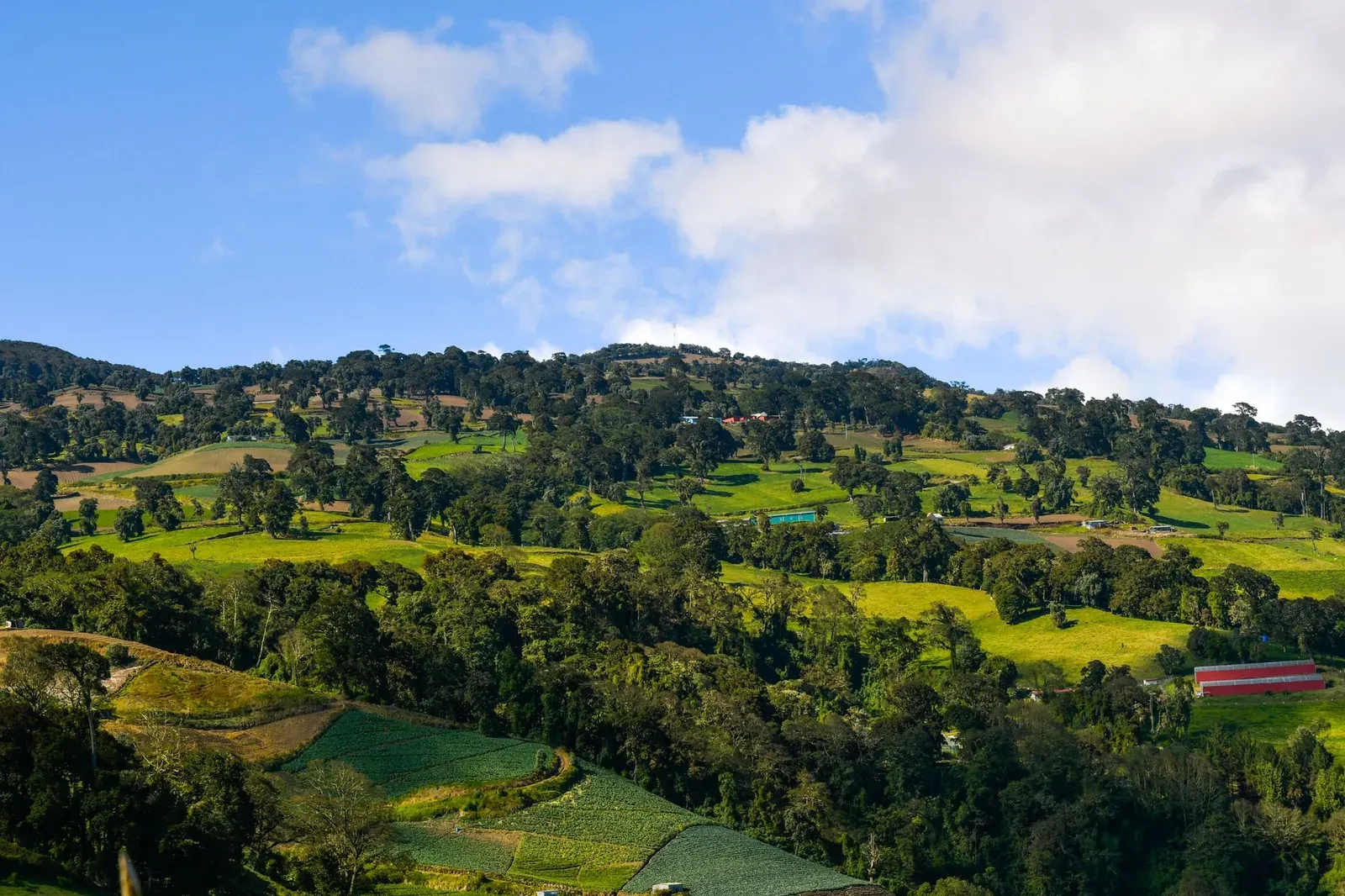
Tarrazú is the famous one: high, cold nights, dense beans, citrus and honey. West Valley is the experimental heart, home to Villa Sarchí and most of the black honey work. Tres Ríos is elegant and balanced, Orosi softer, and Brunca lower and gentler.
Brewing it
A washed Tarrazú at 1:16 and 93 °C is about as clean as filter coffee gets. A red or black honey wants a slightly coarser grind and a cooler 91 °C, because the extra sugar extracts easily and will tip into cloying. As espresso, honeys make a syrupy 1:2 shot that needs no sugar and very little milk.