Origins
Ethiopia
The genetic home of arabica, and the origin whose washed lots defined what floral coffee tastes like.
- Jasmine
- bergamot
- stone fruit
- tea-like
| Regions | Yirgacheffe, Sidama, Guji, Harrar, Limu, Jimma |
|---|---|
| Altitude | 1700–2300 m |
| Harvest | October–January |
| Processes | Washed, Natural |
| Varieties | Heirloom landraces, 74110, 74112, Kurume |
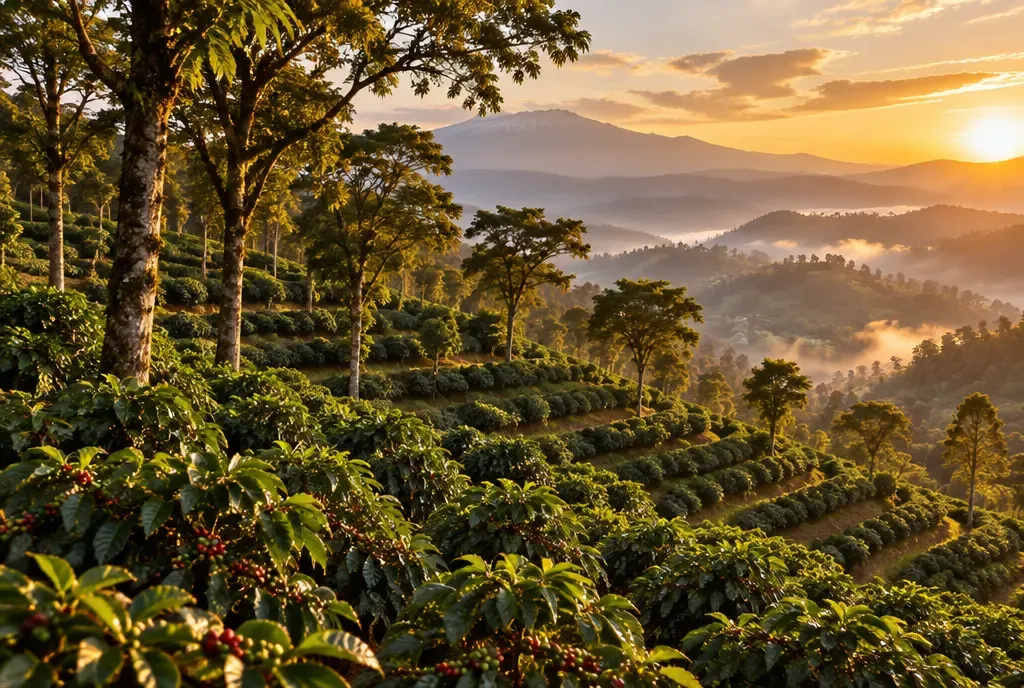
Arabica came out of the forests of southwestern Ethiopia, and it never fully left. What a bag calls “heirloom” is really thousands of uncatalogued landrace varieties, many of them still growing semi-wild under forest canopy. No other origin has that library, and it is the reason an Ethiopian lot can taste like something you have never met before.
The regions worth knowing
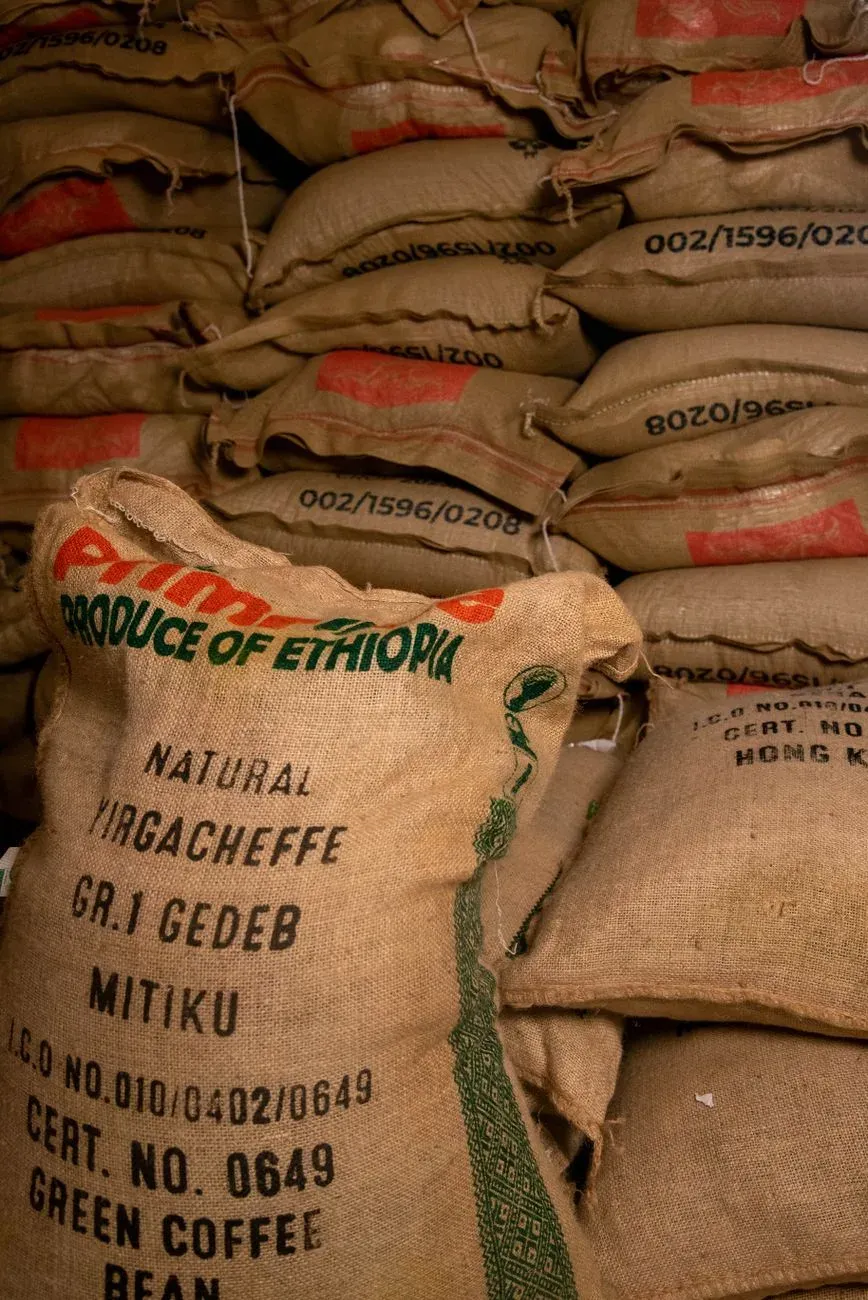
- Yirgacheffe, small and very high, is the reference for floral washed coffee: jasmine, bergamot, lemon, a tea-like body.
- Sidama surrounds it and covers a wider range, often peach and citrus.
- Guji has become the natural process star, with blueberry and tropical fruit that reads as almost unreal to a new drinker.
- Harrar, in the dry east, is the old natural style: blackberry and spice.
- Limu and Jimma are lower, softer, and much of the volume.
Washing station, not farm
Most Ethiopian coffee is grown by smallholders on a hectare or less, in gardens that also carry enset, maize and shade trees. Cherry is carried to a washing station, which sorts it, processes it and assembles the lot. So the name that predicts the cup is the station, not a farm, and a good station manager is worth more to the cup than any single grower.
What the cup does
Washed: jasmine, bergamot, white peach, lemon, a light silky body. Natural: blueberry, strawberry jam, a heavier sweetness, sometimes a fermented edge that is the point rather than a fault. Both stay bright, because altitude between 1700 and 2300 m grows dense, acidic seeds.
Brewing it
Light roasts, always. Filter at 1:16 to 1:17, water at 94 °C, medium grind, and give it a long bloom: dense high grown coffee degasses slowly. As espresso it is a specialist pleasure, best at 1:2.5 and above, long and tea-like, and it fights with milk rather than working with it.