Origins
India
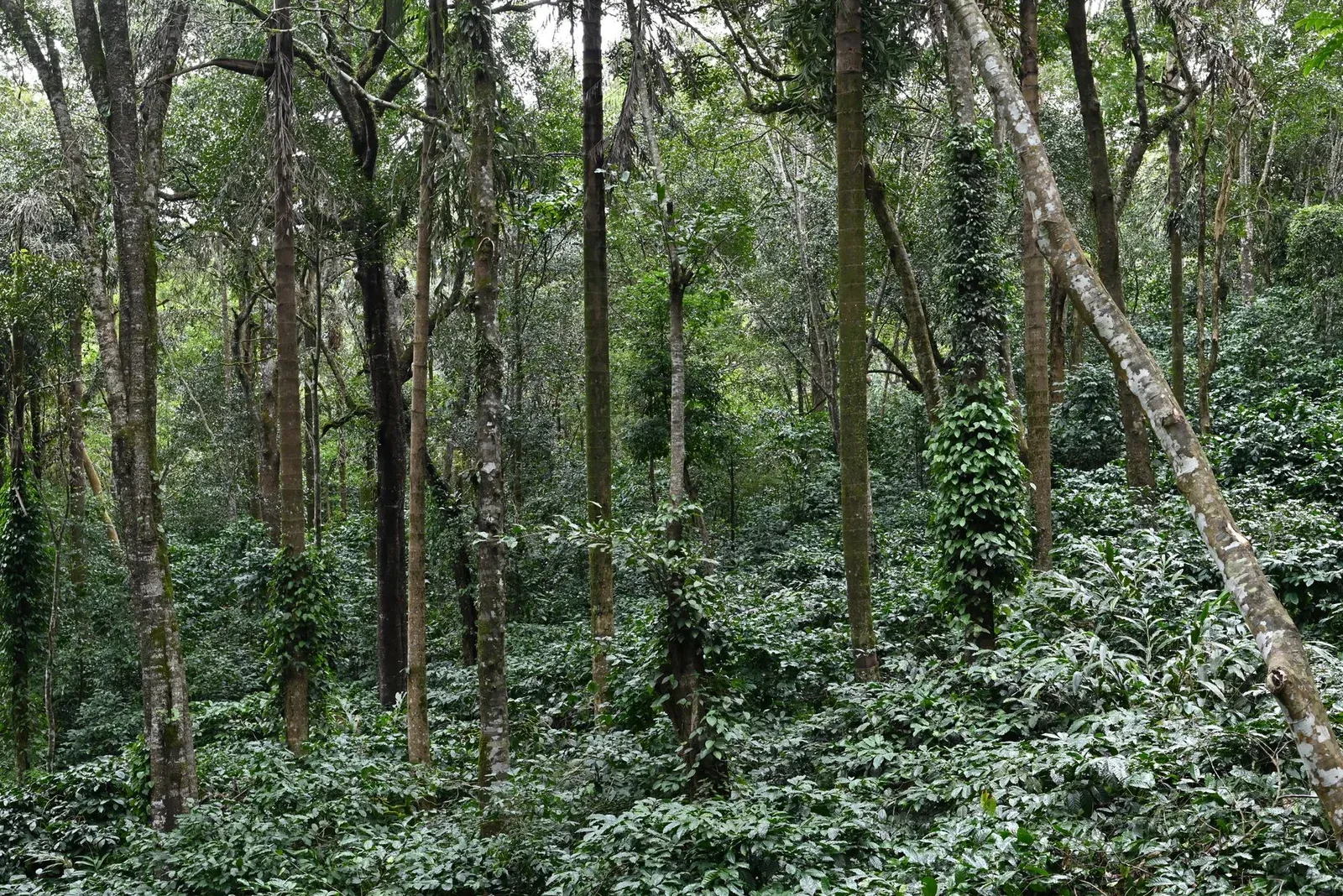
Shade-grown coffee under spice trees, the only monsooned coffee in the world, and serious fine robusta.
- Spice
- cocoa
- low acidity
- heavy body
| Regions | Coorg (Kodagu), Chikmagalur, Baba Budangiri, Wayanad, Araku Valley |
|---|---|
| Altitude | 700–1600 m |
| Harvest | November–February |
| Processes | Washed, Natural, Monsooned |
| Varieties | S795, Kent, Sln 9, Robusta, Cauvery |
Coffee reached India in the seventeenth century, when seven seeds were carried from Yemen to the hills of Karnataka, and those hills are still where most of it grows. What makes the origin distinct is not variety or altitude. It is that Indian coffee is a forest crop grown alongside pepper, cardamom and vanilla, and that one of its processes exists nowhere else.
Monsooned Malabar
Before the Suez Canal, green coffee spent months in the damp hold of a sailing ship on its way to Europe, and it arrived pale, swollen and mellow. Buyers developed a taste for it. When faster shipping ended the effect, producers recreated it on land: green beans are spread in open-sided warehouses on the Malabar coast during the June to September monsoon, raked regularly and turned for weeks, absorbing moisture until they swell and turn the colour of straw.
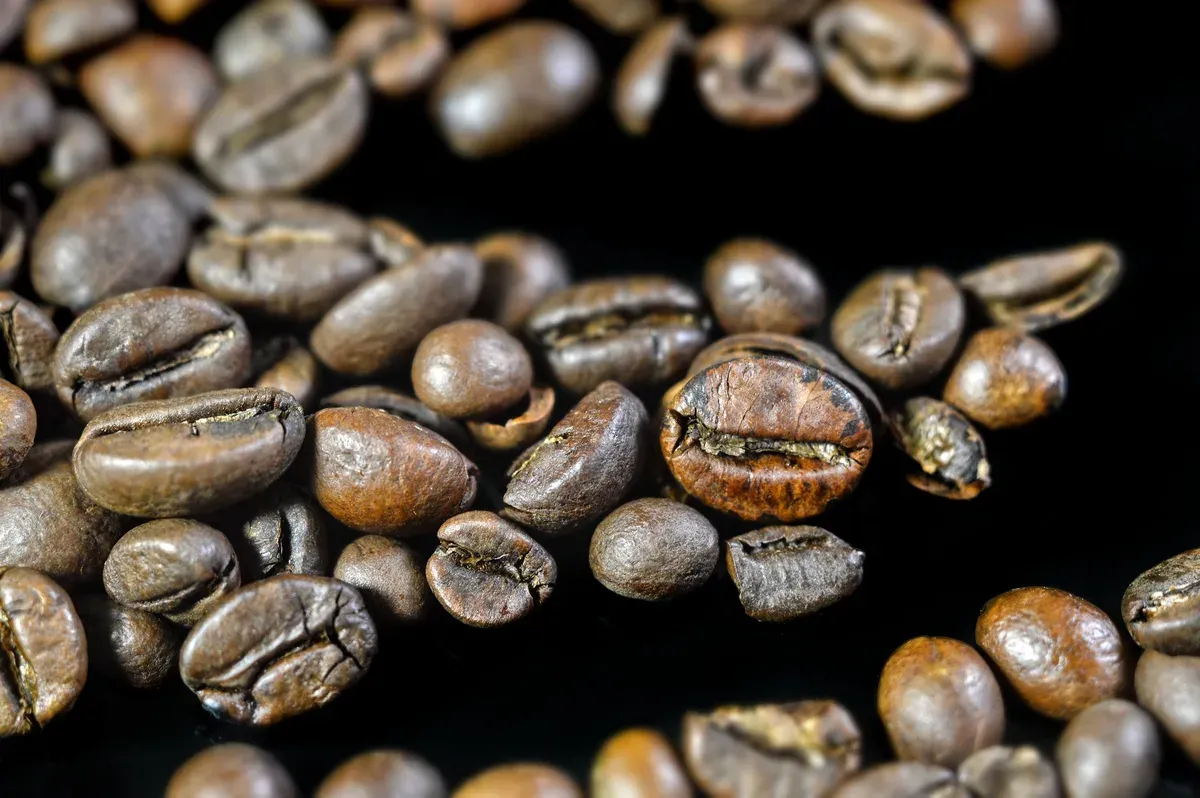
The result has almost no acidity, a very heavy body, and notes of spice, malt and tobacco. It is the only coffee designed to be low in acid rather than accidentally so, and it is the reason Indian coffee appears in so many traditional espresso blends.
Fine robusta, and South Indian filter coffee
India takes robusta seriously in a way few origins do: washed robusta, selectively picked, that cups sweet and chocolatey rather than rubbery. It also drinks it domestically. South Indian filter coffee is a dark roast with 10 to 20 percent chicory, brewed slowly in a two-chamber metal filter and poured with hot milk and sugar between tumbler and dabara until it foams.
The estates
Coorg produces the largest share, Chikmagalur holds the oldest estates and the Baba Budangiri hills where those first seeds were planted, Wayanad in Kerala is robusta country, and Araku Valley in Andhra Pradesh is the newer high altitude arabica project run with tribal cooperatives.
Brewing it
Monsooned Malabar belongs in a moka pot or an espresso basket, dark roasted, at 1:2: it has nothing to lose and a lot of body to give. Washed Indian arabica is a straightforward 1:16 filter at 93 °C. For the South Indian style, use a metal filter, a fine grind, chicory if you want the real thing, and more milk than feels reasonable.