Origins
Vietnam
The world's robusta powerhouse, and a specialty scene that is changing the species' reputation.
- Dark chocolate
- walnut
- heavy
- low acid
| Regions | Dak Lak, Lam Dong (Da Lat), Gia Lai, Son La, Quang Tri |
|---|---|
| Altitude | 500–1500 m |
| Harvest | October–January |
| Processes | Natural, Washed, Honey |
| Varieties | Robusta, Arabica (Catimor), Bourbon, Typica |
Vietnam went from almost no coffee in 1985 to second place in the world inside fifteen years, and it did it on robusta planted on the basalt plateaus around Buon Ma Thuot. For most of that period the crop was commodity: stripped off the branch ripe and unripe together, dried on a yard, sold by the tonne.
Why fine robusta is not a contradiction
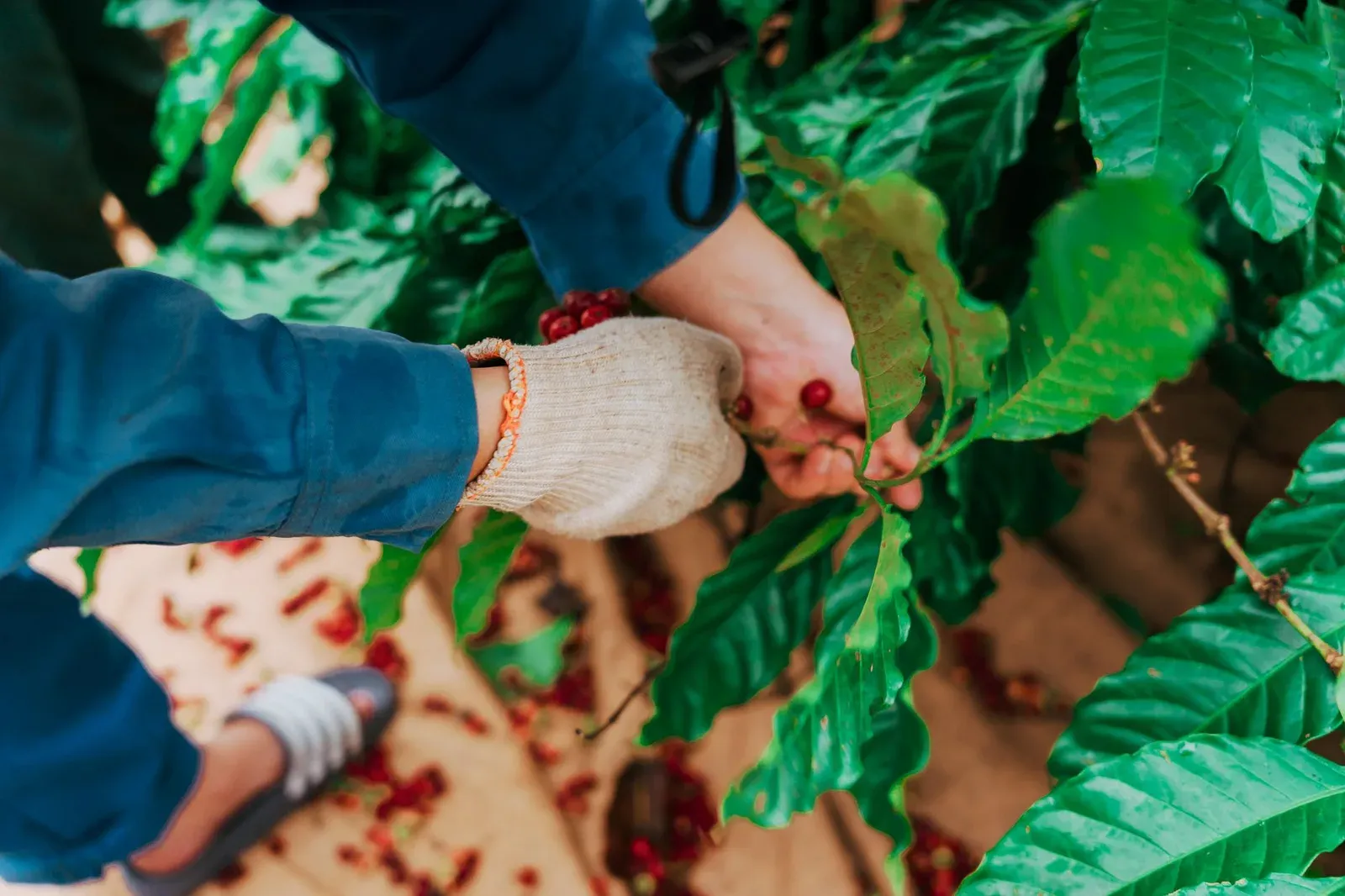
Robusta’s bad reputation is mostly a description of how it was handled. The species has roughly twice the caffeine and much more chlorogenic acid, so it is harsher by nature, but the rubber and burnt tyre notes come from unripe cherry, sloppy drying and industrial dark roasting. Picked ripe, fermented with care and roasted like arabica, it gives dark chocolate, walnut, a huge body and a crema that no arabica matches.
Where the arabica is
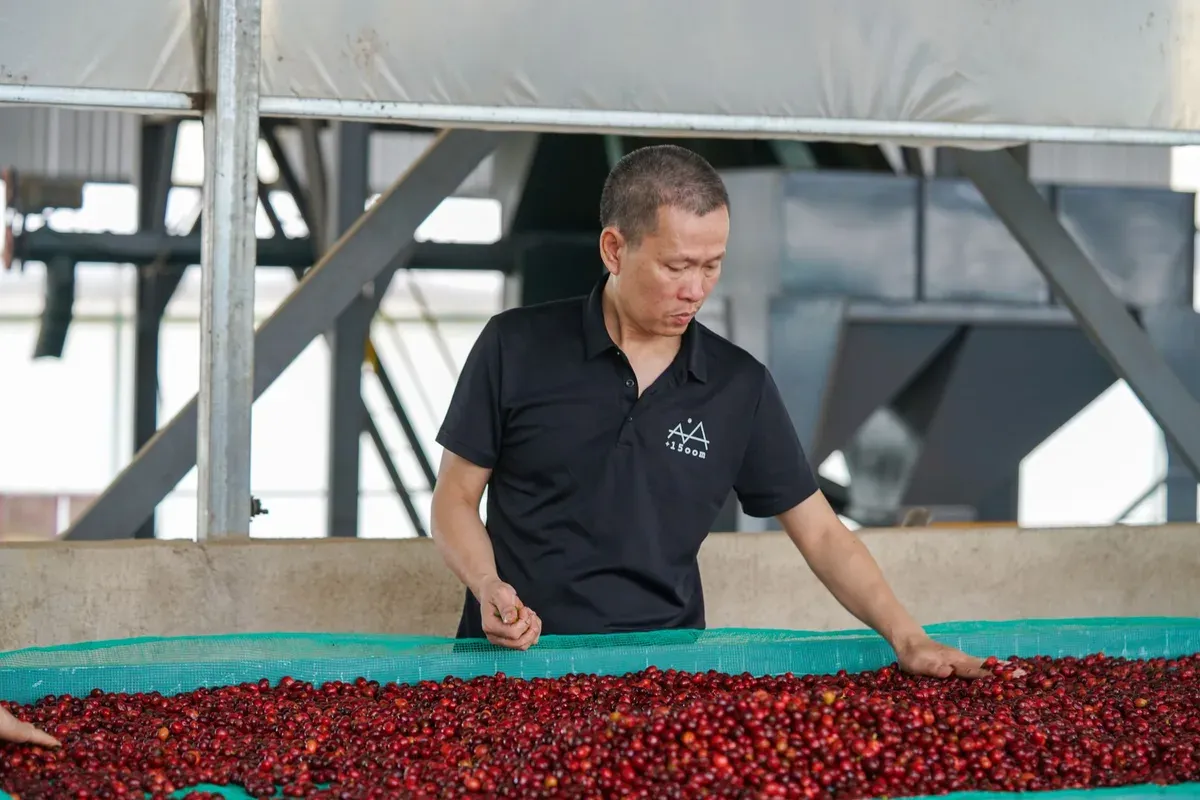
Around Da Lat in Lam Dong, at 1400 to 1600 m, and in the northern highlands of Son La and Dien Bien, where Bourbon and Catimor are grown washed. The Da Lat lots have improved fast: clean, sweet, stone fruit and cocoa, closer to a Central American profile than anything else in Southeast Asia.
How it is drunk locally
Ca phe sua da is a robusta drip through a phin filter over condensed milk and ice, and it is built on exactly the qualities that make robusta hard elsewhere: intensity, body and bitterness that survive both sugar and dilution. Egg coffee in Hanoi does the same job with whipped yolk and sugar.
Brewing it
A phin is the honest test: 20 g medium-coarse, hot water in two pours, four minutes, over ice and condensed milk if that is the drink you want. As espresso, fine robusta at 10 to 20 percent in a blend adds body and crema without the harshness. Vietnamese arabica behaves like any washed coffee: 1:16 filter at 93 °C.