Espresso
Café bombón
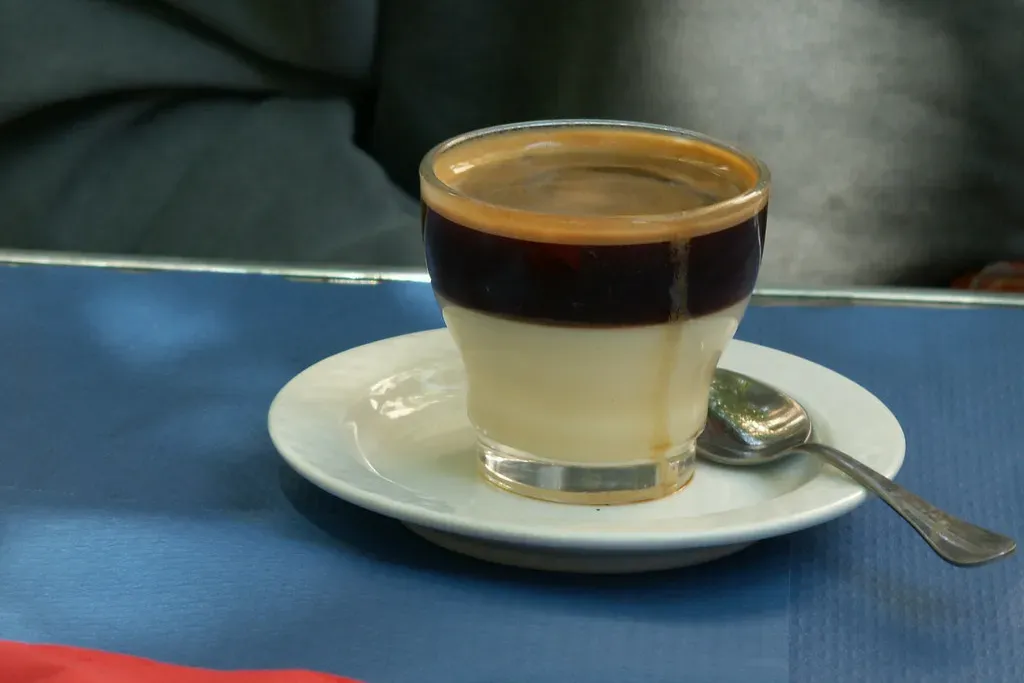
Espresso floated on sweetened condensed milk in a small glass, the Valencian way. Two layers, two ingredients, and a spoon to stir them together.
At a glance
- Total
- 3 min
- Difficulty
- Easy
- Yield
- 1 cup
- Ratio
- 1:2
- Dose
- 18 g
- In cup
- 36 g
In the cup
- Crema8%
- Espresso47%
- Condensed milk45%
Equipment
- Espresso machine
- Small glass, 90–120 ml
- Teaspoon
- Scales
Ingredients
- Coffee, medium to medium-dark roast
- 18 g
- Sweetened condensed milk
- 30 ml
Method
Warm the glass with hot water and dry it. Condensed milk thickens in a cold glass and will not stir in later.
Spoon 30 ml of condensed milk into the bottom of the glass. Keep it off the sides so the line between the layers stays clean.
20sDose 18 g and pull 36 g of espresso in 27 to 30 seconds, into a small jug rather than straight into the glass.
30sPour the shot slowly over the back of a teaspoon held just above the milk. The espresso is lighter than the milk and settles on top.
10sServe at once, with the spoon. It is drunk stirred: the layers are for looking at, not for sipping separately.
Where it comes from
The café bombón is Valencian, and in Valencia and much of Spain it is simply on the bar menu next to the cortado. The Canary Islands have cousins built on the same base: the barraquito, which adds milk, liqueur, cinnamon and lemon zest, and the leche y leche, condensed milk under an espresso topped with frothed milk. Condensed milk turns up wherever fresh milk was once hard to keep, which is why the same idea appears in Vietnam, in Malaysia and in Singapore, each with its own coffee. How the world actually drinks coffee follows that thread further.
Why the layers hold
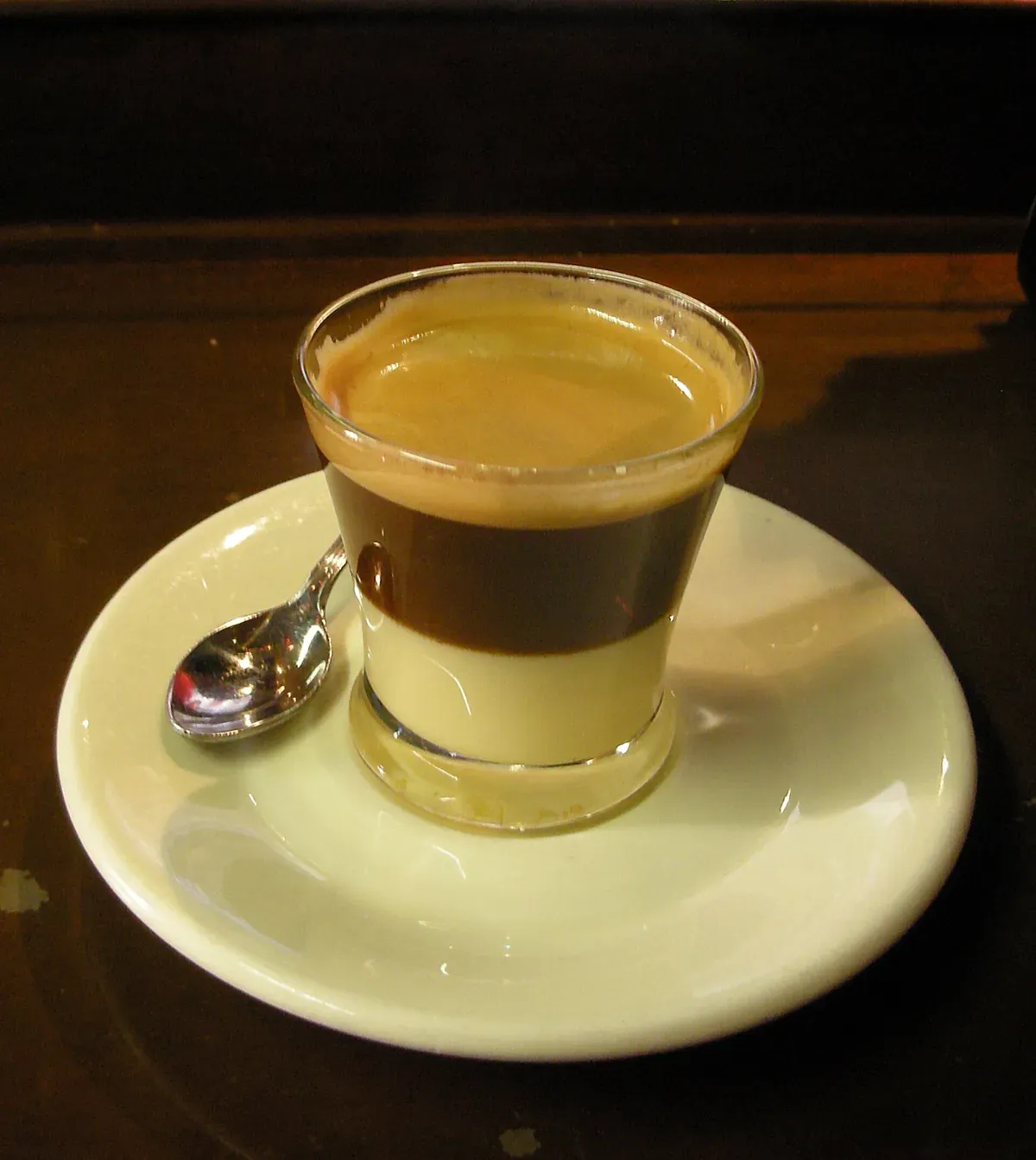
Sweetened condensed milk is dense and thick, well over a third sugar, so an espresso poured gently onto it simply floats. The back of a spoon spreads the stream so it does not punch through. Pour straight from the machine into the glass and you still get two layers, just with a cloudier line between them.
Choosing the coffee
That much sugar needs a coffee that can answer it. A medium or medium-dark roast with chocolate and caramel notes works best, and an espresso blend with a little robusta is traditional. A light, bright single origin tastes sharp and sour against the milk, and if your shot already leans that way, why your espresso tastes sour is the place to start.
Adjusting the sweetness
The classic ratio is about one to one. If that is too sweet, cut the condensed milk to 20 ml rather than lengthening the espresso: a longer shot adds bitterness, not balance. A ristretto of 25 g over the same 30 ml makes a denser, more dessert-like glass.
Questions about this recipe
- Why condensed milk instead of sugar and milk?
- It is both at once, and it keeps without a fridge. The drink comes from Valencia, where it is still ordered by name, and condensed milk gives a thick, caramel sweetness that sugar stirred into fresh milk does not.
- Is it the same as Vietnamese coffee?
- Same idea, different coffee. Vietnamese cà phê sữa is dripped slowly through a phin, usually from robusta, and is often served iced. A café bombón is an espresso, and is served hot in a small glass.