Extraction
Why your espresso tastes sour
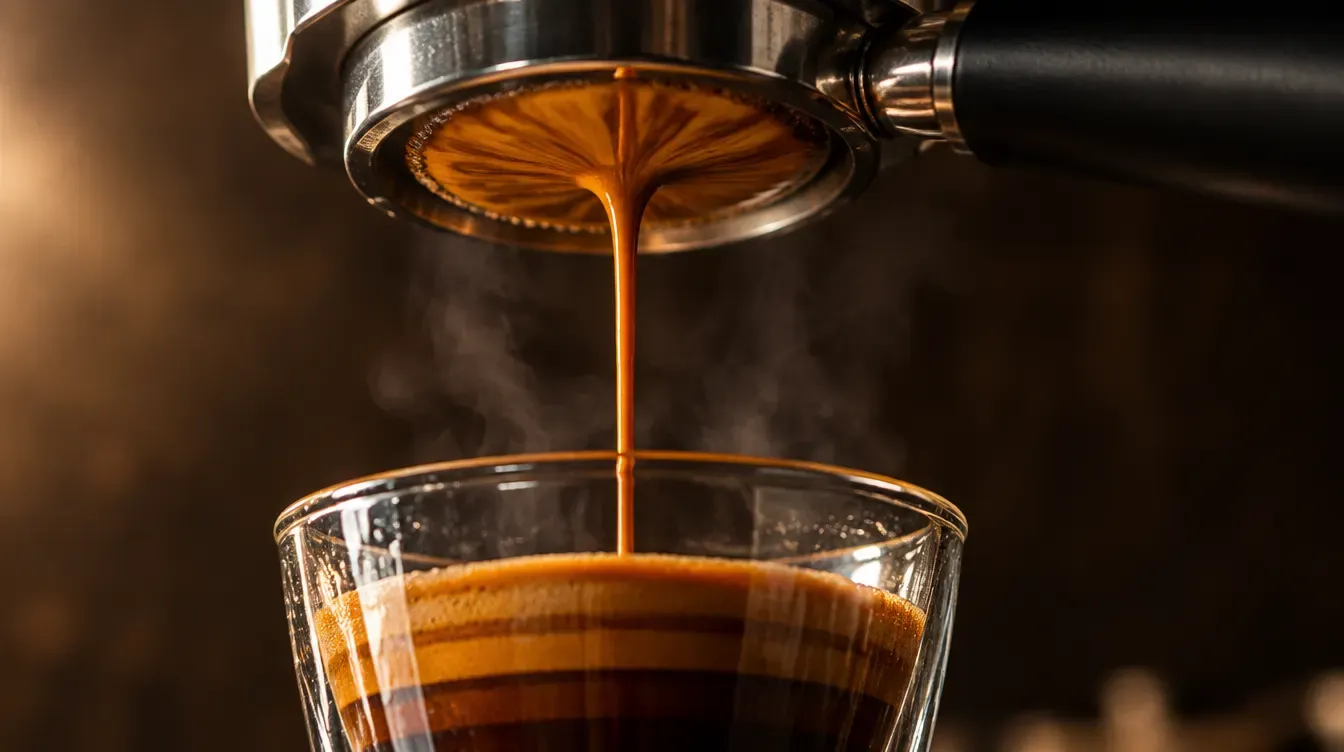
Sour means the water left too early
A sour shot is one where the water finished before it had dissolved the sugars and the browning compounds that balance the acids. Those acids are extracted first and fastest; everything that rounds them out comes later.
That ordering is the whole mechanism, and it is worth holding in your head because it explains every fix below. Coffee does not give up its compounds all at once. The acids and the salts come out early, the sugars in the middle, and the bitter compounds last. Stop the process early and you have the first group without the second. Run it too long and you collect the third.
So sourness is not a flavour the coffee has. It is a flavour the coffee has only, because the rest never arrived.
Sour, or bitter, or both
Before changing anything, be sure what you are tasting, because the two faults pull in opposite directions and guessing wrong doubles the work.
| Under-extracted | Over-extracted | |
|---|---|---|
| Attack | Sharp, sour, lemony | Harsh, drying |
| Body | Thin, watery | Can be heavy but hollow |
| Finish | Stops abruptly, nothing left | Lingers, dry and bitter |
| Aftertaste | Salty at the sides of the tongue | Ashy |
| Shot behaviour | Ran fast, pale, blonded early | Ran slow, dark, thin stream |
The salt note is the most reliable tell. Under-extraction produces a distinctly saline edge along the sides of the tongue that over-extraction does not. If you taste salt, you are under-extracting, whatever else is going on.
A shot can also be both at once, which confuses people badly. That is channelling: water found a fast path through part of the puck, over-extracting that channel while the rest of the bed stayed under-extracted. The cup averages the two. If your shots read as sour and harsh together, skip to the puck preparation section of the fix list rather than grinding finer, because finer will make channelling worse.
Change one thing, in this order
- Grind finer. This is the only variable that reliably moves extraction.
- Check the time. Twenty-five to thirty seconds for a 1:2 ratio.
- Raise the temperature. Only if grind and time are already right.
- Check the coffee. Very light roasts and very old coffee both resist extraction.
Changing two of these at once is how people spend a month not fixing this.
Why grind comes first
Grind changes the total surface area the water meets, and it changes it enormously for a small movement of the collar. Nothing else you can adjust comes close. Dose moves extraction a little, temperature moves it a little, time moves it as a consequence of the other three.
Move in steps you can taste. A single click on an espresso grinder should shift the shot time by two or three seconds. If a click does nothing at all, the grinder’s resolution is too coarse for espresso, and that is a hardware limit rather than a technique problem, as the grind explainer sets out.
What the time is actually telling you
Twenty-five to thirty seconds is a symptom, not a target. Chasing the number by adjusting dose while the grind is wrong produces a shot that hits the time and still tastes sour.
Read it alongside the ratio. Eighteen grams in, thirty-six out, in twenty-eight seconds is a healthy starting point. If you are hitting that and the cup is still sour, the grind is not actually fine enough and the dose is compensating.
Temperature, third and last
Higher water extracts more, so raising it helps a sour shot. It is third on the list because its range is small: ninety-two to ninety-six degrees covers essentially everything, and two degrees will not rescue a shot that is four clicks too coarse.
If your machine is a single boiler, the temperature you got is partly luck of timing rather than a setting. Pull the shot at the same point in the heating cycle every time before concluding anything, and see the temperature explainer for why the same button produces different water on consecutive shots.
When it is the coffee, not you
Two cases where the recipe is not the problem.
A very light roast is denser, less porous and less soluble, so it resists extraction by construction. It wants a finer grind, hotter water and a longer ratio than a medium roast, often 1:2.5 or 1:3. If a new bag went sour the day you opened it and your settings had been fine for months, check the roast level before anything else.
Coffee that is too fresh or too old. Under about five days from roasting, carbon dioxide is still coming out of the grounds and physically getting in the water’s way, and the shot both gushes and tastes sour. Past about five weeks the soluble compounds have degraded and no grind setting brings them back. The window is wide but it has two edges.
The one that is not a recipe fault
If none of the above moves the cup, stop adjusting and look at the puck.
Pull a shot in a bottomless portafilter and watch the underside of the basket. Even extraction looks like a uniform curtain that converges into one stream. Channelling looks like one or two jets firing sideways while the rest drips. That is a distribution problem, and no amount of grinding finer fixes it; finer grind raises the pressure and makes the channel worse.
The fix is in the basket rather than the grinder: level the bed, break up clumps before tamping, tamp flat rather than hard, and check that the basket is not worn. The espresso fault table covers the rest of the symptoms, and water is the last thing to suspect, because low-alkalinity supplies let the acids through undamped and a cup can read sour on a technically correct extraction.
Frequently asked
- Should I change grind or dose first?
- Grind. It moves extraction further than any other variable, and changing two things at once tells you nothing about either.
Related reading
Real espresso in twenty centimetres
Small machines used to mean bad espresso. The compact category grew up, and the compromises moved somewhere more sensible.
Resting coffee: why a fresh roast is not ready yet
Roasted coffee is full of carbon dioxide for days. How long to rest beans for filter and for espresso, and what a bag that is too fresh does to the cup.
What a PID actually changes
A PID holds brew temperature to a fraction of a degree. That matters for a light roast and a repeatable shot, and much less for a dark roast in milk.