Espresso
Cappuccino
Equal thirds of espresso, steamed milk and foam, served in a 150–180 ml cup. The classic ratio, and how to hit it at home.

At a glance
- Total
- 5 min
- Difficulty
- Medium
- Yield
- 1 cup
- Ratio
- 1:2
- Dose
- 18 g
- In cup
- 36 g
In the cup
- Foam33%
- Steamed milk34%
- Crema5%
- Espresso28%
Equipment
- Espresso machine with steam wand
- Milk jug, 350 ml
- Cup, 150–180 ml
- Scales
- Thermometer, optional
Ingredients
- Coffee, medium roast
- 18 g
- Whole milk, cold
- 120 ml
Method
Pull a double espresso, 18 g in to 36 g out, in 25–30 seconds.
30sPurge the steam wand, then submerge the tip just below the surface of the milk.
Introduce air for the first three to four seconds only. The jug should gain about a third in volume.
4sDrop the tip deeper and spin the milk until the jug is uncomfortably warm to hold, around 60 °C.
20sGroom the milk: tap once, swirl until glossy, and pour from height to break the crema before dropping close to finish.
The ratio is the recipe
A cappuccino is a third espresso, a third milk, a third foam. Every difference between a good cappuccino and a bad one at home is in the foam: too much air introduced for too long gives you stiff, dry foam that sits on top instead of folding into the drink.
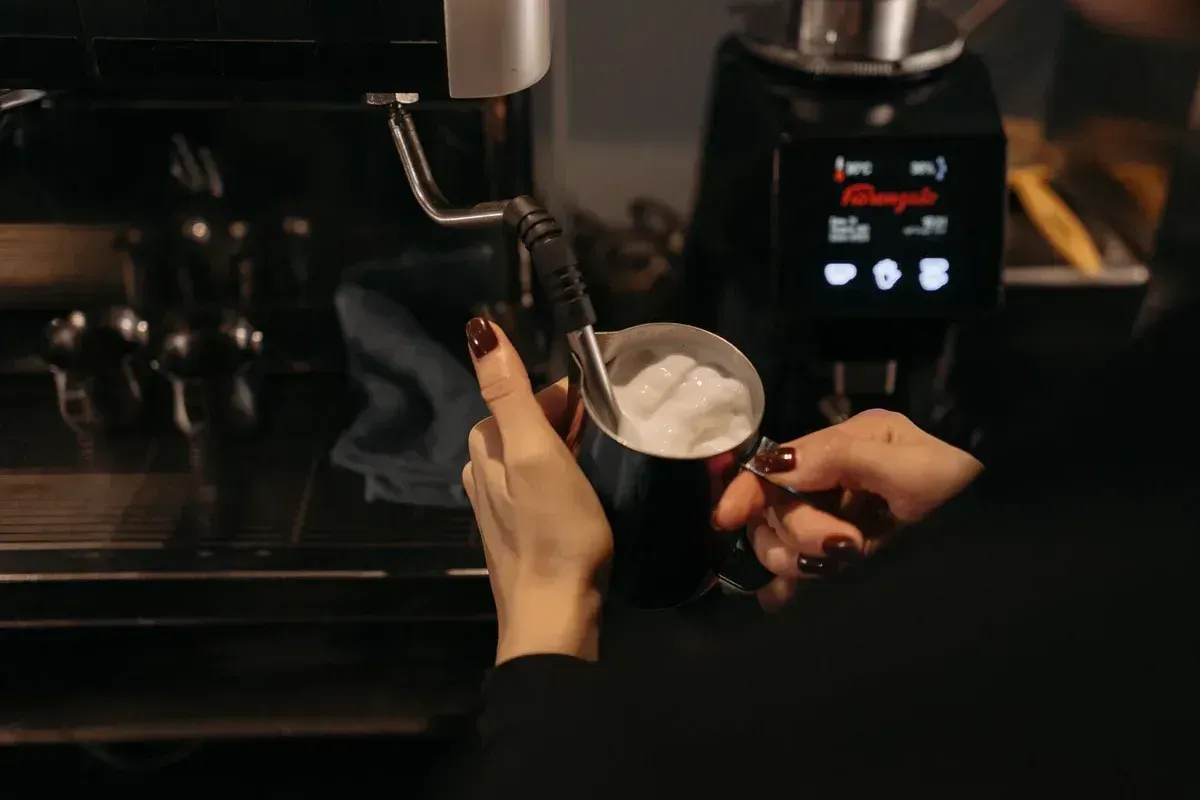
Four seconds of air, then none
The aeration window is the whole technique. Keep the tip just under the surface for three to four seconds, while the milk is still cold, and listen for a steady tearing sound rather than a shriek. The jug should gain about a third in volume, which is the foam you are going to drink. After that the tip goes deeper and the job changes: no more air, just a whirlpool folding what you made into the rest of the milk until it looks like wet paint.
Milk taken past 65 °C loses that texture and picks up a cooked note, so stop at around 60 °C. If you have no thermometer, the jug becoming uncomfortable to hold is close enough, and it is the cue most bars actually use.

Where home cappuccinos go wrong
Three things, in order of how often they are the culprit. The cup is too big, so the ratio is a latte before the milk is even textured. The milk was steamed before the shot and has been sitting, which lets the foam and the liquid separate: pull the espresso first, then steam, then pour straight away. And the shot itself is under-extracted and sour, which milk rounds off but never fixes.
Weigh the shot before you blame the milk. 18 g in, 36 g out, 25 to 30 seconds is the target, and the same one every drink on this page starts from.
Questions about this recipe
- How big should a cappuccino cup be?
- 150 to 180 ml. A double shot is 36 g, so a 150 ml cup lands on the classic thirds. Pour the same drink into a 250 ml cup and you have made a latte with a thick lid of foam.
- Can I make a cappuccino with skimmed milk?
- Yes, and the foam will actually be stiffer, because protein does the foaming and fat does the softening. It holds a taller head but drinks thinner and the sweetness drops. Whole milk is the better default; semi-skimmed is a fair compromise.
- Why does my foam separate from the milk?
- The air went in too late or for too long, so the bubbles are large and dry. Aerate in the first three to four seconds only, while the milk is still cold, then drop the tip deeper and let the whirlpool fold that air through. Glossy, paint-like milk does not split in the cup.