Espresso
Espresso macchiato
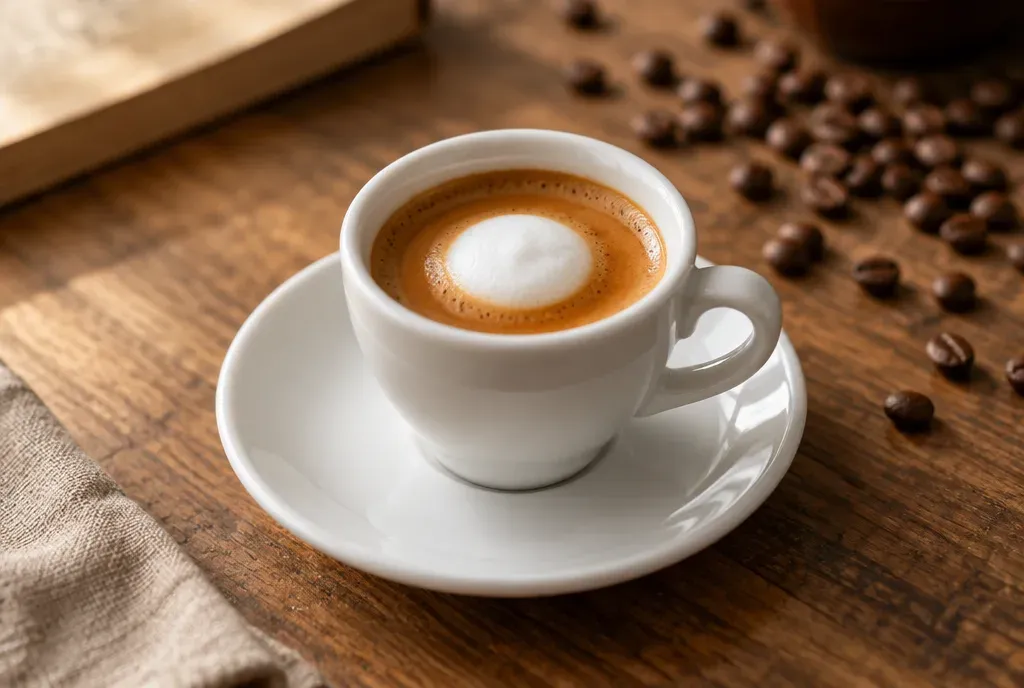
A double espresso marked with a spoon of dense foam. Two ingredients, 40 grams in the cup, and the milk is punctuation rather than a drink.
At a glance
- Total
- 4 min
- Difficulty
- Easy
- Yield
- 1 cup
- Ratio
- 1:2
- Dose
- 18 g
- In cup
- 36 g
In the cup
- Foam15%
- Milk10%
- Crema10%
- Espresso65%
Equipment
- Espresso machine with steam wand
- Milk jug, 350 ml
- Demitasse, 60–90 ml
- Scales
- Teaspoon
Ingredients
- Coffee, medium to medium-dark roast
- 18 g
- Whole milk, cold
- 50 ml
Method
Warm the demitasse with hot water and empty it. A 60 ml cup loses a shot's heat in seconds.
20sPull a double espresso straight into the cup, 18 g in to 36 g out, in 25–30 seconds.
30sPurge the wand, then steam 50 ml of milk with two seconds of air. You want paint, not meringue.
2sSpin the jug to 55–60 °C, lower than a cappuccino: the milk sits on top and cools fast in a small cup.
15sTap and swirl until glossy, then spoon one dollop of foam into the centre of the crema. Stop at a coin-sized mark.
10sServe at once. The mark tells the drinker how much milk is in there, so it should still be visible at the table.
Marked, not mixed
Macchiato is Italian for stained or marked. The name is the recipe: a shot of espresso with one spoon of milk foam dropped on top, so a barista handing over a tray can tell at a glance which cup already had milk in it. Everything that has since been sold under the name is a different drink wearing it.
The whole build is about 40 grams of liquid, and 36 of those are espresso. That ratio is why the shot itself has nowhere to hide. A macchiato made with a sour, under-extracted shot tastes sour, because there is no volume of milk to round it off. Fix the espresso first, then mark it.
What the spoon of foam actually does
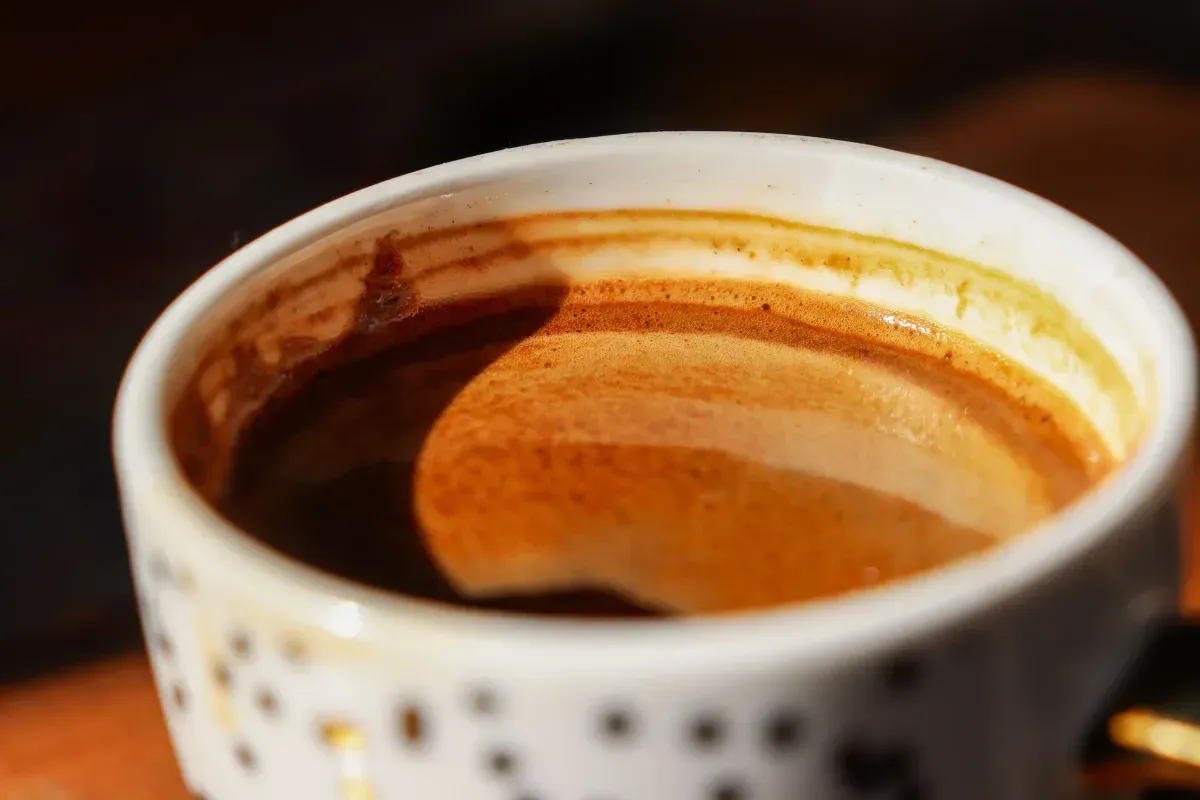
Ten to twenty millilitres of foam cannot dilute a double shot. What it does is change the first two seconds of drinking: fat and air hit the palate before the espresso, which rounds off the sharp front edge of a fresh shot without touching the body underneath. That is also why the foam has to be dense. A loose, bubbly foam drains into the crema, the mark disappears, and you have a slightly warmer espresso instead.
Keep the milk cooler than you would for a cappuccino. In a 60 ml cup the drink is finished in three or four mouthfuls, so it never needs the heat reserve that a 180 ml cup does, and milk taken to 70 °C brings a cooked, sweetish note that sits badly on a short, intense shot.
The variations worth knowing
A latte macchiato is the inverse: milk marked with espresso, poured in the other order, in a tall glass. It is a milk drink. A cortado replaces the spoon of foam with 60 to 70 ml of textured milk. A piccolo is a ristretto in a 90 ml glass topped with milk, so it lands between the two. All four are the same two ingredients, which is the point of learning the ratios rather than the menu names.
Questions about this recipe
- Is a macchiato the same as a caramel macchiato?
- No. An espresso macchiato is espresso marked with a spoon of milk foam, around 40 g in the cup. The caramel version sold by large chains is a flavoured latte, roughly five times the volume, with the milk as the main ingredient.
- What is the difference between a macchiato and a cortado?
- Volume of milk. A macchiato takes a spoon of foam, 10 to 20 ml, and stays espresso-forward. A cortado takes 60 to 70 ml of steamed milk poured through the shot, so it drinks like a very short flat white.
- Why does my macchiato taste watery?
- Too much milk, or milk that was heated past 65 °C. Above that the proteins slacken, the foam collapses into the shot and the drink reads as diluted espresso rather than as espresso with a mark on it.