Light roast
Light roast, explained
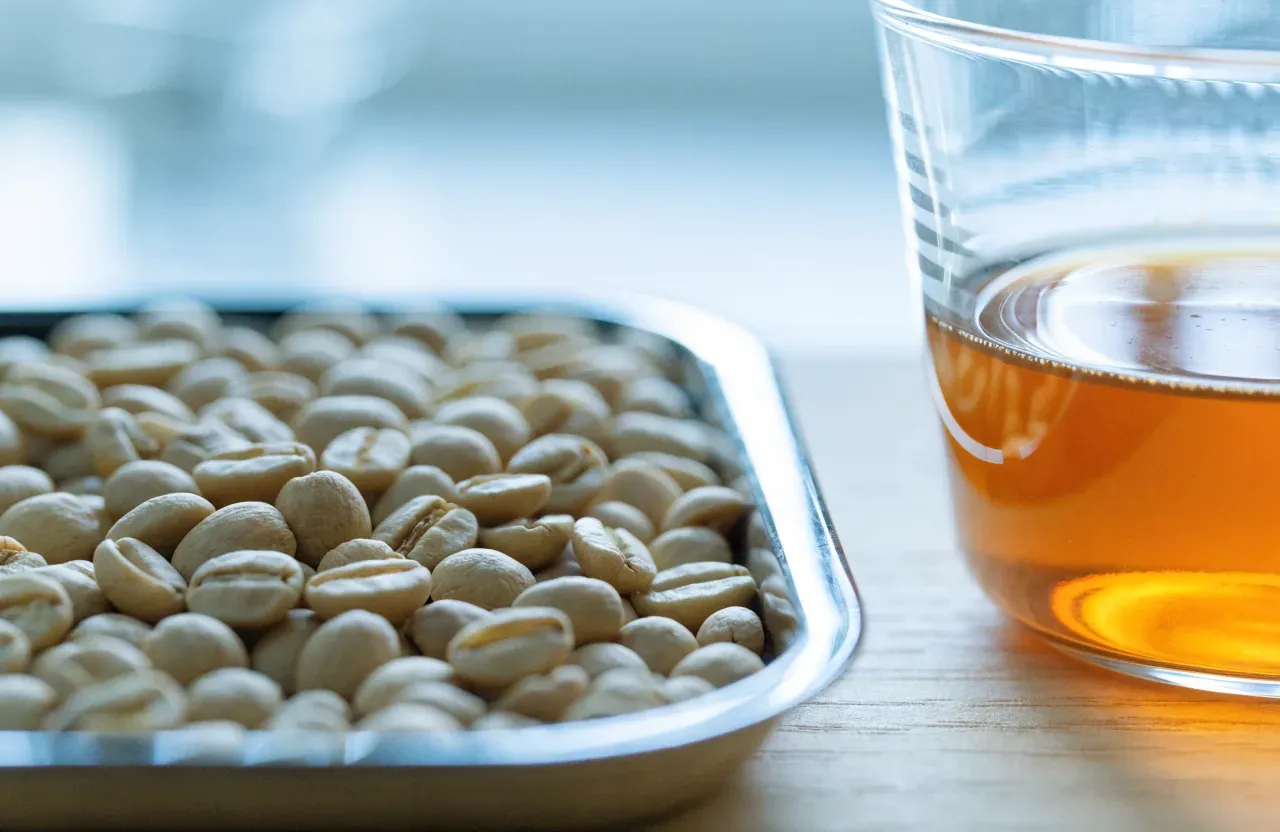
What a light roast keeps
A light roast is one dropped from the roaster shortly after first crack, when the bean has cracked audibly and expanded but has not yet gone on to develop the heavy caramelisation of a longer roast. In practice that is a minute or two of development rather than four or five, and the bean comes out pale, matte and dry, with no oil anywhere on the surface.
What that timing protects is the coffee’s own chemistry. The organic acids that a coffee arrives with, chiefly malic, citric and the quinic acids that come from chlorogenic breakdown, are still largely present. So are the volatile aromatics that carry a floral Ethiopian or a stone fruit Kenyan, most of which are fragile and are driven off by further heat. That is the entire argument for roasting light: everything distinctive about where the coffee grew survives.
Density survives too, and it matters more than it sounds. Roasting drives out water and builds internal pressure until the cell structure ruptures. The further a roast goes, the more porous and the more fragile the bean becomes. A light roast stays hard and heavy, which makes it a different physical object to brew even before you consider flavour.
The trade is honest. You get acidity, clarity and origin character, and you give up the deep caramel sweetness and the soft body that come from time in the roaster. Whether that is a good trade depends entirely on what you are making, which is the difference between this and a medium roast.
Why it resists extraction
Everything difficult about light roast coffee follows from one fact: it is less soluble. The compounds you want to dissolve are locked in a denser matrix, there are fewer ready-made sugars sitting near the surface, and the water has to work harder and longer to reach the same extraction yield.
Brew a light roast at the settings that suit a medium one and it will under-extract. Under-extraction tastes sour, thin and salty, and it is consistently mistaken for the coffee simply being too acidic. It is not. It is the same acidity with none of the sweetness that balances it, which is why the cup tastes like a lemon rather than like a peach.
The dials, in order
The fix is to push extraction, which means three dials in roughly this order. Grind finer, because surface area moves extraction further than anything else; our grind guide covers what each step actually changes. Raise the water temperature to the top of the range, 94 to 96 °C, which a medium roast would find harsh and a light roast needs. Then extend contact time, with a longer pour schedule or a slightly higher ratio.
| Variable | Typical for medium | For a light roast | Why |
|---|---|---|---|
| Grind | Reference setting | One or two steps finer | More surface area against a denser bean |
| Water | 92–94 °C | 94–96 °C | Solubility rises steeply with temperature |
| Ratio | 1:16 filter | 1:16 to 1:17 | More water extracts more, within reason |
| Rest after roast | 5–10 days | 7–21 days | Dense beans degas slowly and open up late |
Water chemistry has an outsized effect here as well. A light roast has less to give, so a water low in minerals extracts less of it and the cup reads as empty. This is the single most common reason the same bag tastes different in two kitchens, and it is covered in the water article.
On espresso, and under milk
Espresso is where light roast turns from demanding into genuinely difficult. You are asking nine bars of pressure to extract a hard, low-solubility bean in roughly thirty seconds, and the margin for error collapses. Recipes drift towards finer grinds than feel sensible, ratios stretched past 1:2 to 1:2.5, and temperatures at the top of what the machine offers. Shots run long, taste sharp if anything is off, and need re-dialling more often than a medium roast does.
Milk is the other honest limitation. A cappuccino or a flat white works because the roast sugars in the coffee and the lactose in the milk meet in the middle, and a light roast has fewer of those roast sugars to offer. Put a delicate washed Ethiopian under steamed milk and the florals disappear, the acidity reads as a slight sourness against the dairy, and what is left is an expensive, faint milky drink. Some light roasts with a heavier body survive it, and a dark roast survives it easily, which is precisely why most milk-drink blends are not roasted light.
Where a light roast is unarguable is filter. A pour-over gives it the time, temperature and dilution it needs, the acidity has room to read as fruit rather than as sharpness, and the aromatics that the roast preserved are the entire point of the cup. If you have bought a light roast and are not enjoying it, brew it black as filter before you conclude the style is not for you.
Frequently asked
- Is a light roast more caffeinated?
- Barely, and the direction depends on how you measure. Roasting destroys very little caffeine, but it burns off mass, so a light roast has slightly more caffeine per bean and slightly less per gram than a dark one. The difference is small enough that dose and brew method matter far more.
- Why does my light roast taste sour rather than bright?
- Because it is under-extracted. Brightness is acidity balanced by sweetness, and sourness is the same acidity with the sweetness missing. Grind finer, use water closer to 96 °C, and extend the brew before concluding you dislike the coffee.
- How long should I rest a light roast before brewing it?
- Longer than a dark one. Seven to fourteen days after roasting is a common window, and some dense high-grown coffees keep improving for three weeks. A light roast brewed two days off the roaster will taste closed and thin however carefully you brew it.
Related reading
How to read a bag of coffee
Roast date, process, altitude, varietal and the tasting notes: what each line on a bag is actually claiming, and which ones are worth paying for.
Dark roast without the burn
A developed dark roast is sweet, heavy and smooth. A scorched one is ashy and thin.
What happens inside the roaster
Drying, Maillard, first crack, development, second crack. What each phase puts into the cup, and why a roast profile is a curve rather than a setting.