Capsule machines
Compatible capsules: what changes inside
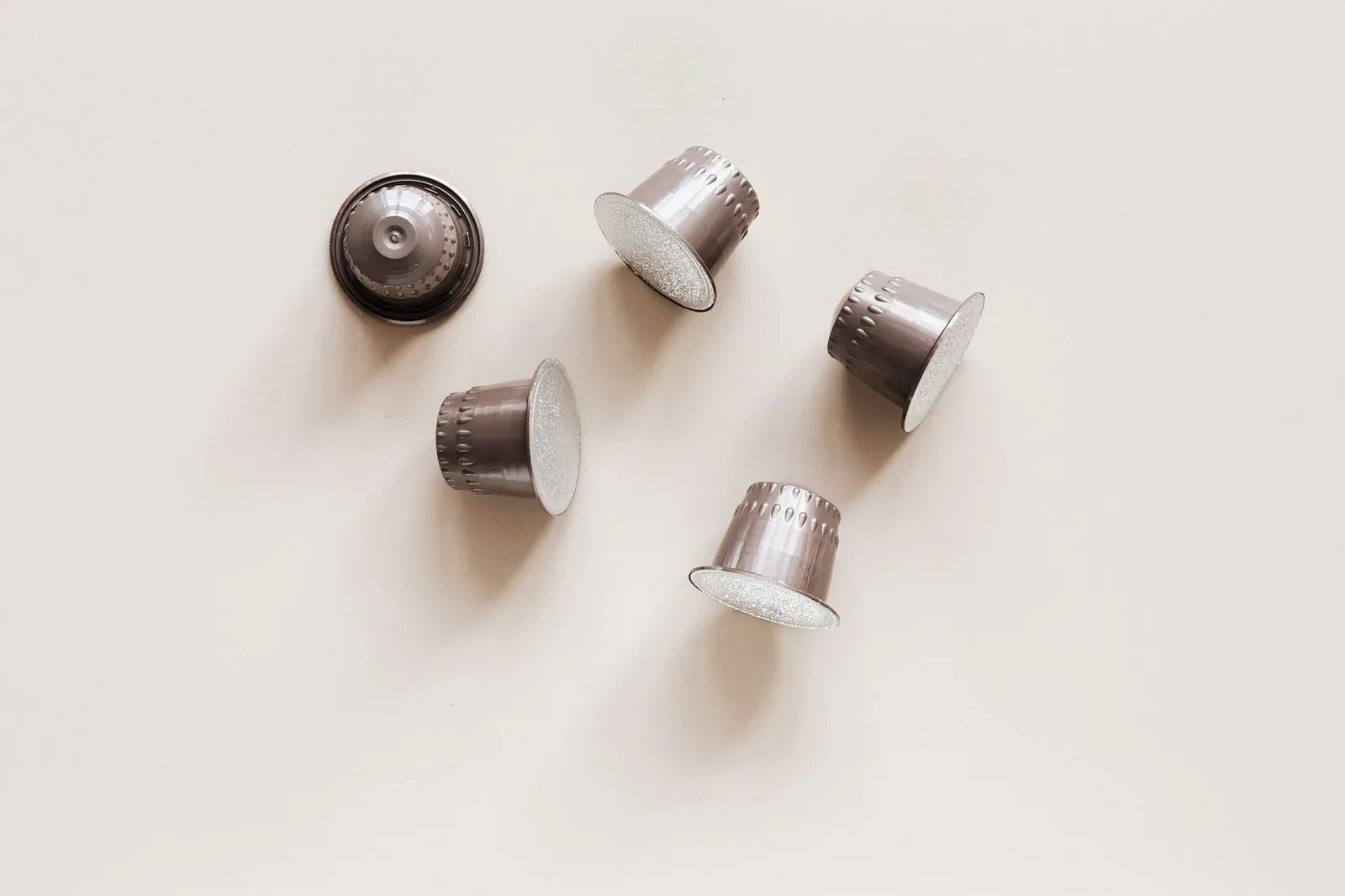
The machine is not the variable
A capsule machine pierces, pushes water at a pressure it decided, and ejects. It does that identically whatever is inside. So every difference in the cup comes from the capsule itself, and there are only four things to vary.
1. Dose
Originals hold roughly 5 to 5.5 g. Compatibles range from 5 to 7 g, and a few “intense” versions go further by packing the same shell harder.
More coffee at the same water volume means a stronger, heavier cup. It also means more resistance, so an overfilled capsule can slow the flow enough to trip a machine into cutting the shot short.
2. Grind
Finer grind, more extraction, more body, and more risk of clogging the exit screen. Compatibles often run slightly coarser than originals to stay safe across the whole range of machines they claim to fit, which is one reason a compatible can read thinner even at a higher dose.
3. The filter, and the shell
Aluminium originals use a foil lid pierced by the machine and a moulded filter plate. Plastic compatibles use a plastic mesh or a paper disc. Paper holds back more fines and oils, so it gives a cleaner, lighter cup, closer to filter than to espresso.
Compostable shells are the interesting case: they behave like plastic in the machine, and like nothing else on the shelf, because they breathe.
4. How long it has been breathing
This is the one nobody prints on the box. Aluminium plus a foil seal is an oxygen barrier for months. A plastic shell with a peel lid is not: it lets oxygen in slowly, and a capsule bought in a three month old carton has been staling the whole time.
That is most of why a compatible tastes flat rather than wrong. It is not a defect, it is a package doing less work.
How to buy well
- Prefer aluminium when you can, for the seal rather than for the metal.
- Look for a roast date, not just a best before. Almost nobody prints one, and the brands that do are telling you something.
- Buy small boxes often rather than a hundred at once.
- Judge a brand on two capsules from two different boxes, because consistency between batches is exactly where cheap compatibles fail.
Frequently asked
- Do compatible capsules damage the machine?
- A well made one does not. A badly moulded shell can jam the piercing plate or leave fragments in the chamber, and a capsule that is too tall stresses the closing mechanism. If a brand jams twice, stop using it rather than adjusting the machine.
- Why is the same capsule better in one machine than another?
- Pressure and water volume differ by model, and older machines pierce differently. A capsule tuned for a 19 bar pump at 25 ml will behave differently on a machine that delivers 40 ml by default.
Related reading
Refillable capsules, honestly
A refillable capsule solves the waste and the price, and hands you back a job the machine used to do. Whether that trade is worth it depends on one thing.
Capsule machines: what you gain and what you give up
Capsules buy you consistency and zero skill. They cost you money per cup, choice of coffee, freshness you can verify, and a bin full of packaging.
Coffee capsules: the cost per cup and the waste question
A capsule holds about five grams of coffee. Work the price up to a kilogram and the number stops being small. Here is the arithmetic, and the recycling reality.