Troubleshooting
Espresso troubleshooting: what the shot is telling you
Start with the symptom, not the fix
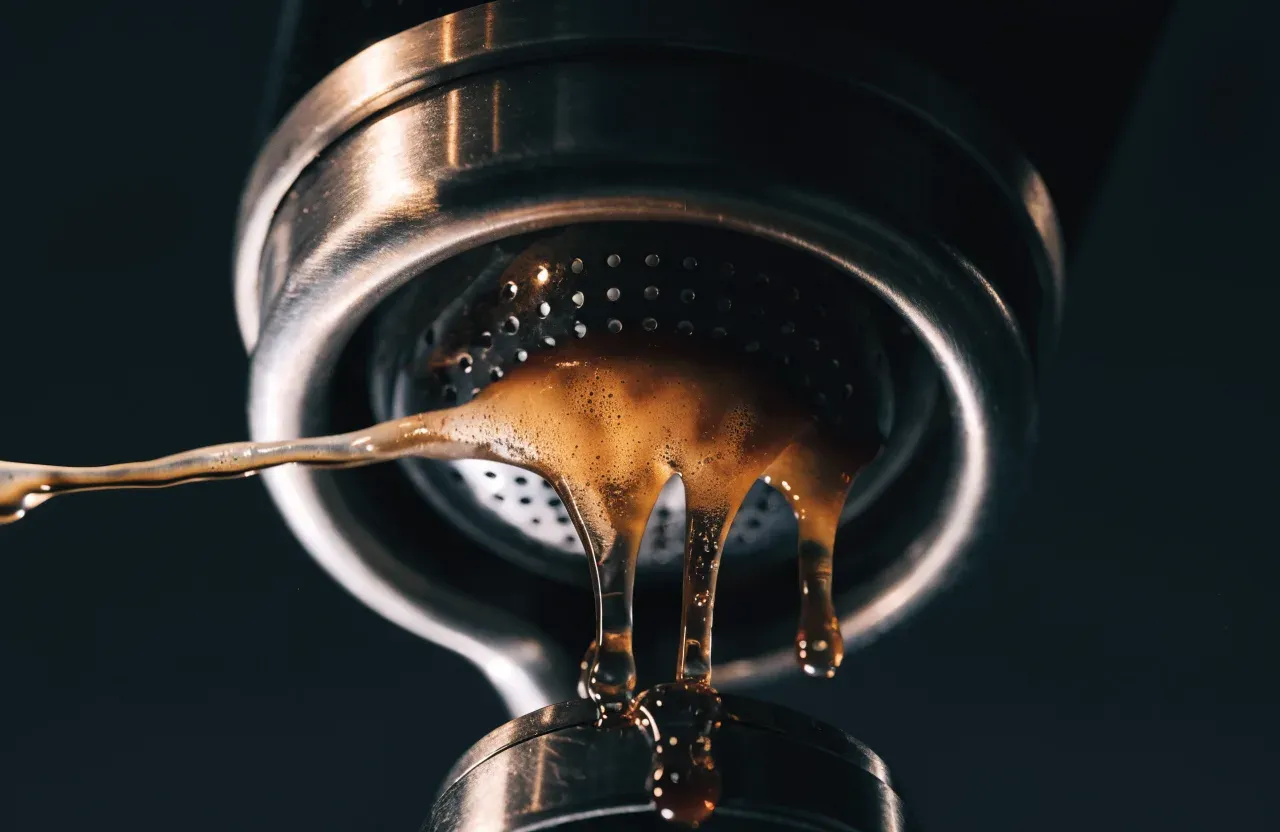
Espresso goes wrong in a small number of ways, and each way has a short list of plausible causes. The mistake almost everybody makes is starting from the fix they already know, usually grind, and applying it to a shot whose problem is somewhere else entirely. Grinding finer on a shot that is spraying out of a bottomless portafilter makes the spraying worse.
So read the shot before you change it. Watch how long it takes to first drops, watch whether the streams converge into one, watch the colour as it runs, and taste it even when it looks wrong. The table below maps what you saw to what is most likely causing it, and to the single change worth making next.
| Symptom | Most likely cause | Change this one thing |
|---|---|---|
| Fast and thin, under 20 seconds | Grind too coarse for the dose | Grind finer, two clicks or equivalent |
| Slow and choked, over 40 seconds | Grind too fine, or dose too high | Grind coarser, or drop 0.5 g |
| Sprays sideways or squirts from one point | Uneven distribution before the tamp | Stir the dry grounds with a WDT tool |
| Dark streaks, pale patches, quick then slow | Channelling through a weak spot | Level the bed, then tamp flat |
| Sour, sharp, hollow | Under-extraction | Grind finer, leave everything else |
| Bitter, drying, ashy | Over-extraction, or a burnt group | Grind coarser, or purge and clean |
| No crema, thin surface | Stale or too-fresh coffee | Change the bag, not the settings |
| Correct time but thin body | Dose too low for the basket | Add 1 g and re-dial the grind |
The table is a starting point and not an oracle. Two faults can arrive together, and a machine with a real problem will produce symptoms that look like technique faults for weeks. What the table is good for is stopping you from changing three things at once.
The order to work in
There is a sequence, and it is the sequence because each step changes the ground the next one stands on.
Grind comes first. It moves extraction further than dose, temperature or tamp, and it is the variable your beans force you to revisit anyway as they age. Adjust it in small steps, pull a shot, and write down what happened. Keep dose, basket and ratio fixed while you do. This is the whole of dialling in, and it is the only step most shots need.
Dose comes second, and only once grind is roughly right. A dose that is too low for the basket leaves headroom, the puck moves, and you get a shot that runs on time but tastes thin. A dose that is too high chokes the machine and can leave the screen printing a ring into the puck. Move it half a gram at a time, and expect to re-adjust the grind after each move, since the two are coupled.
Distribution and tamp come third, and they are the step people skip. If the grounds are unevenly packed before the water arrives, water finds the loose route and takes it, which is channelling. No grind setting fixes a channel. Stirring the dry bed with a fine needle tool breaks clumps and evens the density, and as tamping sets out, going in level matters far more than going in hard.
Temperature comes fourth. It is real, and on light roasts it matters, but it is a smaller lever than grind and chasing it first hides everything else. Raise it for a light roast that stays sour at a correct time, lower it for a dark roast that turns bitter at a correct time.
The machine comes last, because it is the most expensive answer and the least likely one. A group that has not been backflushed in months tastes bitter no matter what you do. A shower screen with old grounds baked onto it distributes water unevenly and produces channelling that looks exactly like bad technique.
Reading the two faults that mislead
Two symptoms deserve their own paragraph because they are routinely misdiagnosed.
Sourness is under-extraction almost every time, and the fix is finer grind rather than more time or hotter water. The reason it fools people is that a sour shot can run for a perfectly respectable thirty seconds while still leaving half of what you paid for in the puck. If you want the long version of why, and the order to change things in, why your espresso tastes sour sets it out properly.
Spraying is the other one. A bottomless portafilter that throws coffee at the side of the cup is not telling you the grind is wrong. It is telling you the bed was not uniform, either because the grounds clumped on the way out of the grinder or because the tamp went in at an angle. Fix the bed, then judge the grind, and not the other way round.
When to stop changing things
The last piece of troubleshooting advice is the least popular one: sometimes the shot is as good as this coffee gets on this machine, and the next change makes it worse. If you have pulled six shots and the best of them was the second, go back to the second one’s settings and drink coffee for a week. Espresso rewards patience far more than it rewards a long session of adjustments, and a record of what you did is worth more than any single change you made.
Frequently asked
- What should I change first when a shot is wrong?
- Grind, almost always. It moves extraction further than any other variable you have, and most faults that look like dose or temperature problems are grind problems wearing a disguise. The exceptions are shots that spray or channel visibly, which are distribution faults, and a sour shot on a machine that has never been temperature stable.
- How many shots should I pull before deciding a change worked?
- One, if you changed one thing and the change was large enough to see. Two, if you are reading a subtle flavour difference. What does not work is pulling five shots while adjusting something each time, because at the end you know only that the last shot was different from the first.
- Can bad coffee be dialled in at all?
- Only within limits. Coffee older than about a month past roast, or fresher than about four days, will fight you: the first has lost the gas that builds crema and the second is still releasing it. If the shot behaves differently every morning with no change from you, suspect the bag before your technique.
Related reading
Why your pour over drains slowly, and how to fix it
A V60 that stalls past four minutes is rarely the recipe. Grind, fines, agitation, paper and fresh coffee, checked in the order that finds the cause fastest.
Pre-infusion and the bloom
Wetting the coffee before you brew it properly is the same idea on an espresso machine and on a pour over. What it fixes, and how long it should last.
Baskets, gaskets and screens: the parts that change the shot
A few pounds of replaceable parts sit between your grinder and your cup.