Extraction
Pre-infusion and the bloom
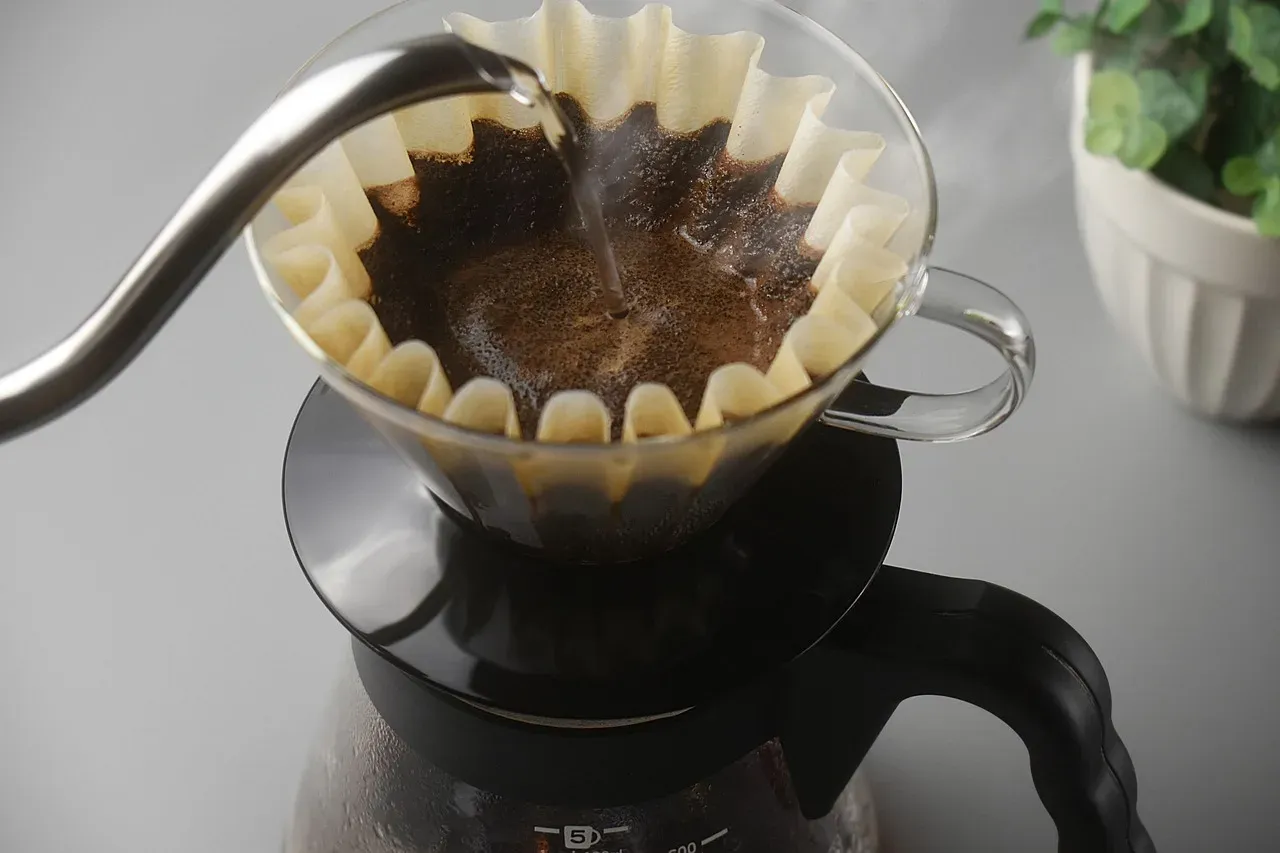
The same problem, twice
Dry coffee grounds resist water. They are full of carbon dioxide left over from roasting, they are not wetted evenly, and hitting them hard with water creates a path of least resistance that the rest of the brew then follows.
Pre-infusion on an espresso machine and the bloom on a pour over are the same answer: introduce a small amount of water at low or no pressure, wait, and let the bed settle and degas before the real extraction starts.
On espresso
Pre-infusion means running water into the puck at low pressure, typically one to three bars, for a few seconds before the pump reaches full pressure.
What it buys:
- The puck swells and closes the gaps that would otherwise become channels.
- A finer grind becomes usable, which raises extraction without the shot gushing.
- The start of the shot is more repeatable, which is most of what dialling in is chasing.
Five to eight seconds suits most recipes. Watch the spouts: you want first drops appearing towards the end of pre-infusion, not a stream, and not nothing at all.
Machines do this differently. A lever machine pre-infuses by design while the spring is loaded, an E61 group does it mechanically with the line pressure, and a pump machine with a programmable profile does it electronically. A basic machine that goes straight to nine bars does not pre-infuse, which is one real reason its shots are less forgiving.
On filter
The bloom is the same move with gravity instead of a pump. Pour roughly twice the coffee’s weight in water, so 60 g of water on a 30 g dose, wet everything, and wait.
You will see the bed rise and bubble. That is carbon dioxide leaving. Until it does, it physically pushes water away from the grounds, which is why a brew poured all at once on fresh coffee runs unevenly and tastes thin and sour.
Thirty to forty-five seconds covers most coffees. A coffee roasted three days ago may still be rising at a minute. A coffee roasted three months ago will sit there flat, which is a useful thing to know before you blame your technique.
When it does not help
Pre-infusion cannot rescue a puck that was never even. If the shot still runs fast on one side, the problem is upstream: distribution, the tamp, or a basket that no longer sits flat. Fix the bed first, and let pre-infusion do the small, real job it is good at.
Frequently asked
- How long should the bloom be?
- Thirty to forty-five seconds with twice the coffee's weight in water. Very fresh coffee can take a minute, and coffee that does not rise at all is telling you it is old.
- Does pre-infusion fix channelling?
- It reduces it, it does not fix it. Channelling starts with an uneven or badly distributed puck, and gentle wetting only helps a puck that was reasonably even to begin with.
Related reading
Resting coffee: why a fresh roast is not ready yet
Roasted coffee is full of carbon dioxide for days. How long to rest beans for filter and for espresso, and what a bag that is too fresh does to the cup.
Why your pour over drains slowly, and how to fix it
A V60 that stalls past four minutes is rarely the recipe. Grind, fines, agitation, paper and fresh coffee, checked in the order that finds the cause fastest.
Dialling in a new bag
A repeatable routine for the first four shots from a new coffee: what to fix, what to change, and how to know when you are done.