Troubleshooting
Why your pour over drains slowly, and how to fix it
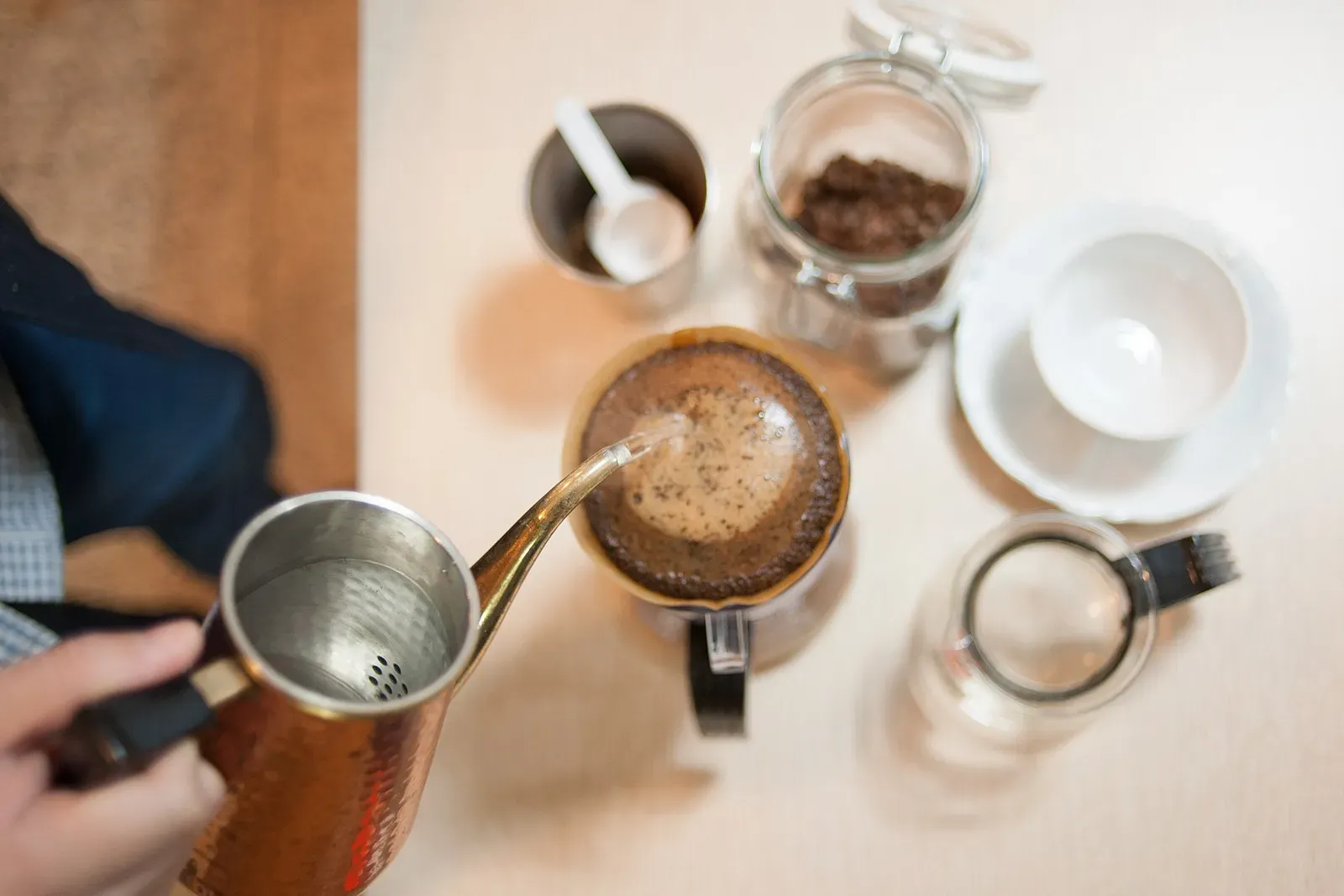
Grind two steps coarser and brew the same recipe again. Do that before you read anything else, because it fixes the problem more often than everything below put together. If the brew now finishes on time and tastes better, you are done. If it finishes on time and tastes thin, the grind was not the problem, and the rest of this page is for you.
What slow actually means
For a single cup on a V60, 15 g of coffee to 250 g of water, the whole brew should finish somewhere between 2:30 and 3:30. A Kalita or a flat-bottom brewer runs a little longer. A Chemex with its thick paper runs longer still, four to five minutes for a batch.
A stalled brew is one where the water sits on the bed for a long time after the last pour and then drips out slowly. It usually tastes bitter and dry at the finish, and often muddy at the same time: overextracted grounds and a cup that still somehow lacks sweetness.
Time is a symptom, not a target. If a brew runs to 4:00 and tastes excellent, leave it alone.
The five usual causes, in the order to check them
1. The grind is too fine. The first suspect for a reason. Finer grounds pack more tightly and slow the water. The grind settings by method table gives a starting point; from there, move one or two steps at a time.
2. There are too many fines. A grinder that produces a lot of dust clogs the paper even at a sensible average size. Blade grinders are the extreme case, but worn or entry-level burrs do it too. The sign is a brew that stays slow even as you go coarser, while the cup turns thin. You cannot fix fines with technique, only reduce the damage: grind a little coarser than feels right, and pour gently.
3. There is too much agitation. Stirring hard, pouring from high up or pouring onto the paper all drive fines to the bottom of the bed, where they form a layer that seals the filter. Pour in slow circles in the centre, keep the kettle low, and finish with a gentle swirl of the brewer rather than a stir.
4. The paper. Papers vary more than people think: thickness, weave and even how well a paper sits against the ribs change the flow. If a new pack of filters arrived the same week the problem did, that is your answer. Rinse every paper with hot water before adding coffee, and press it flat against the walls. The papers, cloth and metal piece covers the differences.
5. The coffee is very fresh. Beans roasted a day or two ago are still full of carbon dioxide, which bubbles through the bed and keeps water away from the grounds. The bloom is violent, the bed looks like foam, and the drawdown drags. Resting coffee explains why three to seven days usually cures it.
Two less obvious ones
Dose too large for the brewer. A V60 02 is comfortable up to about 25 g. Put 35 g in it and the bed is so deep that water has a long way to travel, and every pour takes longer to drain. Scale the brewer to the batch.
Light roast ground too fine to compensate. A very light roast resists extraction, so the reflex is to grind finer. Past a point that only slows the brew. Hotter water, close to boiling, and a longer bloom do more for a light roast than another step on the grinder.
A quick diagnostic table
| What you see | Likely cause | First change |
|---|---|---|
| Slow, bitter and dry | Grind too fine | Two steps coarser |
| Slow even when coarse, cup thin | Fines from the grinder | Coarser, gentler pours |
| Bed flat and sealed after the last pour | Agitation | Lower kettle, swirl instead of stir |
| Problem started with new filters | Paper | Rinse well, try another brand |
| Bloom foams for more than a minute | Coffee too fresh | Wait three to five days |
| Slow only on big batches | Bed too deep | Larger brewer |
When slow is fine
Two brews in a row that taste good are worth more than a stopwatch. If your V60 recipe finishes at 3:45 with a clear, sweet cup, that is your recipe now. The numbers exist to help you find a good cup, not to overrule one.
Related reading
Filter papers, cloth and metal
Bleached, natural, cloth and metal filters change body, clarity and even the oils in a filter coffee. What each one lets through, and what it holds back.
Pre-infusion and the bloom
Wetting the coffee before you brew it properly is the same idea on an espresso machine and on a pour over. What it fixes, and how long it should last.
Espresso troubleshooting: what the shot is telling you
Read the symptom, find the likely cause, change one thing. A working order for fixing fast, choked, sour, bitter and channelling shots without guessing.