Grinder care
Grinder care: burrs, retention and when to replace
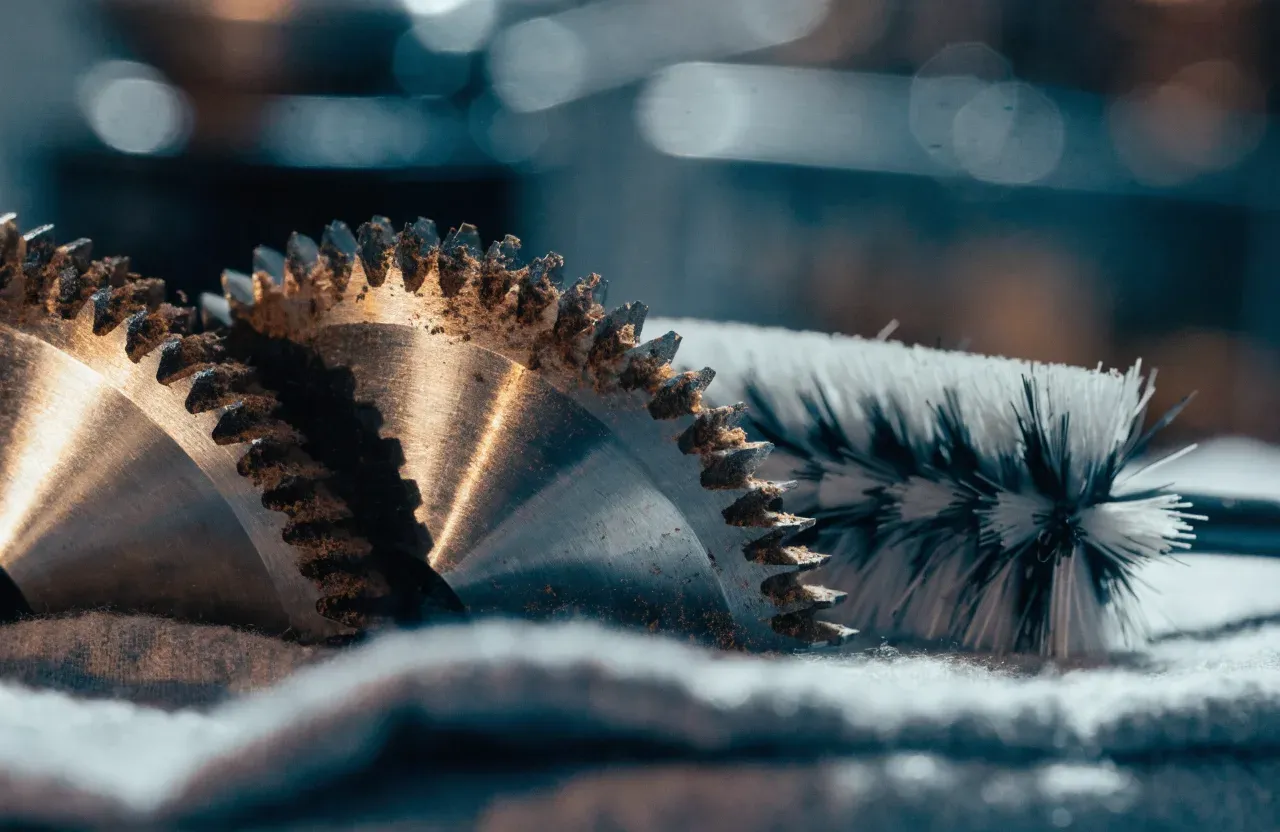
What the grounds left in the chamber do to a shot
Every grinder holds on to some of what it grinds. Coffee sticks to the burr carrier, packs into the corners of the chute and sits in the exit path, and it comes out at the front of the next dose. That retained coffee was ground minutes, hours or days ago, and ground coffee stales fast: the surface area that makes extraction possible in the first place is also what lets it oxidise. What you taste is a flat, papery, slightly cardboard note sitting under an otherwise decent shot, and it is maddening precisely because nothing about the shot looks wrong.
Retention also makes a grinder lie about dose. If the machine holds three grams and hands you three grams of yesterday’s coffee in exchange, your dose is right and your coffee is not. Worse, that exchange is not stable. Change the grind setting and some of what was packed in gets pushed out at the old setting, which is why the first shot after an adjustment so often tastes like neither setting. Single dosing with a puff of air or a bellows, or simply purging a gram before the real dose, removes most of the problem without removing any hardware.
The practical rule is that the coffee in the path should be today’s coffee. How you achieve that matters less than that you do.
Cleaning burrs without dulling them
Burrs are cut steel edges. Everything that makes a knife blunt makes a burr blunt, which rules out most of what people reach for. Clean dry, and clean mechanically.
Unplug the grinder, take the hopper off and remove the upper burr carrier. On most home grinders that is one collar and a couple of screws. Photograph the position of the adjustment ring before you disturb it, because getting back to your old setting by feel costs a morning. Brush the burr faces with a stiff nylon or natural bristle brush, working from the centre outwards along the cutting teeth rather than across them, and vacuum as you go so the dislodged fines leave rather than resettle. A wooden toothpick clears anything packed into the root of a tooth. The ring of compacted coffee behind the carrier is usually the largest single deposit in the machine, and it is the one no cleaning tablet ever reaches.
What not to do is a shorter list and a more important one. No water, ever, on steel burrs: they rust, and rust pits the cutting edge permanently. No oil, no degreaser, no isopropyl on the burrs themselves, since anything left behind becomes a flavour. No wire brush and no abrasive pad. Rice is a stubborn piece of folk advice that belongs in the bin; it is harder than the machine expects, it voids plenty of warranties, and cleaning tablets made of food-grade cereal do the same job without the risk.
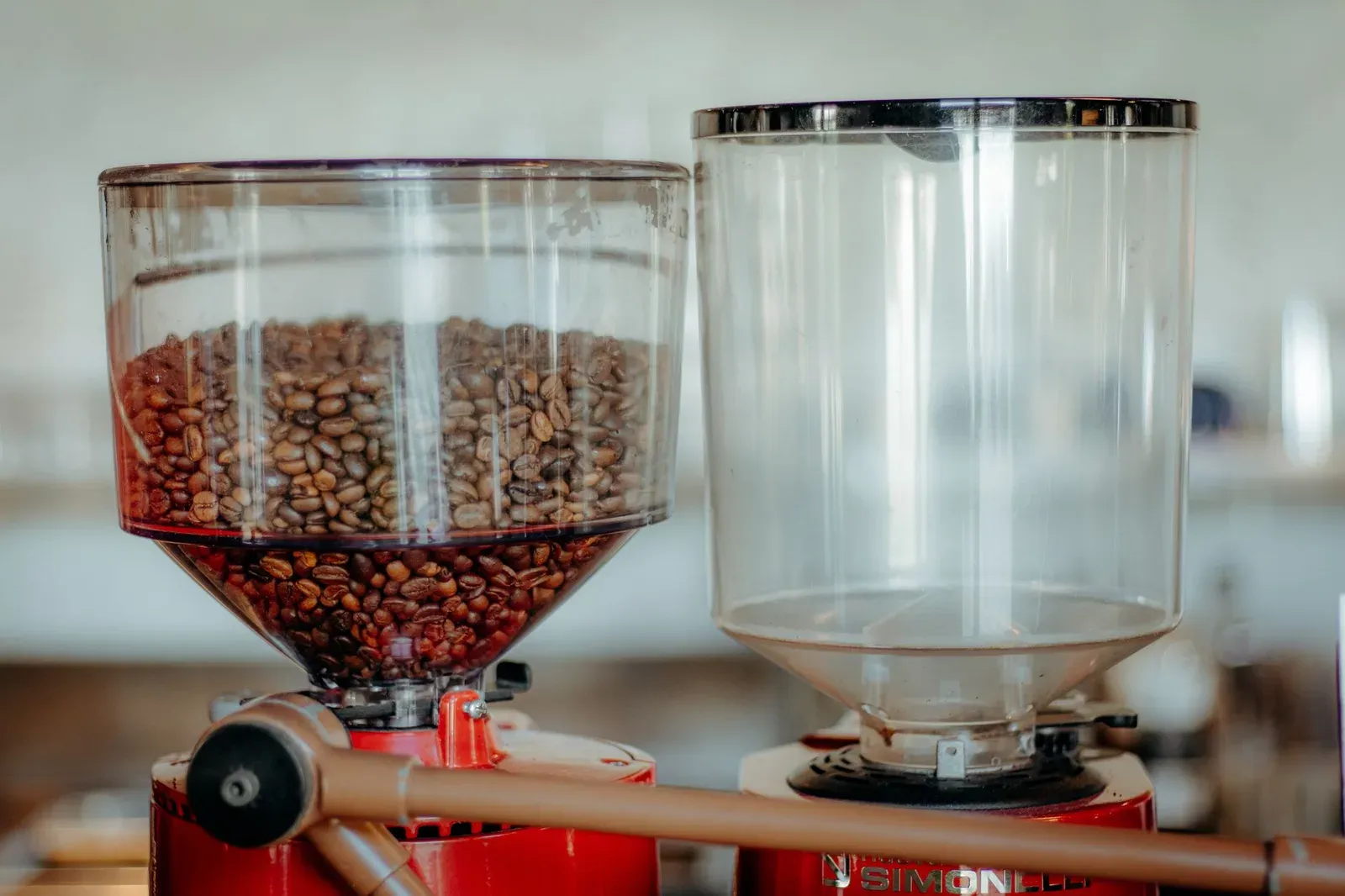
Reading the signs that burrs are worn
Burrs do not fail, they fade, which is why people run them long past their best without noticing. Three symptoms arrive together.
The first is time. A worn burr set grinds more slowly at the same setting, because it is tearing where it used to cut. If a dose that took eleven seconds now takes sixteen, and the beans and the setting have not changed, that is the strongest single indicator you get.
The second is the shape of the grind. Dull burrs produce more fines alongside the particles you want, so the distribution widens at both ends. In the cup that reads as a shot that is simultaneously bitter and thin, and at the machine it reads as rising resistance and more channelling, since fines migrate and block. If you have been chasing that combination with dose and tamp, the grinder is a likelier culprit than your technique, and it is worth ruling out the faster explanations in espresso troubleshooting first.
The third is drift. You find yourself going finer month after month to hold the same shot time, and eventually you run out of adjustment. A grinder that needs a different setting every few weeks for the same coffee is telling you something about its edges.
How long a set actually lasts
Ask how many years and the answer is meaningless, because a grinder that does two doses a day and one that serves a small office are not the same machine. Measure in kilograms through the burrs instead, and keep a rough tally.
| Burr type and use | Rough working life | What ends it |
|---|---|---|
| Steel, home espresso | Several hundred kg | Edges round off, fines rise |
| Steel, cafe or office volume | Similar total, reached in a year or two | The same wear, much sooner |
| Ceramic, any use | Longer than steel | Chipping on a stone, not dulling |
| Coated or hardened steel | Longest of the common types | The coating wears through unevenly |
Two things shorten every row. Dark, oily roasts load the burrs with residue that accelerates wear, and a single small stone in a bag of unsorted beans can end a set in one dose. The second is the argument for buying coffee from a roaster who sorts, rather than for any particular grinder.
When the replacement finally comes, expect to re-dial everything. New edges cut cleanly again, so your old setting will run fast and sour, and the fix is the same one that fixes it in why your espresso tastes sour: go finer and change nothing else until the time is back. It is also worth re-reading what the setting is actually doing in grind size explained, because a fresh set of burrs is the one moment when your numbers are genuinely starting over.
Frequently asked
- How often should I clean my grinder?
- A brush-out of the chute and the exit path every week or two is enough for most home use. A full strip down to the burrs, with a vacuum and a soft brush, is worth doing every few months or whenever the grind starts to feel sluggish. If you grind oily dark roasts or flavoured beans, halve both intervals.
- Do grinder cleaning tablets work?
- They do lift oils and old grounds, and they are gentler than any wet method because nothing stays behind. They are not a substitute for taking the burrs out occasionally, since the packed ring of grounds that builds behind the burr carrier is not in the path the tablets take.
- How long do burrs actually last?
- Steel espresso burrs in a home grinder usually stay honest for several hundred kilograms of coffee, which for most households is many years. Ceramic lasts longer but chips rather than dulling. The number is contested and depends heavily on bean density and roast level, so treat the symptoms as the real signal.
Related reading
Conical or flat burrs
The burr shape argument, with the marketing removed: what each geometry does to the grind distribution, and when it matters in the cup.
Baskets, gaskets and screens: the parts that change the shot
A few pounds of replaceable parts sit between your grinder and your cup.
Espresso troubleshooting: what the shot is telling you
Read the symptom, find the likely cause, change one thing. A working order for fixing fast, choked, sour, bitter and channelling shots without guessing.