Parts & accessories
Baskets, gaskets and screens: the parts that change the shot
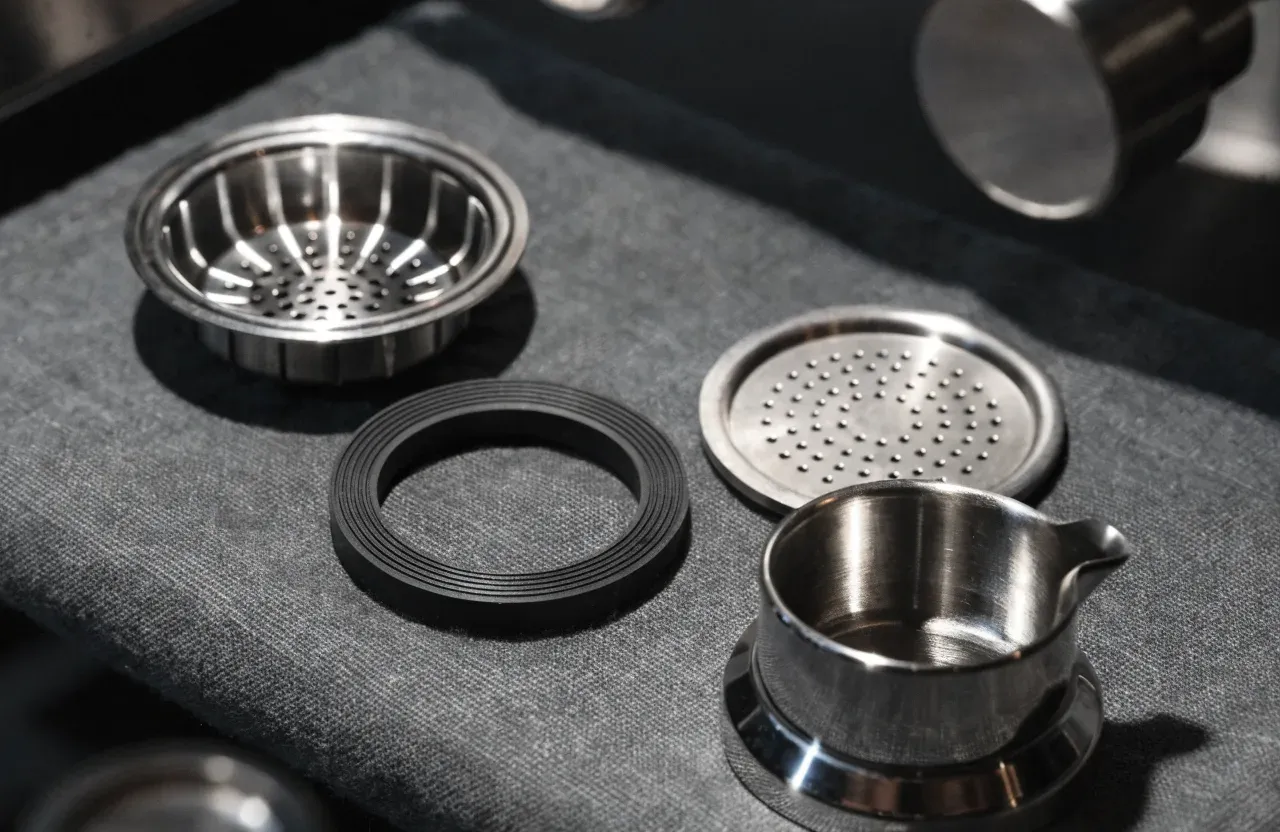
The parts you can replace are the parts that drift
An espresso machine has a boiler, a pump and a group head, and none of those are things you service casually. Sitting inside the group, though, are four consumable parts that cost very little and that quietly decide what the water does when it reaches your coffee: the filter basket, the group gasket, the shower screen and the dispersion plate behind it. Two of them wear out on a schedule. All four are user-replaceable on most machines with a screwdriver and ten minutes.
This is worth knowing because the symptoms of a worn part look exactly like the symptoms of bad technique, and people generally spend weeks on the second before checking the first.
Precision baskets against stock ones
The claim made for a precision basket is that its holes are consistent in diameter and evenly spaced across the plate, and that the base is flat rather than slightly dished. That claim is usually true, and it is measurable. A cheap stock basket can vary noticeably in hole size across one plate, and it can have open and blank areas from the stamping. Water flows fastest where there is least resistance, so an uneven plate biases the flow towards part of the puck before the coffee has any say in the matter.
What that is worth in the cup is narrower than the marketing suggests, and it is contested. The measured effect on extraction yield is small, and blind tastings have not produced a consistent verdict. Where people do agree is on repeatability: with the plate taken out of the equation, the variation left in your shots is variation you introduced, which makes the machine easier to learn on. If you are still chasing the basics, that is a real benefit. If your shots are already even, it is a small one.
Two things matter more than the brand. The first is that the basket wall is straight rather than tapering, so the puck sits as a cylinder and your tamper meets it flat. The second is that the basket’s stated dose is honest. Which brings us to size.
Single, double, triple, and why size means grind
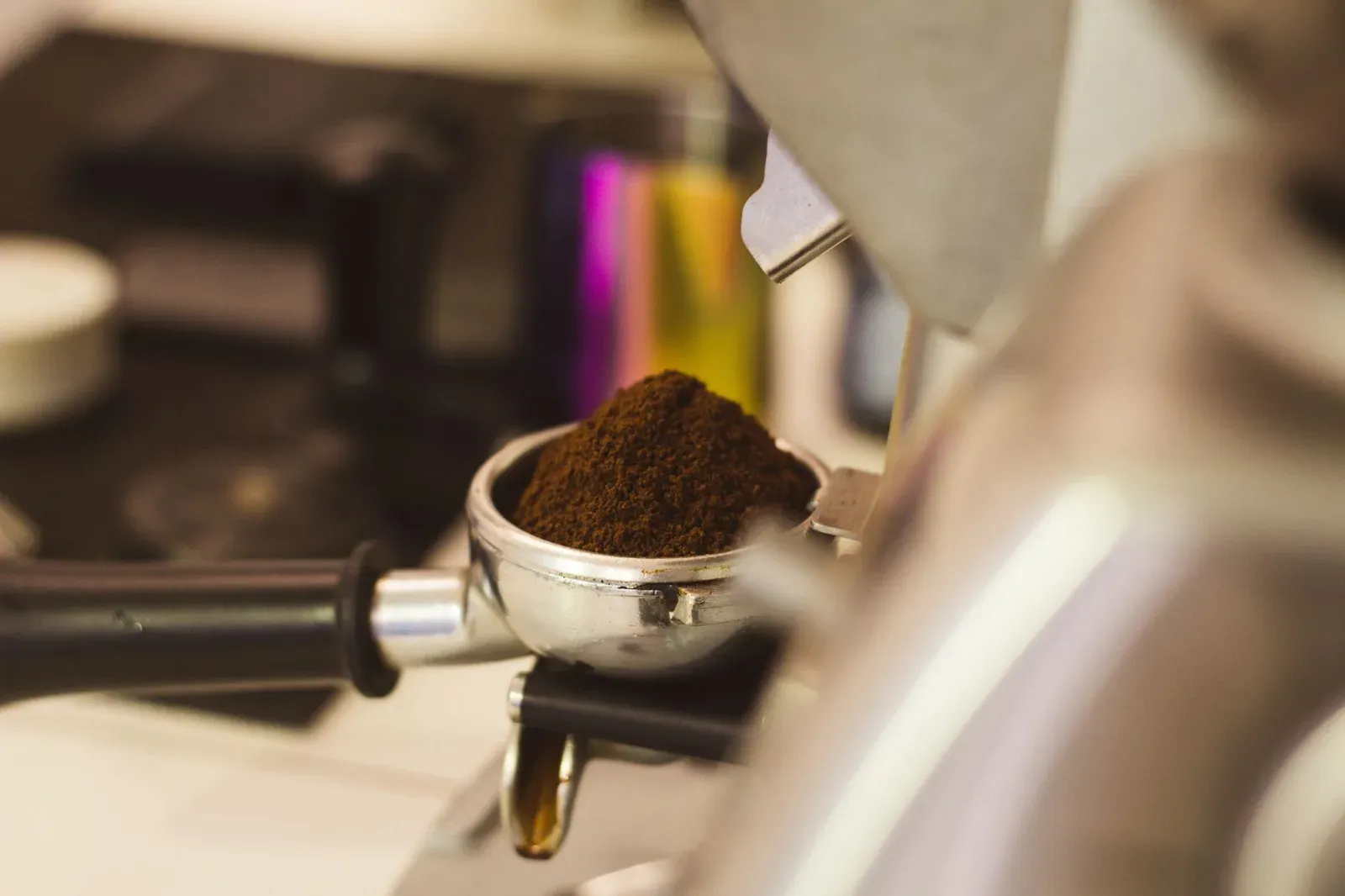
Basket size is a dose specification, not a preference. A single holds roughly 7 to 10 grams, a double 14 to 20, and a triple 20 to 24. Within one basket there is a workable range of a gram or two either side of its nominal figure. Go under it and there is too much headroom above the puck, which lets the bed lift and break when the pump comes on. Go over it and the puck touches the shower screen, so it has nowhere to swell and the edges compress unevenly.
Singles are the difficult ones, because a shallow puck is proportionally more affected by any unevenness. Most people are better off pulling a double and discarding half than fighting a single.
The important consequence: changing basket changes the dose, and changing the dose changes the resistance the water meets. Every basket swap is a re-dial. If you move from a stock double to a precision one of the same nominal size, expect the new basket to run faster, because the holes are open and consistent, and expect to grind finer to compensate. The troubleshooting table is the right place to start from once you have made the change.
The gasket goes first
The group gasket is a rubber or silicone ring in the group head that the portafilter seals against. It is under heat, pressure and compression every time you pull a shot, and it is the first part on nearly every machine to fail. It does not fail suddenly. It hardens and it takes a permanent set, and the portafilter handle creeps round a little further each month to find the same seal. Once the handle sits well past centre, the gasket is already old.
The failure that follows is water escaping around the edge of the portafilter during the shot, which means pressure that should be going through the puck is going around it. Leaks are the obvious version. The quieter version is a machine that just seems weaker. Replacement is cheap and is a ten-minute job on most machines: pull the shower screen, hook the old gasket out, push the new one in with the chamfered edge facing the right way, and lock a portafilter in while it beds down. Nine to eighteen months is normal in daily use, and it is the job that most belongs on the yearly list alongside the other annual maintenance.
The shower screen, and the portafilter with no bottom
The shower screen sits above the puck and its job is to spread the incoming water across the whole surface rather than letting it land as a jet in the middle. On most domestic machines a dispersion plate sits behind it doing the coarse work, with the screen doing the fine work. A screen that is clogged with old oils and fines delivers water unevenly and adds a stale flavour to everything, which is why backflushing and soaking it is part of the weekly clean rather than an occasional job. Screens are cheap enough to replace outright when the holes stop coming clean.
A bottomless portafilter is the last part on this list and the most misunderstood. Removing the spouts does not change the extraction. What it does is let you watch the underside of the puck while the shot runs, and that view is the clearest feedback available on whether flow is even: a clean shot pulls together into a single stripe, while a jet shooting sideways or a pale patch at one edge is channelling you would never have seen through a spout. Treat it as an instrument. It tells you that your distribution, your tamp or your basket is the problem, and then you go and fix the thing it pointed at.
Frequently asked
- Will a precision basket fix my channelling?
- Not on its own. A precision basket removes one cause of uneven flow, which is a random pattern of hole sizes across the plate. It does nothing about clumps in the grounds, a sloped tamp or a dose the basket cannot hold. If your shots are uneven, fix distribution and dose first, then decide whether the basket is still contributing.
- How do I know the group gasket needs replacing?
- Three signs, usually in this order. The portafilter locks in further round than it used to, past the centre line. It becomes hard to insert and remove because the rubber has hardened. Then water weeps from the edge of the group during a shot. Any two of those together mean replace it, and most machines want a new one every nine to eighteen months in daily use.
- Do I need to descale and clean the shower screen separately?
- Yes, they are different jobs on different parts. Descaling deals with mineral scale inside the boiler and pipework. The shower screen collects coffee oils and fines on its underside, which is a backflushing and soaking job. A screen left dirty holds rancid oil directly above your coffee, and it is one of the most common causes of a machine that has gradually started tasting stale.
Related reading
Real espresso in twenty centimetres
Small machines used to mean bad espresso. The compact category grew up, and the compromises moved somewhere more sensible.
What a PID actually changes
A PID holds brew temperature to a fraction of a degree. That matters for a light roast and a repeatable shot, and much less for a dark roast in milk.
Single boiler, heat exchanger or dual boiler
The three ways a machine makes brew water and steam at once, what each one costs you in waiting, and which one suits how you actually drink.