Ground coffee
Pre-ground, done as well as it can be
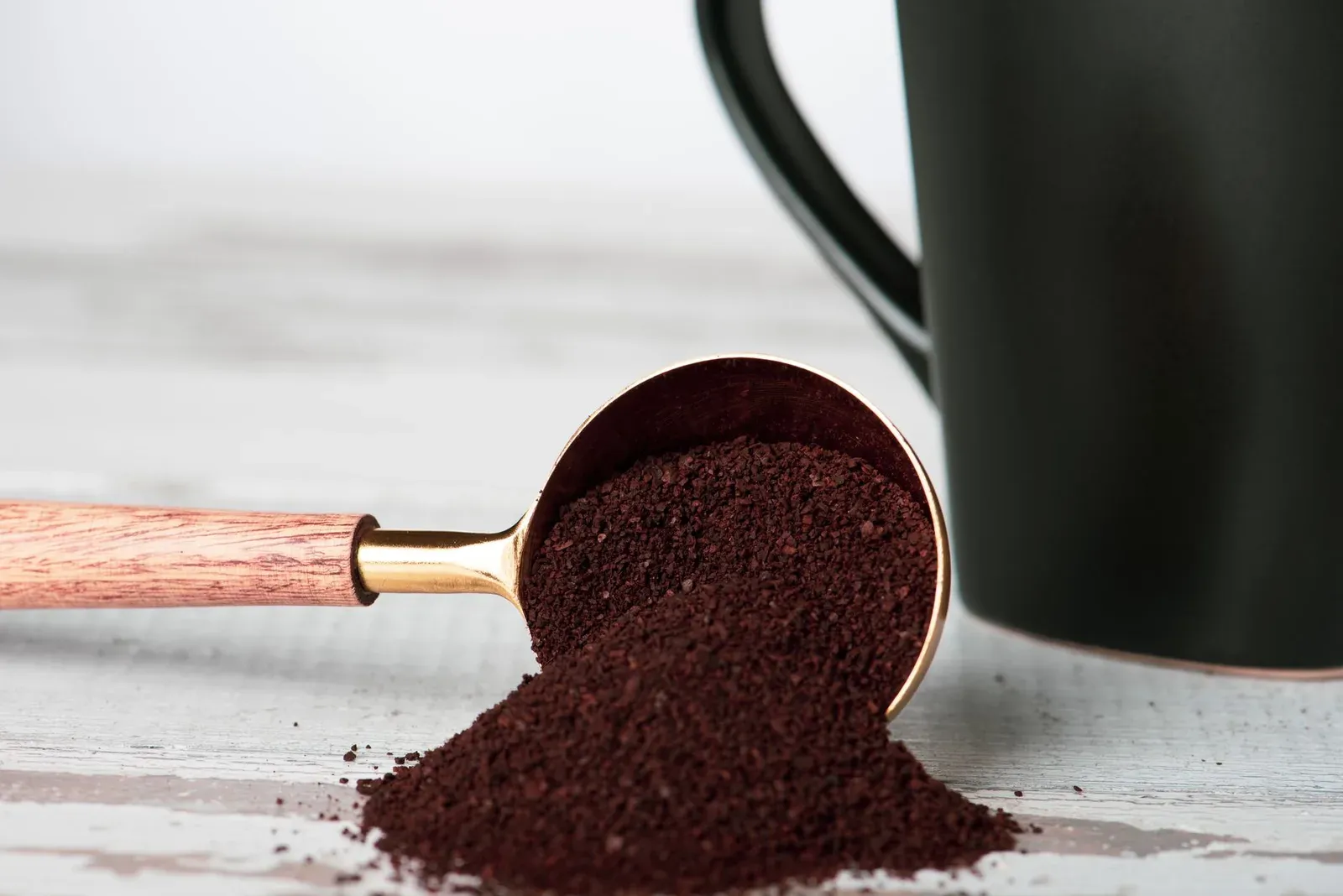
First, be honest about why
A grinder is the single biggest upgrade in home coffee, and nothing below changes that. But there are good reasons not to own one: a shared kitchen, a baby asleep next door, an office, a caravan, hands that no longer manage a hand grinder, or simply not wanting one more machine.
Ground coffee has one problem. Grinding multiplies the surface exposed to air by something like a thousand, and the aromatics leave through that surface. A whole bean holds most of what it has for two to four weeks. Grounds lose the volatile top of it in the first fifteen minutes and are noticeably flatter after a week.
You cannot undo that. You can buy in a way that makes it matter less.
Buy small, buy often
The cheapest kilogram in the shop is the most expensive coffee you will drink, because two thirds of it will be stale when you get to it.
Two hundred and fifty grams is about fifteen to twenty cups. That is two weeks for most households, which is roughly how long ground coffee stays interesting. Buy that, finish it, buy again.
If your only option is a large pack, split it the day it is opened. Divide it into weekly portions in small jars or bags, fill each one to the top so there is little air in it, and freeze all but the current one. Frozen ground coffee keeps for months. Take a portion out and use it from frozen; do not thaw and refreeze the same jar.
Buy the right grind, not a general one
This is the mistake that costs more than freshness. A bag marked simply ground is a filter grind, and a filter grind in a moka pot channels, in a French press turns to silt, and in an espresso machine gushes.
Ask for the grind that matches your brewer:
- Espresso: fine, like table salt going towards flour. Only worth buying from a roaster who grinds to order, and even then dial your expectations down.
- Moka pot: fine but not espresso fine. Between table salt and caster sugar.
- Filter, V60, drip machine: medium, like sand.
- French press: coarse, like sea salt.
- Cold brew: coarse, and this is where pre-ground does best, because a long immersion is forgiving.
Any roaster worth buying from will grind a bag to order and ask you what you brew with. A supermarket cannot, which is a good reason to buy ground coffee from a roaster rather than from a shelf.
Store it properly, which is not the fridge
Four things stale coffee: oxygen, heat, light and moisture. The fridge supplies the fourth generously and adds smells, so it is the worst container in the house.
- An opaque, airtight jar, at room temperature, in a dark cupboard.
- The original bag is fine if it has a valve and a zip, squeezed flat before closing.
- The freezer for anything you will not finish within two weeks, in small portions, never returned once opened.
Brew it slightly differently
Ground coffee that is a week old has lost aromatics but kept its solubles, so it tastes thin rather than bitter. Two adjustments compensate.
A little more coffee. If your recipe is 60 g per litre, go to 65 or 68. You are not making it stronger for its own sake, you are replacing the aromatic intensity that left with a bit more body.
Slightly cooler water. 90 to 92 °C rather than 94 to 96. Stale grounds give up their harsh compounds readily, and a cooler brew leaves more of them behind.
And skip the bloom on anything more than two weeks old. There is little CO2 left to release, so thirty seconds of waiting is thirty seconds of cooling for no return.
What you can expect
Handled this way, a fresh 250 g bag of properly ground specialty coffee gets you most of the way to a home grinder for the first week. It is not equal. It is close enough that the difference is smaller than the difference between a good bag and a bad one, which is the honest ranking of what matters.
Related reading
What is actually inside a capsule
Five grams of coffee, a nitrogen flush, a filter membrane and a shell built to hold nineteen bars. A capsule is packaging engineering before it is coffee.
Buying a decaf that tastes of coffee
Decaf stopped being a punishment about fifteen years ago. What to look for on the bag, what to avoid, and how to brew it so it holds up.
Reading a supermarket shelf
Most of what a coffee pack tells you is regulated, vague or both. What the words mean, which number matters, and how to find the two decent bags.