AeroPress
The inverted AeroPress debate
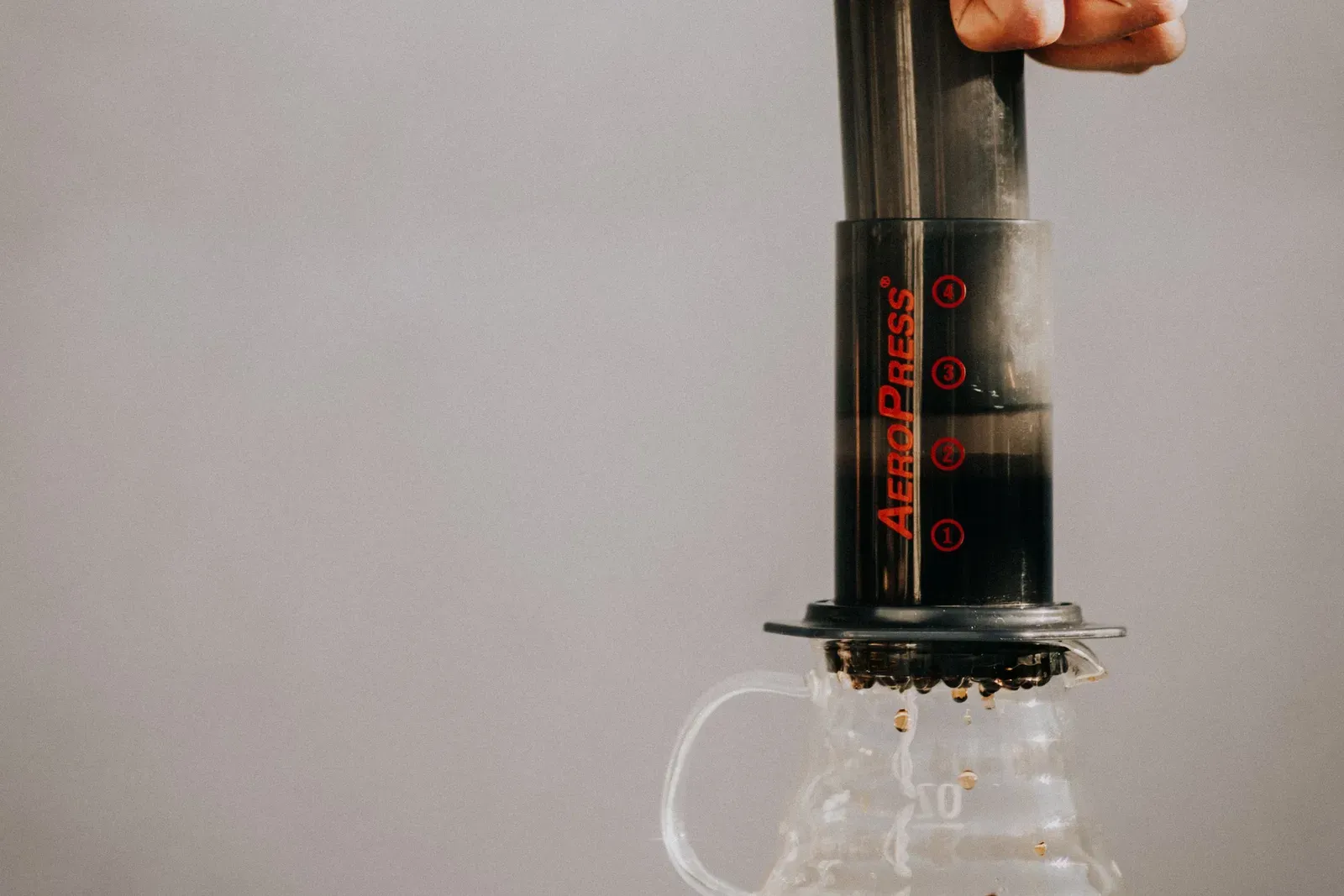
Every few months someone asks me whether they should be brewing their AeroPress upside down. My short answer is: try it once, understand what it does, and then probably go back. Here is the long answer.
What “inverted” means
In the standard method, you put the chamber on the cup with the filter at the bottom, add coffee and water, and press. Some coffee drips through before you press, especially with a coarse grind.
In the inverted method, you push the plunger a centimetre into the chamber, stand the whole thing upside down on the plunger, add coffee and water, steep, screw on the filter cap, then flip it onto the cup and press. Nothing drips until you choose.
What it changes
It makes the AeroPress a pure immersion brewer. All the water is in contact with all the coffee for the whole steep, and the steep time is exactly what you decide. Our piece on immersion against percolation explains why that tends to give a rounder, heavier cup.
It also allows long steeps with coarse grinds, which is why it is popular at the World AeroPress Championship, where recipes are built around precise control of every variable. A recipe that steeps two minutes at a coarse setting simply does not work the right way up: half the water would be in the cup before you start.
What it costs
The flip. You are turning over a plastic tube full of water just off the boil, balanced on a rubber seal that was not designed to carry weight. Most people who brew inverted every day have a spill story. Some have a burn story.
There is also a smaller cost: an inverted brew is less forgiving of a stuck plunger or an overfilled chamber, and the extra step adds a minute of fiddling to what is supposed to be the easiest brewer there is.
What I actually do
I brew the right way up, almost always. The drip-through in the first thirty seconds is small with a medium-fine grind, and I treat it as part of the recipe rather than a flaw. Our standard AeroPress recipe is built that way.
When I want full immersion, a valve cap does the job without flipping anything. It is the inverted method for people who would rather not pour boiling water on their hands.
So who should go inverted?
If you like experimenting with long steeps and coarse grinds, and you are careful, go ahead: it opens up recipes the standard method cannot do. If you want a reliable cup every morning, stay upright, adjust the grind using our grind settings by method, and spend the energy on better beans. The AeroPress will reward that far more than the orientation.
Frequently asked
- Is the inverted method dangerous?
- It can be. The brewer stands on the rubber seal of the plunger, which is not designed to bear weight, and flipping a full chamber of hot water over a mug is where spills happen. If you do it, keep the chamber below the top, use a sturdy mug and flip in one confident movement.
- Does the AeroPress Flow Control cap replace the inverted method?
- Largely, yes. A valve cap stops the drip until you press, which gives the same full immersion without flipping anything. It is the safer way to get the inverted result.
Related reading
Cold drip is not cold brew
Both use cold water and both take hours, but one drips and one soaks. How cold drip and cold brew differ in method, taste and effort, and which to make at home.
Fixing a moka pot: bitter, sputtering, leaking or weak
Most moka pot problems come from heat, grind, a tired gasket or a packed basket. Symptom by symptom, what is going wrong and how to fix it.
Immersion against percolation
Every brewer either soaks coffee in water or runs water through it. How the two families extract, why they taste different, and where each brewer sits.