Cleaning
The weekly clean that keeps espresso tasting right
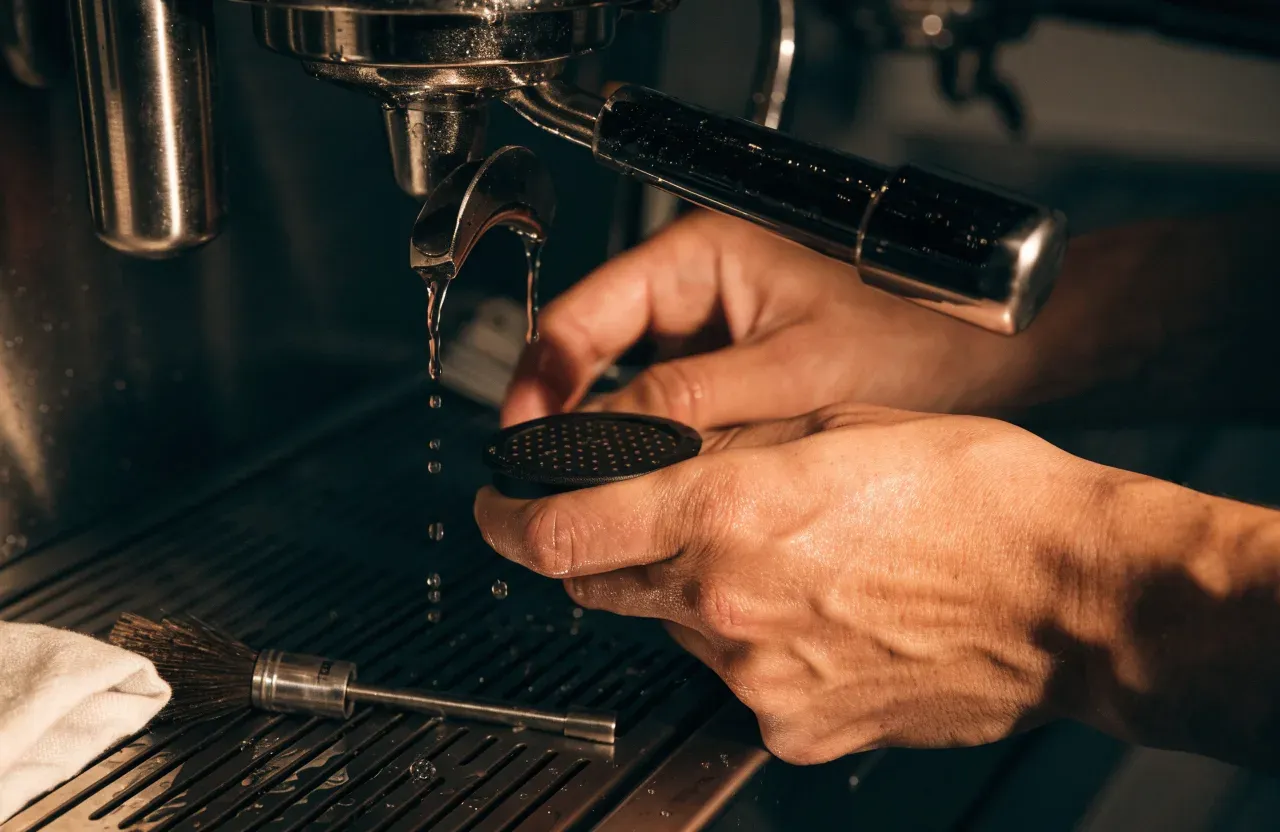
What you are actually cleaning away
Coffee is roughly fifteen per cent oil, and espresso extracts a good deal of it under pressure. Those oils settle everywhere the water and the grounds have been: the shower screen, the underside of the group, the seat of the gasket, the walls of the basket and the spouts of the portafilter. Warm, wet and exposed to air, they go rancid within days.
Rancid oil has a specific flavour and once you know it you cannot unknow it. It is stale nut, cardboard, and at the far end something close to old chip fat, and it sits underneath everything. It does not taste like a dialling-in problem, which is why people chase grind settings for weeks on a machine that needs twenty minutes with a brush. If a shot tastes flat and slightly savoury no matter what you change, clean the machine before you change anything else.
The second thing you are cleaning is milk. Milk protein cooks onto a hot steam wand in seconds and sets hard, and inside the tip it forms a plug that both sours the next jug and ruins the steam pattern.
The group: backflush, screen and gasket
Set aside twenty minutes with the machine hot. The detergent works far better warm, and so do the oils.
Backflush with detergent, five minutes. Put the blind basket, the one with no holes, into the portafilter and add a small measure of espresso machine detergent, usually around three grams or a level scoop. Lock it in, run the pump for ten seconds and stop. The water has nowhere to go, so it is forced back through the three-way valve and out to the drip tray, carrying the residue with it. Wait ten seconds, then repeat five times. Remove the portafilter, rinse it, and repeat the whole cycle five more times with no detergent at all, then pull one shot’s worth of water through the empty group and discard it. Skip the rinse cycles and the next three drinks taste of soap, which is unmistakable and genuinely unpleasant.
Machines without a three-way valve cannot do this. See the question at the foot of the page.
The shower screen and the gasket, five minutes. Undo the screw or clip holding the screen and take it out. Drop it into hot water with a pinch of the same detergent for ten minutes while you do everything else. Underneath it the group and the gasket face will be dark and tacky: work round the gasket seat with a group brush, then wipe the whole face with a cloth. A screen left in place blocks unevenly, and uneven flow through a screen is one of the causes of a puck that extracts on one side and not the other, which tastes sour and bitter at once rather than either cleanly.
While the gasket is exposed, look at it. A gasket that has gone hard, shiny or cracked will not seal, and that shows up as the portafilter needing to be forced past centre and as water weeping around the rim. Replacing it is a yearly job, covered in the jobs you only do once a year.

Baskets, tray and wand
Baskets and portafilter, five minutes. Take the basket out and hold it up to a light. The holes should be clean circles. Oils and fines block the outer ones first, and a basket that flows only through its centre gives you channelling and a thin, sharp shot. Soak the basket and the portafilter body, spouts included, in the detergent solution for ten minutes, then scrub the basket with a soft brush and rinse both thoroughly. Do not soak a plastic-handled portafilter for hours, and never put one in a dishwasher: the handle finish and the chrome both suffer.
Drip tray and the area under it, three minutes. Pull the tray out, empty it, and wash it properly rather than tipping it out. Underneath it is usually a sump that collects everything the tray missed, and that is where the sour, yeasty smell some machines develop is coming from. Rinse the drain hose end if you can reach it.
The steam wand, two minutes. Take the tip off if it unscrews and leave it in hot water with a little milk-line cleaner or a drop of detergent for ten minutes, then clear the holes with a pin and rinse. Wipe the whole wand shaft with a damp cloth. A wand cleaned daily needs almost nothing here. A wand that is not will have a crust inside the tip, and the result is a jug that will not spin, foam full of large bubbles and a faint cooked-milk taste in every drink after it. If your foam has started collapsing in the cup, this is one of the first places to look, ahead of the usual technique faults.
The daily habits that keep it to twenty minutes
Almost all of the above is undoing a week of small omissions, and the omissions take seconds to avoid.
After every drink, wipe the steam wand with a damp cloth immediately and purge it for a second. Immediately means while it is still hot, not after you have drunk the coffee. Milk that has set is a different job from milk that is still liquid.
After every shot, knock the puck out, wipe the basket with a cloth and flush the group for two or three seconds. That single flush takes the loose grounds off the screen and stops them baking on.
At the end of the day, backflush with plain water five times, leave the portafilter out of the group rather than locked in, and wipe the drip tray. A portafilter left clamped in overnight keeps the gasket compressed and the group face wet, and both age faster for it.
Do those three things and the weekly clean is genuinely twenty minutes. Skip them and it becomes an hour of scraping, which is the real reason people stop doing it at all.
Frequently asked
- Can I backflush a machine without a three-way valve?
- No, and attempting it can damage the pump. Single-boiler machines with a passive return, including many entry-level models, have nowhere for the pressurised water to go. Clean the group by soaking the basket, screen and portafilter in detergent solution instead, and check the manual before assuming your machine has the valve.
- How often does the shower screen need to come off?
- Once a week alongside the backflush is a sensible default for a household machine making a few drinks a day. If you are pulling ten or more shots daily, twice a week. You will know it is overdue when the screen holds visible grounds after a rinse or the puck starts coming out wet and uneven.
- Is a soak in detergent enough instead of backflushing?
- It cleans the parts you can remove, which is most of the residue, but it leaves the three-way valve and the group's internal passages untouched. On a machine that can backflush, do both. On a machine that cannot, soaking is the whole routine and it needs to happen more often.
Related reading
Bringing a 1970s lever back to life
A fifty-year-old lever machine is mostly brass, a spring and four seals. Here is the order to work in, and the two faults that mean walk away.
Buying a used espresso machine
Second hand is the cheapest route to a serious machine, and the fastest route to a boiler you cannot replace. What to check, what to walk away from.
Baskets, gaskets and screens: the parts that change the shot
A few pounds of replaceable parts sit between your grinder and your cup.