Buying guides
Kettles and scales: what actually matters
A spout you can aim, water at a repeatable temperature, a scale that reads 0.1 g fast enough. What to pay for in kettles and scales, and what to skip.
Featured
2 buying guides
Best variable-temperature kettle
Fellow
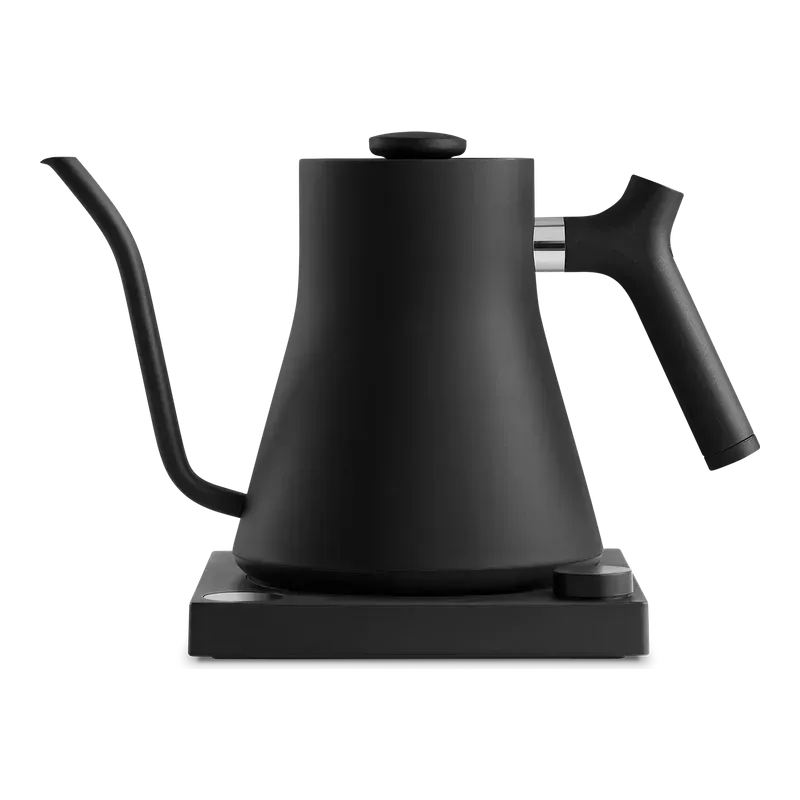
Fellow Stagg EKG
A narrow gooseneck, the set and the actual temperature on one display, and a hold of up to an hour. Expensive for a kettle, and the most precise way to stop thinking about water.
- Type
- Gooseneck, variable temperature
- Capacity
- 0.9 L
- Hold
- Up to 60 minutes
- Display
- Set and actual temperature
Best pour-over scale
Timemore
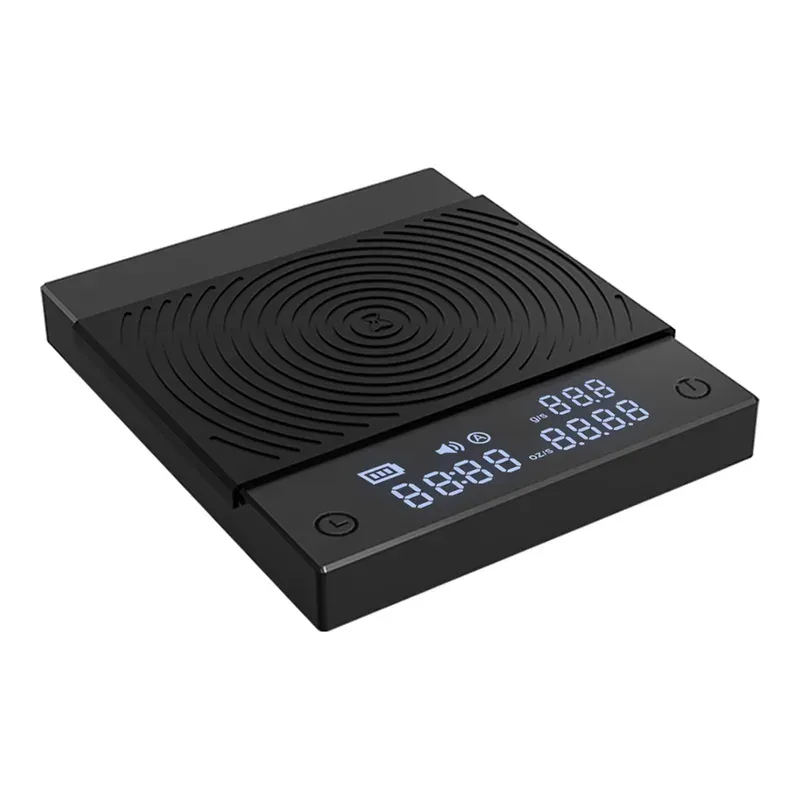
Timemore Black Mirror Basic 2
Reads to 0.1 g up to 2 kg, starts its timer when the first water lands and charges over USB-C. Check its footprint before you count on it under a portafilter.
- Resolution
- 0.1 g
- Capacity
- 2 kg
- Timer
- Auto-start on pour
- Charging
- USB-C
The kettle: spout first
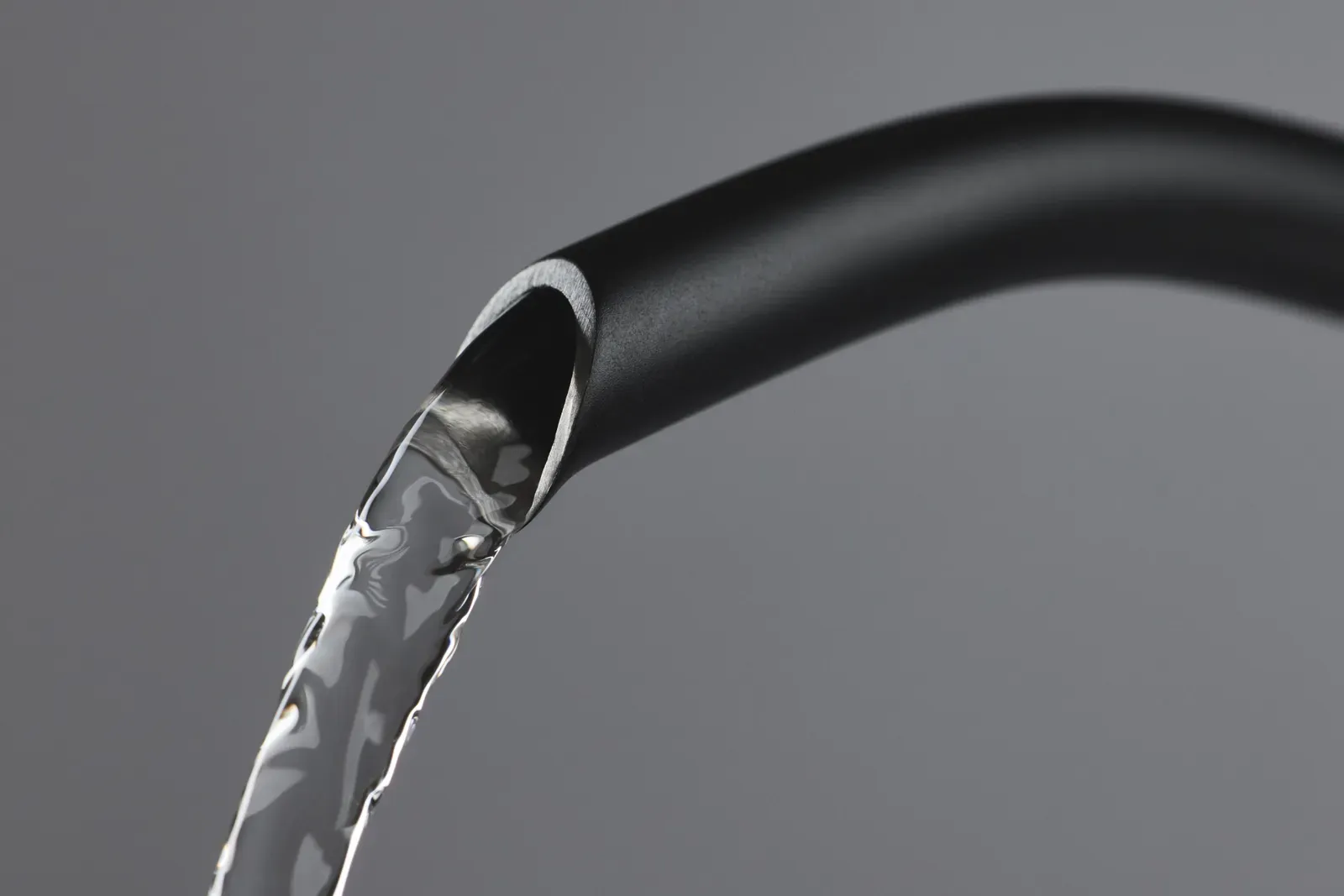
A pour over is a few hundred grams of water placed onto a bed of coffee over about three minutes. A kitchen kettle delivers it in a wide arc, at a flow you cannot slow without it dribbling down the side. A gooseneck spout is long, thin and starts low on the body, so the water leaves at low pressure and goes where you point it. That is the whole case. The pour over page says to buy one before a nicer dripper. It is right.
What separates a good gooseneck from a decorative one:
- A narrow, tapered spout. A thin stream should hold without breaking into drops, and should not jump to a gush when you tilt further.
- A balanced handle. Full or nearly empty, the kettle should pour at a similar angle without your wrist doing the work.
- A lid that stays put when the kettle is tipped well past horizontal.
For immersion brewing (French press, AeroPress, cold brew), a gooseneck is optional. You are flooding the grounds, and aim barely matters.
Temperature: variable, or boil and wait
Most filter coffee is brewed between about 90 and 96 °C, light roasts at the top or straight off the boil, dark roasts lower. Water temperature, and what it actually changes covers the reasons. The kettle question is only how you get there.
Boil and wait works. Water off the boil loses a few degrees in the first half minute in an open kettle, and more when you decant it into a cold gooseneck. If you brew one roast level, a stovetop gooseneck and a fixed habit get you to the same place every morning. Boil, decant, wait thirty seconds, pour. What the cup needs is repeatability, not a number on a display.
Variable temperature earns its price in three cases:
- You brew light and dark roasts in the same week, and want 96 °C one day and 88 °C the next without guessing.
- You also make tea, where green and white teas want water well below the boil.
- You want the number without building the habit.
A hold function keeps the water at the set temperature after it gets there. Useful for a second cup or a slow morning. Not a reason to buy on its own: a kettle that reheats in a minute does the same job.
Capacity is simple arithmetic. A two-cup V60 is about 500 g of water, plus the rinse. A 0.9 litre kettle covers that. A Chemex for four, with rinse, does not in one fill. An overfilled gooseneck also gushes on the first tilt, so leave headroom.
On a stovetop model, check the base if you cook on induction. Not every cheap gooseneck works on it.
The scale: what to check, in order
The barista kit worth buying explains why scales come first. This is how to choose one.
Resolution: 0.1 g. At a 15 g dose, a scale that reads whole grams can be half a gram out either way. With 240 g of water, that moves the ratio anywhere from 1:15.5 to 1:16.6, which is a different cup. For espresso, where 18 g in gives 36 g out, half a gram matters more still.
Capacity. Dripper, server and water add up fast. A ceramic dripper on a glass server with water for two cups can approach a kilogram. Many cheap 0.1 g scales stop at 500 g. Read the maximum before the resolution.
Response time. The display always lags the pour a little. On a pour over weighed in stages (pour, pause, read), a slow scale costs you nothing. On an espresso, the last grams arrive quickly and a lagging display means you stop the shot late, every time, by the same amount you cannot see.
Timer and auto-start. A timer on the scale is convenient. Your phone also has one. Auto-start, where the timer begins when the first water lands, removes one hand from the routine and is the nicer of the two.
Water resistance. Matters for espresso, not filter. A scale on a drip tray gets splashed, and sooner or later the tray overflows. Sealed buttons, or a silicone pad under the scale, are the difference between a scale that lasts years and one that dies in spring.
Size. Under a portafilter, the scale has to fit the drip tray and leave room for a cup below the spouts. Measure both before you buy. A pour-over scale wide enough for a Chemex will not fit many drip trays.
Power. USB-C rechargeable or batteries, either is fine. Auto-off should be long enough to survive a slow bloom, or switchable.
The cheap options that genuinely work
A kitchen scale at about $15 that reads to 0.1 g is enough for filter. Its display will be slower than a coffee scale, and you will start the timer on your phone. Neither matters on a pour over weighed in stages. Check the capacity.
A basic stovetop gooseneck, for a few tens of dollars, plus the boil and wait habit above, covers temperature for anyone brewing one style of roast.
Together that is around $40. On filter, it does most of what the $220 pair below does. The cup will not tell the difference. Your mornings might.
When the dearer version pays
| Item | Basic version | What the dear version adds | Worth it if |
|---|---|---|---|
| Gooseneck kettle | Stovetop, boil and wait | Set temperature, display, hold | You brew several roast levels, or make tea |
| Scale | Kitchen scale, 0.1 g | Fast display, auto-start timer, slim and splash-proof | You weigh espresso on it |
The two picks
Fellow Stagg EKG, about $165. A 0.9 litre electric gooseneck with variable temperature, the target and the actual temperature on one small display, and a hold of up to 60 minutes. The spout pours a thin, steady stream. It costs several times a stovetop gooseneck, and what you pay for is not having to think about water again. Its capacity is right for one or two cups and short for a big Chemex.
Timemore Black Mirror Basic 2, about $55. Reads to 0.1 g up to 2 kg, starts its timer when water lands, charges over USB-C. It is a pour-over scale first. Before you plan to use it for espresso too, compare its footprint with your drip tray.
If you are buying the rest of the filter kit at the same time, kitting out for pour over covers the dripper, papers and the order to buy in, and the V60 page is where all of this gets used.