Reviews
Baratza Encore ESP review
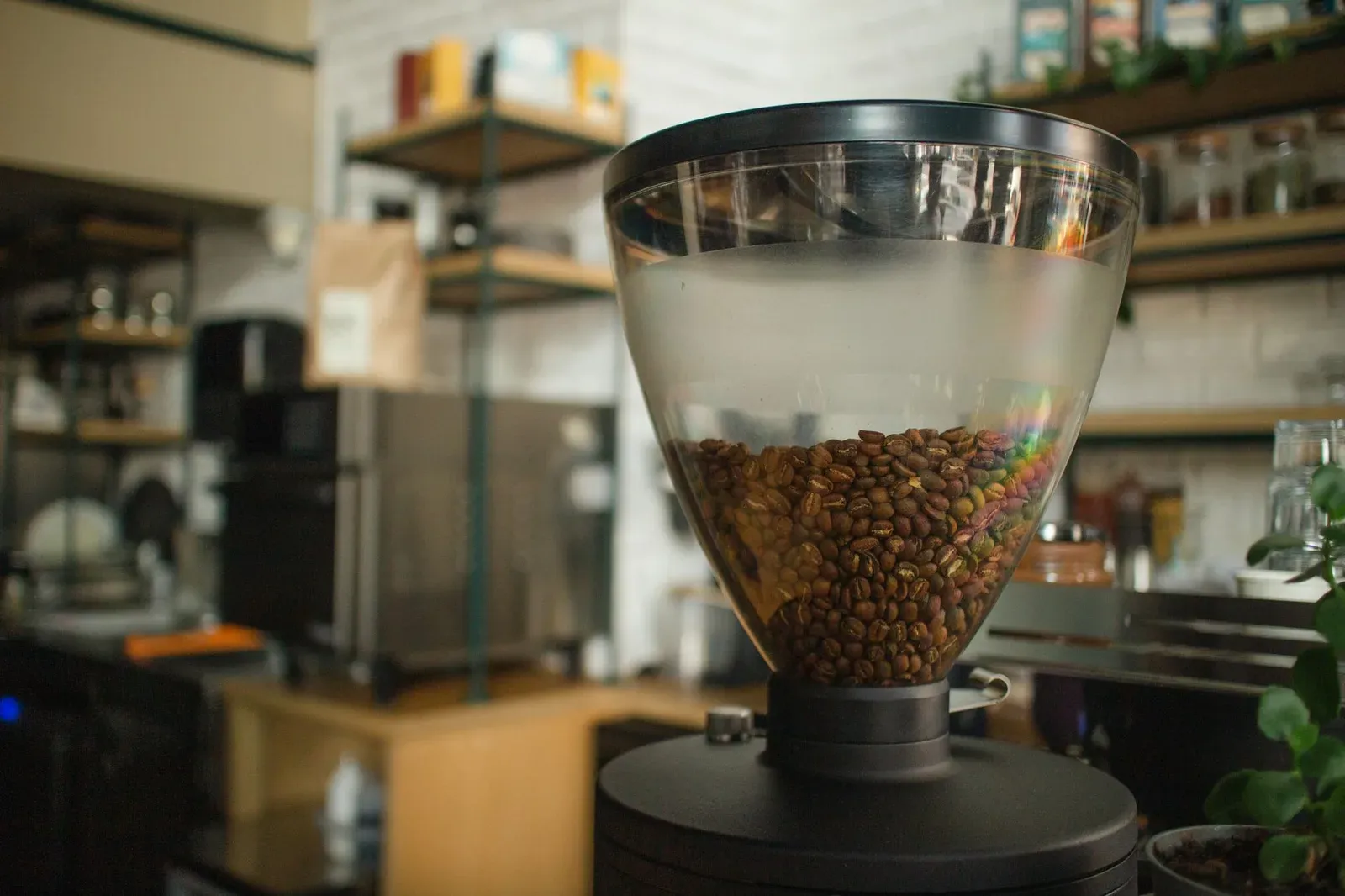
The most repairable espresso-capable grinder under $250, and the one we recommend to anyone buying their first espresso machine.
What we liked
- Forty usable espresso steps, fine enough for a single-boiler machine
- Every internal part is sold separately and documented
- Retention measured at 0.4–0.6 g across twenty doses
What we did not
- Stepped adjustment means you sometimes sit between two settings
- Static cling with light roasts unless you spritz the beans
| Grind quality | |
|---|---|
| Espresso range | |
| Build | |
| Retention | |
| Value |
On the bench
We ran twenty consecutive 18 g doses through the Encore ESP at setting 8, weighing retention after each. The mean carryover was 0.5 g, which is low enough that single-dosing works without a bellows.
That number is the headline finding, and it is worth explaining why it matters before anything else. Retention is coffee that goes into the grinder and does not come out with the dose it belongs to. It comes out with the next one instead, which means every shot is partly yesterday’s coffee. At half a gram on an eighteen gram dose, roughly three per cent of what you brew is carryover. On grinders with a hopper and a long chute the figure is often several times that, and it is the main reason a machine that tastes fine on day one tastes muddled a month later.
What it is
A 40 mm conical burr grinder with forty espresso steps and twenty filter steps, driven by a gear-reduced DC motor, at a list price of $199.
Each part of that sentence is a decision, and together they describe what the grinder is for.
Forty espresso steps is the whole reason this model exists rather than the standard Encore. The base Encore is a filter grinder with forty settings spread across the entire range; the ESP redistributes them so two thirds sit in the espresso region. The burrs are the same family. The gearing that moves them is not.
A gear-reduced DC motor turns the burrs slowly and holds that speed when the load arrives. Cheaper grinders use a universal motor that slows under load, which means the first gram and the last gram of a dose are ground at different speeds and therefore at slightly different sizes.
Conical burrs at 40 mm is the right call at this price, and the reasoning is covered in the burr shapes piece: flat sets available under $300 are smaller and softer than the conicals they compete with, and the uniformity advantage flats have in theory does not survive that compromise.
Where the forty steps run out
The honest limitation, and the reason the espresso range scores 4.0 rather than higher.
Stepped adjustment means the grinder can only sit where a step is. On filter that is irrelevant, because the useful band is wide. On espresso the band is narrow, and there are bags where the correct setting is plainly between step 11 and step 12. You can work around it by adjusting dose or ratio instead, and that is a workaround rather than a solution.
It matters most with light roasts, which need finer grinding and have the narrowest window to begin with. If you drink Nordic-style light roasts on a temperature-stable machine, this is the grinder’s real ceiling and a stepless model is the upgrade that removes it. For medium roasts on a single boiler, the gap between two steps is smaller than the machine’s own temperature swing, so it disappears into the noise.
Static, and the thing nobody mentions
Light roasts cling. The ESP is no worse than its price class here and no better, and on a dry winter day a portion of the dose will end up on the outside of the cup rather than inside it.
The fix is the Ross Droplet Technique: wet a spoon handle, stir it through the beans before grinding, and the grounds stop jumping. It costs three seconds and it works completely. It is not a criticism of this grinder so much as a fact about grinding dry beans in a plastic chute, and anyone who tells you a two-hundred dollar grinder eliminates static is selling something.
Serviceability is the case for it
This is the part that decides the recommendation.
Every internal component is sold separately and the exploded diagrams are public. Burrs, the motor, the gearbox, the ring gear, the thrust bearing: all orderable, all documented, all replaceable with a screwdriver and twenty minutes. There is a repair culture around these machines because the manufacturer made one possible.
Set against the alternative, which is a sealed unit that becomes waste when a gear strips, that changes what the money buys. A grinder you can keep running for fifteen years is a different purchase from one you replace in four, and it is worth more than a fractional improvement in particle distribution.
Budget an hour a year for the maintenance and it will outlast the machine you bought it for.
Who should buy it, and who should not
Buy it if you are pairing a first espresso machine with your first real grinder, if you drink medium roasts, or if repairability is something you weight. It is also the grinder to buy if you are still deciding whether espresso is a hobby you will keep, because it holds its value and it does filter competently too.
Do not buy it if you already grind on something with 50 mm or larger burrs, if you drink very light roasts on a machine that holds temperature to within a degree, or if you want a single grinder to do espresso and filter without readjusting. It does both, but it does not do both at once.
If you are weighing this against spending the same money on the machine instead, that is the question the grinder or machine comparison was written to settle, and the answer surprises people. Once it is on the counter, dialling in a new bag is the skill that makes it pay.