Comparisons
Grinder or machine: where the first $200 should go
We put the same budget into a Baratza Encore ESP and into a De'Longhi Dedica, then tasted the results blind. One of them is not close.
Verdict
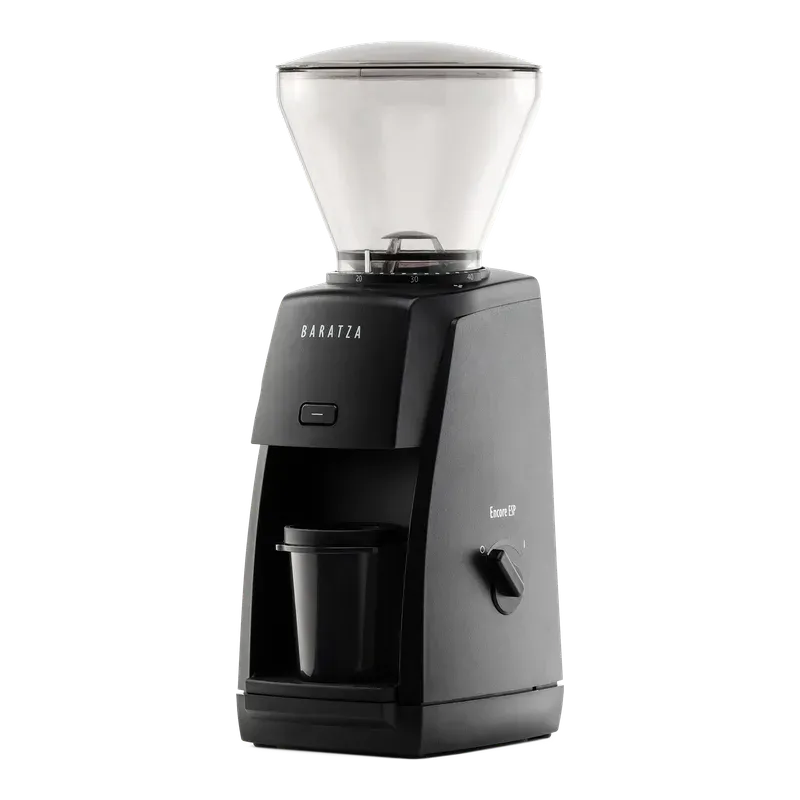
Baratza
Baratza Encore ESP
- Burrs
- 40 mm conical, M2
- Steps
- 40 espresso / 20 filter
- Motor
- DC, gear reduction
- Retention
- Low, ~0.5 g
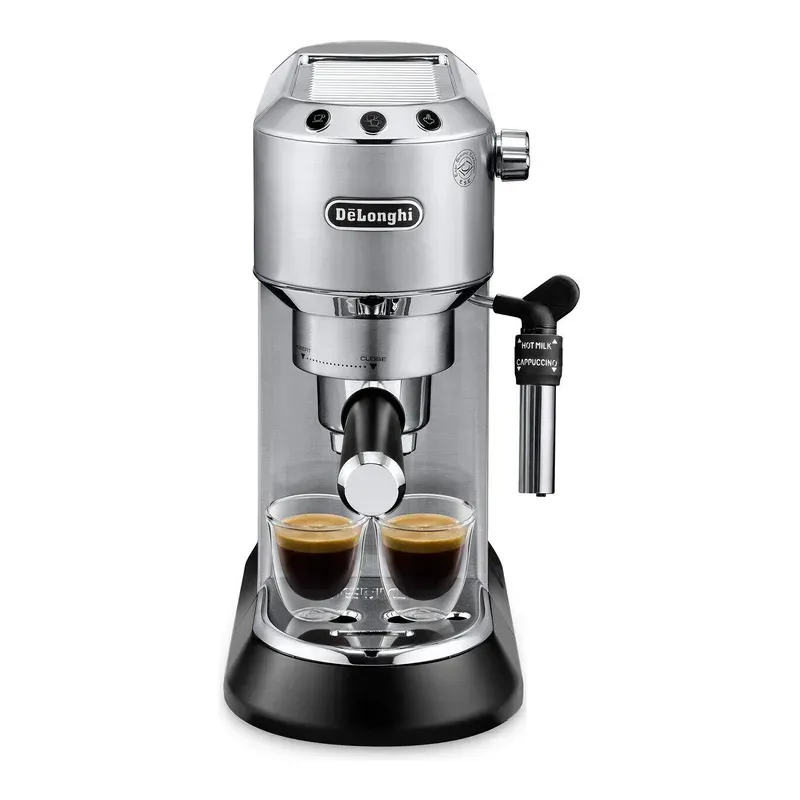
De'Longhi
De'Longhi Dedica EC685
- Type
- Single boiler, thermoblock
- Portafilter
- 51 mm, pressurised
- Width
- 15 cm
- Tank
- 1.1 L
| Specifications | Baratza Encore ESP | De'Longhi Dedica EC685 |
|---|---|---|
| Price | $199 | $199 |
| What it fixes | Particle distribution | Water delivery |
| Works with cheap partner | Yes | No |
| Upgrade path | Keeps its value | Replaced early |
The test
Same beans, same water, same eighteen-gram dose. One setup paired a good grinder with a basic machine; the other paired a good machine with supermarket pre-ground. Four tasters, blind, no ties allowed.
The question behind it is the one nearly every reader arrives with. You have about four hundred dollars and two things to buy. Do you split it evenly, or put the weight on one side? The industry answers by selling you the machine, because the machine is the thing that looks like espresso on a kitchen counter. The result below says the industry is wrong.
Why the money goes to the grinder
A machine’s job is to deliver water through a bed of coffee at a controlled pressure and temperature. Within reason, an inexpensive pump machine does that adequately. It will be less stable than an expensive one and it will make you work around it, but the water arrives.
A grinder’s job is to produce the bed. If the particle distribution is wrong, there is no pressure and no temperature that rescues it, because the fault is in the thing the water has to pass through. That asymmetry is the whole argument: one of these two devices produces a defect the other cannot correct.
Pre-ground supermarket coffee makes the point at the extreme. It is ground to a single compromise size, weeks or months ago, for no particular method. Put it under nine bars and it either gushes or chokes, and the expensive machine has no mechanism for doing anything about that. The grind explainer sets out why: the machine controls water, and grind controls everything the water meets.
What the tasters said
Four people, blind, no ties. All four put the grinder-first setup ahead, and the description of why was consistent enough to be worth quoting in summary.
The grinder-first cups were described as sweeter, with a defined finish. The machine-first cups were described as harsh at the front and empty behind it, which is the classic signature of a bed that channelled: part of the coffee over-extracted while the rest gave up nothing. Two tasters said the machine-first shots tasted like they had been made from stale coffee, which is exactly what had happened.
The margin was not subtle. This is not a tuning preference, it is a difference in category.
Where the cheap machine does cost you
The comparison is not that the machine does not matter. It is that it matters second, and it is worth being explicit about what the entry-level machine gives up so the trade is made with open eyes.
Temperature stability. A single thermoblock or a small single boiler wanders between shots, so consecutive drinks differ. You manage it by pulling at the same point in the heating cycle every time.
Pressurised baskets. Many entry machines ship with a basket that creates back-pressure artificially, which is designed to make pre-ground coffee produce crema. With a real grinder you want the non-pressurised basket instead, and on some machines that is a separate purchase.
Steam power. Small boilers steam slowly and you cannot pull a shot and steam at once. For one or two milk drinks at home that is an inconvenience rather than a defect.
None of those produce a cup that is bad on arrival. They produce a cup that is inconsistent, and inconsistency is a problem you can learn your way around. A bad grind is not.
The upgrade path settles it
The last row of the table above is the one that decides the purchase over five years rather than five minutes.
A good grinder keeps its job when the machine is replaced. Buy the machine you can afford now, upgrade it in three years, and the grinder carries straight across to the new one. It also works with every other method you might take up: the same grinder serves a V60, a french press and an AeroPress, adjusted rather than replaced.
A machine bought at the top of your budget with a poor grinder beneath it has the opposite trajectory. The first upgrade you will want is the grinder, and at that point you have spent the money twice.
The recommendation
Put the larger share into the grinder and buy the machine that the remainder allows. The Encore ESP review covers the pick on this side of the comparison in detail, including where its stepped adjustment runs out.
If you are starting with nothing at all rather than choosing between these two, the order of purchases is a slightly different question, and the first setup guide answers it in tiers. Once both pieces are on the counter, the ratio is the first thing to get right, because it is free.