First look
Bodum Chambord 8-cup French press: first look
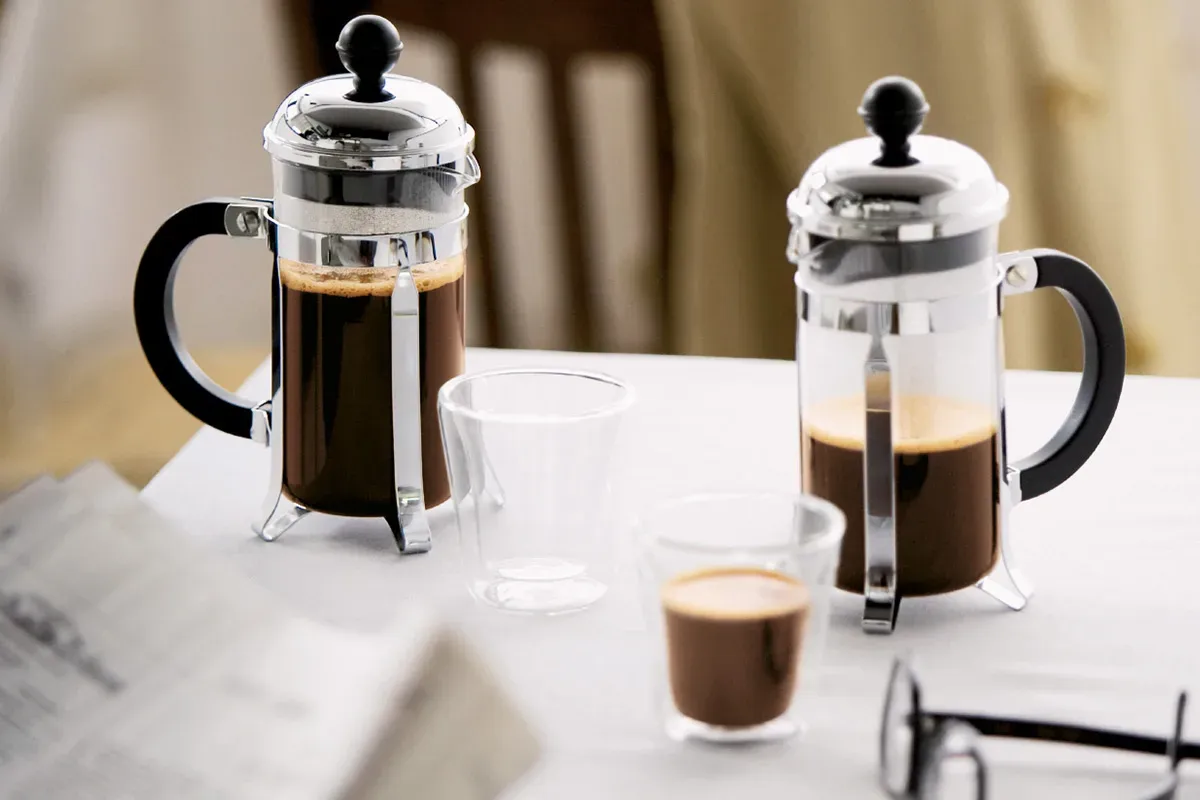
Not tested yet This is a presentation built from the manufacturer’s specification and how the product is meant to be used. We have not had it on the bench, so there is no score.
For anyone who wants a classic, repairable press for two to four mugs and pours it all out once it is brewed, not for anyone who wants coffee to stay hot in the pot.
What it promises
- Borosilicate glass beaker and a stainless steel plunger, both simple to clean
- The lid turns to close the spout while the coffee steeps
- The 8-cup glass is sold on its own, so a breakage costs a part, not a press
- $54.99 or €49.90 direct from Bodum, for a design that has barely changed in decades
What to weigh first
- Single-walled glass gives up heat faster than a double-walled steel press
- Eight Bodum cups are about 4 oz each: three or four mugs, not eight
- One mesh screen passes more silt than presses with a finer second filter
What it is
A one-litre French press with a borosilicate glass beaker, a chrome-plated stainless steel frame and lid, a polypropylene handle and a stainless steel plunger, listed by Bodum at $54.99 in the United States and €49.90 in France.
That is the whole specification, and it is short because the French press is short. Water and coarse grounds sit together for four minutes, a screen pushes the grounds to the bottom, and you pour. There is no pump, no paper and no setting. Everything the press can do well or badly comes down to how it holds the water, how well it separates the grounds, and how long it lasts.
The Chambord is the version of that idea most people picture. Bodum traces it to the dome-topped Melior press made in France by Martin, a company Bodum says it bought in 1991, and the shape has hardly moved since. That continuity is the first argument for it, and the reason is practical rather than nostalgic.
What “8 cups” means
Bodum counts in its own cup of about 4 oz, roughly 12 cl. Eight of those is the litre on the box, and in practice three or four mugs once you leave the headroom Bodum asks for at the top.
It is worth doing the sum before buying. At the 1:15 ratio on the method page, 900 ml of water calls for 60 g of coffee, which is a lot of beans for one person on a weekday. If the press is for one mug, the smaller sizes in the same range make more sense. If it is for two people, or for one large pot at the weekend, this is the size.
The glass, and the heat it lets go
Borosilicate is the right glass for a press. It takes boiling water without cracking from the shock, it does not hold on to old coffee flavours, and you can see the crust form and the bed settle, which tells you more than any timer.
What it does not do is insulate. A single wall of glass and a steel lid give heat away faster than a double-walled steel press, and over four minutes that matters less than people think: the brew temperature drifts, but every ground sees the same drift. Where it matters is afterwards. Coffee left in a glass press goes lukewarm, and coffee left on the grounds goes on extracting and turns harsh. The method page says to decant straight after plunging, and with a Chambord that is not optional advice.
Glass also breaks. Bodum sells the 8-cup beaker as a spare, listed at $14.99 on its US site, and the frame is built to take a new one. That is the real case for this press over a cheaper one with a glued-in jug.
The lid and the screen
The lid turns so the spout is closed while the coffee steeps and open when you pour. It is a small thing that keeps a little heat in and keeps the crust from spilling when you move the pot.
The plunger is a stainless steel mesh. A metal screen lets through the oils and the fines that paper holds back, which is the body you buy a press for and the silt you did not. Some newer presses add a second, finer filter to cut the silt. The Chambord relies on one screen and on your grinder, so a coarse, even grind and the skimming step on the method page do the work that a second filter would. If your grinder makes a lot of fines, the grind settings piece explains why that shows up in the bottom of the cup.
What it competes with
Below it, plastic-framed presses at a fraction of the price brew the same coffee and break in more places. Above it, double-walled stainless presses keep coffee hot for longer and survive a fall, at several times the price, and the ones with fine secondary filters pour a cleaner cup. The Chambord sits between them on purpose: glass so you can see, steel so it lasts, and parts so it can be repaired.
Who should buy it, and who should not
Buy it if you brew for two to four mugs at once, if you are happy to pour the whole pot out as soon as it is brewed, and if you want a press you can repair with a part rather than replace. It is also a sensible first brewer for anyone starting out, because the method forgives nearly everything except a bad grind. The French press for two recipe is a good first pot.
Do not buy it if you want coffee to stay hot in the pot for half an hour, if the press will travel in a bag, or if you cannot stand any silt at all. A double-walled steel press answers the first two, and a paper filter answers the third.