Dark roast
Dark roast without the burn
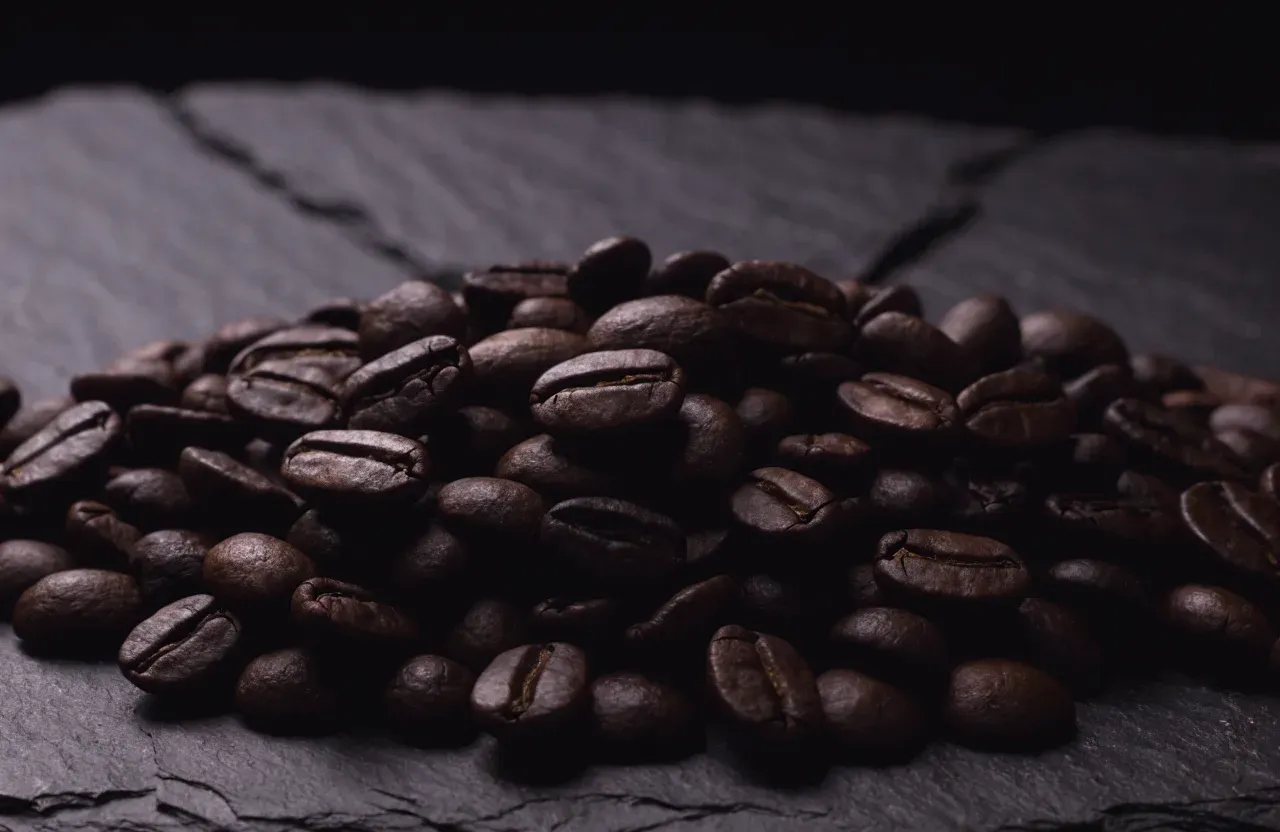
Developed is not the same as burnt
Dark roast has a poor reputation among people who take coffee seriously, and most of that reputation was earned by bad examples rather than by the style. It is worth separating two things that arrive in the cup looking identical.
A developed dark roast got there slowly. The roaster carried the bean through first crack, held a steady declining rate of rise through several minutes of development, and dropped it just into or just past second crack with the inside of the bean as dark as the outside. The sugars have caramelised as far as they usefully can, the bitterness is the pleasant kind found in dark chocolate, and the body is heavy and smooth.
A scorched roast got there fast. Too much heat applied too early either sets the surface of the bean alight before the centre has caught up, which is scorching, or drives the outside past the inside as it rolls, which is tipping and facing. The cup tastes of ash and carbon, has a hollow middle where the sweetness should be, and finishes dry. Crucially it is not simply a darker version of the same coffee. It is a different and worse thing.
You cannot always tell by looking, but there are hints. Scorched beans often show small dark craters or blackened edges rather than an even colour, and the cup announces itself immediately: burnt coffee smells of the smell, of a cold ashtray rather than of chocolate. A well made dark roast smells sweet.
What second crack actually does
First crack is water. Second crack is structure. By roughly 224 to 230 °C the cell walls, already weakened, fracture again, and this time the sound is smaller, sharper and more scattered, like snapping twigs rather than popcorn.
Three things happen at once. The bean becomes markedly more porous, which is why a dark roast weighs less and shatters more easily. The remaining sugars finish caramelising and begin to carbonise, which is the point at which sweetness turns into bitterness if the roast continues. And the lipids stored inside the bean migrate outwards through the now open structure and appear on the surface as oil.
That oil is the most visible signal of roast depth and the most misread one. It is not freshness. It is not quality. It simply means the roast went far enough for the fats to come out, and once they are on the outside they are in contact with oxygen, which is where rancidity starts. This is why a dark roast has a shorter useful life than a medium roast and a much shorter one than a light roast, and why the standard advice to buy small bags applies most strongly here.
| Developed dark | Scorched | |
|---|---|---|
| Colour | Even, deep brown to near black | Patchy, with blackened edges or craters |
| Aroma | Chocolate, molasses, toasted nuts | Ash, smoke, cold cigarettes |
| Body | Heavy and smooth | Thin with a dry finish |
| Sweetness | Present under the bitterness | Absent |
| Cause | Slow, controlled development | Too much heat too early |
Oil, grinders and storage
Oil is also a problem for equipment. It coats burrs, collects grounds into clumps, and gums up the chute of any grinder that has one. A grinder used exclusively for dark roast needs cleaning noticeably more often, and a single-dose grinder handles it better than a hopper model where the beans sit in their own oil for a week. Store the beans sealed, away from heat and light, and use them within three or four weeks rather than three months.
Brewing it sweet rather than ashy
Here is the part that fixes most people’s opinion of dark roast in one session. A porous, brittle bean gives up its solubles far faster than a denser one, which means the settings that suit a medium roast will over-extract it. Over-extraction tastes bitter, ashy and dry, and it is almost always blamed on the roast rather than on the recipe.
Three adjustments, in this order. Grind coarser, by a meaningful amount rather than a nudge: the same brew that wanted a medium grind on a medium roast wants medium-coarse here. Drop the water temperature to 88 to 90 °C, because the compounds you are trying not to extract come out most readily at the top of the range. Then shorten the contact time, whether that is a faster pour schedule or an earlier plunge.
The grind guide explains why the first of those moves extraction more than the other two combined. It is also worth checking your water, since a high-alkalinity supply flattens a dark roast’s sweetness and leaves the bitterness standing alone.
Method matters too. Dark roast is at its best where body is an asset and contact time is controlled, which means a french press with a slightly coarser grind and a shorter steep, a moka pot taken off the heat early, and espresso pulled at a lower temperature than the machine’s default. It is least flattered by a slow pour-over, where the long contact time works against it. Get those choices right and a good dark roast is not a compromise. It is a rich, chocolatey, low-acid cup that no other roast level produces.
Frequently asked
- Does oil on the beans mean the coffee is fresh?
- The opposite, usually. Oil reaching the surface is a sign of how far the roast went, not how recently it happened, and once it is exposed to air it oxidises quickly. A shiny bean that smells faintly of crayon or old nuts has gone rancid, which is a different problem from being stale.
- Is dark roast less acidic on the stomach?
- It is lower in chlorogenic acids, which is often the basis of the claim, but coffee acidity and stomach comfort are not the same measurement and the evidence is genuinely mixed. Many people find dark roast easier to drink. That is worth acting on for yourself without treating it as settled.
- Why does my dark roast taste bitter and thin at the same time?
- You are over-extracting a fragile bean. Dark roast is porous and gives up everything quickly, including the compounds you do not want. Go coarser, drop the water to 88 to 90 °C and shorten the brew, and the same coffee will read as sweet.
Related reading
How to read a bag of coffee
Roast date, process, altitude, varietal and the tasting notes: what each line on a bag is actually claiming, and which ones are worth paying for.
What happens inside the roaster
Drying, Maillard, first crack, development, second crack. What each phase puts into the cup, and why a roast profile is a curve rather than a setting.
Light roast, explained
A light roast keeps the acidity, the origin character and most of the bean's density. All three are why it tastes the way it does, and why it is harder to brew.