Decaf
How decaf is made, and why it used to taste bad
Every method does the same three things
Decaffeination has a reputation built in the 1970s, and the coffee that earned it is barely sold any more. What happens to the bean is worth knowing: the differences between the processes are smaller than the marketing suggests, and the differences they make to your brewing are larger.
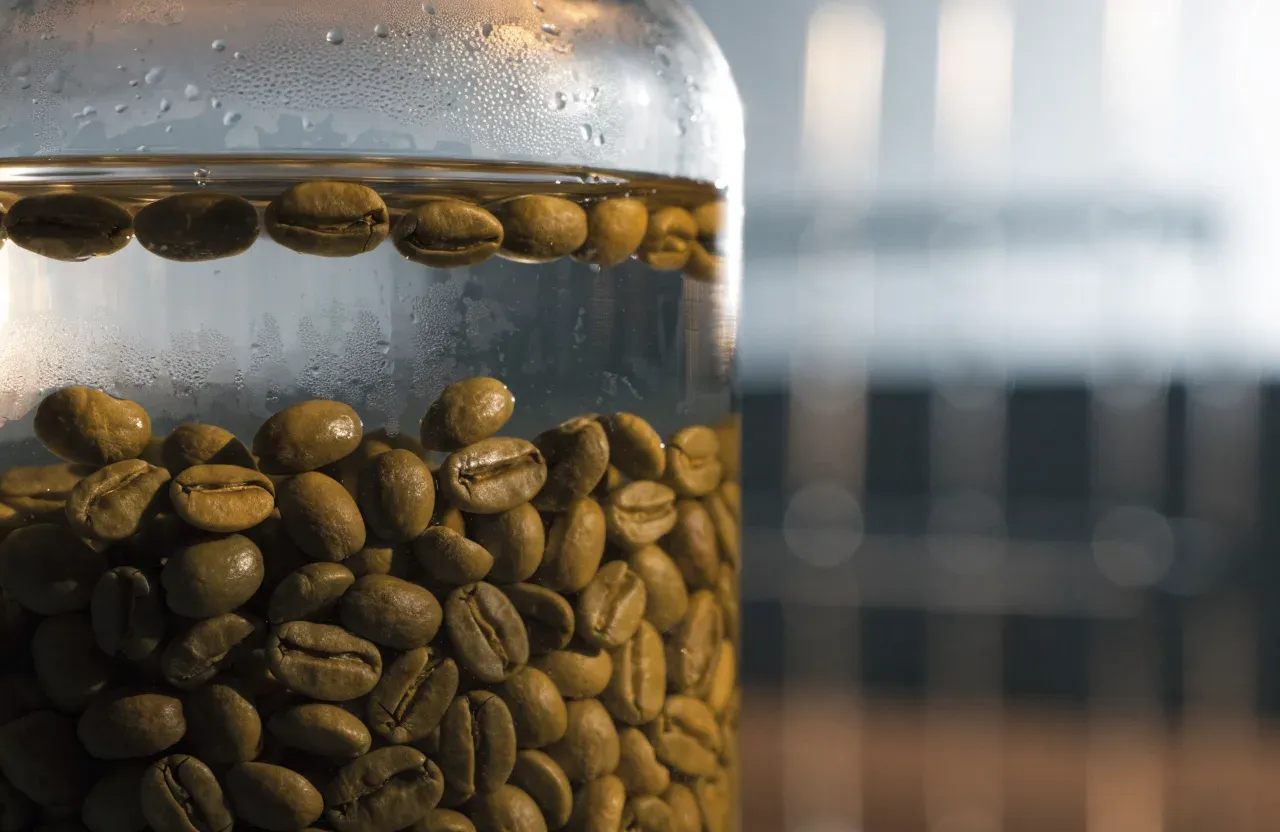
All four commercial routes share a shape. Green coffee is soaked or steamed until the cell walls swell and the caffeine, which is water soluble, can move. A solvent is then circulated through the beans to carry that caffeine away. Finally the beans are dried back down to something near their original moisture content and shipped. Caffeine is never removed from roasted coffee: it happens while the bean is still green, months before anyone roasts it.
The problem is that caffeine is not the only thing that dissolves. Sugars, acids and the precursors that become flavour during roasting all move in the same water, and the whole craft of decaffeination is getting the caffeine out while persuading everything else to stay or to come back. The early processes were bad at this. The modern ones are good at it, and a well made decaf now tastes like a slightly quieter version of the same coffee rather than like a different drink.
The four routes, and what each leaves behind
| Process | What carries the caffeine | What it does to the cup | Usually labelled as |
|---|---|---|---|
| Ethyl acetate | A solvent found naturally in fruit, often made from sugar cane | Softens acidity, adds a faint sweet fruitiness of its own | Sugar cane, natural, EA |
| Methylene chloride | An industrial solvent, applied indirectly through water or directly to the beans | Most selective for caffeine, so origin character survives well | Often unlabelled, sometimes European or KVW |
| Water process | Water saturated with everything except caffeine | Clean and neutral, can flatten the sharper acids | Swiss Water, Mountain Water |
| Supercritical CO2 | Carbon dioxide held between liquid and gas | Very selective, keeps body and aroma, expensive | CO2, sparkling water process |
The water process deserves the explanation it rarely gets. You cannot simply wash caffeine out, because plain water strips flavour first. Instead a batch of green coffee is sacrificed to make an extract saturated with every soluble compound coffee contains. Caffeine is filtered out of that extract with carbon, leaving a liquid full of coffee solubles and empty of caffeine. Fresh beans soaked in it have nowhere to lose their sugars to, so only the caffeine leaves. No added solvent, and a higher price on the bag.
The solvent methods are more selective than the water process rather than less. Methylene chloride in particular binds caffeine and largely ignores the rest, which is why some of the most origin-expressive decafs on the market use it. Its safety is argued about more than it is measured: residues after roasting sit far below the regulatory limits in both the European Union and the United States, and the compound evaporates well below roasting temperature. That is the state of the evidence, not an instruction about what to buy.
Why decaf is harder to roast
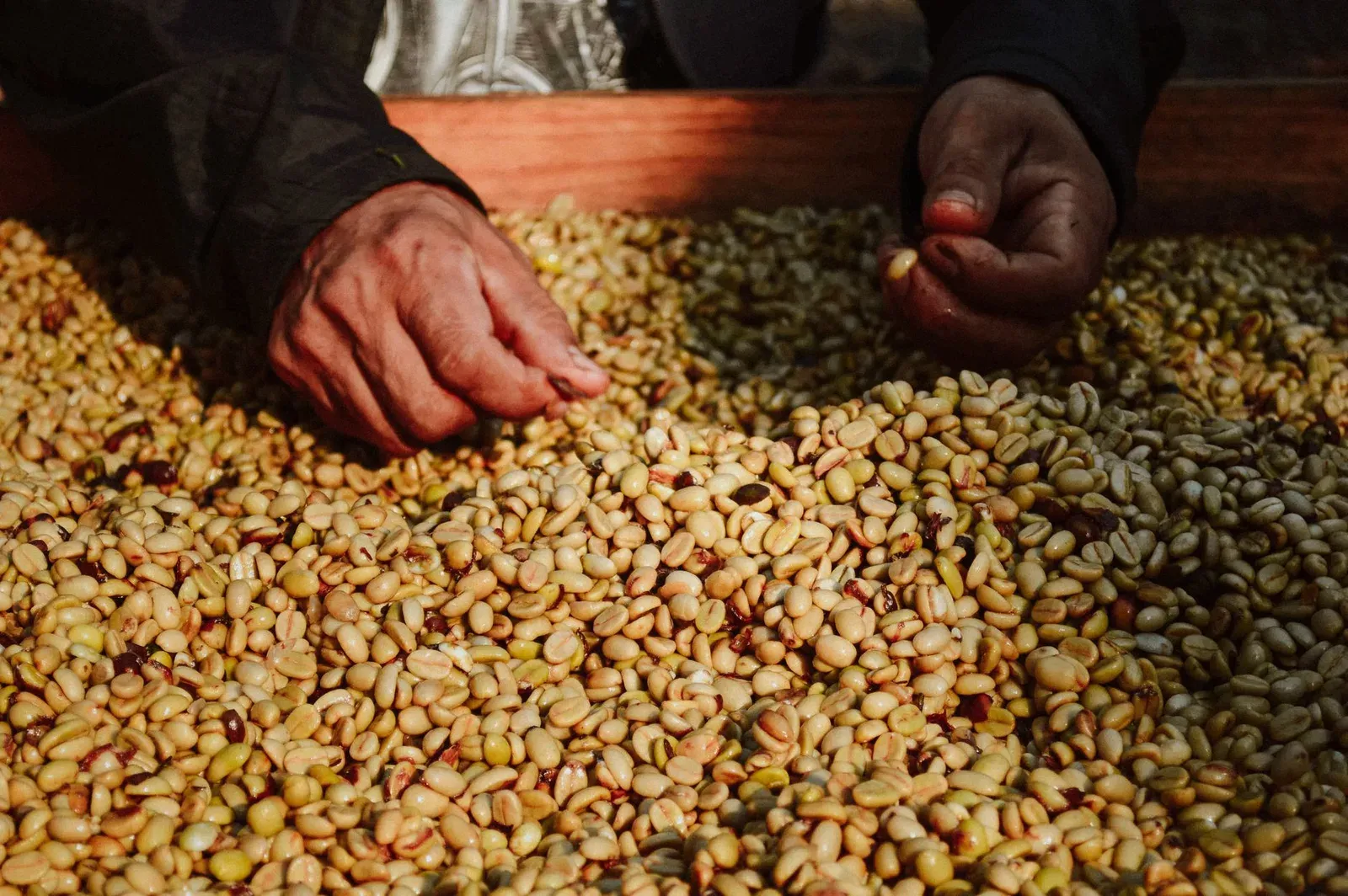
Pick up a bag of green decaf and the first thing you notice is the colour. It is not the pale jade of untreated green coffee. It is brown, sometimes almost the shade of a very light roast already, and the beans feel less dense and more brittle. All of that is the process: hours of hot water and drying have partly cooked the seed before it ever meets a roaster.
Three consequences follow. The bean browns faster, so the visual cues a roaster relies on arrive early and lie about development. It conducts heat differently, because the cell structure has been softened, so it scorches on a drum that would suit the same origin untreated. And first crack is quieter, sometimes almost inaudible, which removes the roast’s most useful landmark.
The old habit was to solve all three by going dark, where everything tastes the same anyway. That is the source of the ashy, flat decaf people remember. A roaster working carefully instead lowers the charge temperature, stretches the middle of the roast and trusts a probe rather than the colour, and the result keeps the origin. If you are choosing between two bags, a recent roast date on a specialty decaf tells you more than the process name on the front does.
Brewing it, and storing it
Treat decaf as a slightly more fragile version of the coffee it came from. The processing leaves a bean that is more porous and more soluble, so it gives up its flavour readily and then gives up the rest of it too. In practice that means a grind one notch finer than you would use for the same origin with caffeine in it, water at the top of your usual range, and a shorter contact time if the cup starts to taste hollow or papery. The advice in our grind size guide applies unchanged; you are just starting from a different point on the dial.
On espresso, decaf famously runs fast. The brittle bean fractures into more fines, the puck compacts differently, and a recipe dialled for regular coffee will gush. Go finer than feels reasonable, keep the ratio at 1:2, and expect to re-dial the next bag from scratch. If the shot tastes sharp rather than hollow, the problem is extraction rather than the decaf itself, and the sour espresso checklist is the faster route to fixing it.
Storage is where most decaf is lost. The porosity that makes it extract quickly makes it stale quickly, and a decaf six weeks past roast tastes noticeably tireder than a regular coffee of the same age. Buy smaller bags more often, keep them sealed, and grind to order. That habit closes most of the gap people still expect between decaf and the real thing.
Frequently asked
- Is decaf completely caffeine free?
- No. The usual regulatory threshold is 97 per cent of the caffeine removed, and in the European Union it is 99.9 per cent for roasted decaf. A cup still carries a few milligrams, which matters if you are extremely sensitive and is irrelevant for almost everyone else.
- Is methylene chloride decaf safe to drink?
- Regulators in the European Union and the United States allow it, with residue limits far below what is left after roasting, and the compound boils off at a temperature every roast passes through. It remains contested in public debate rather than in the residue data, and if it bothers you, water process and CO2 decafs are widely sold.
- Why does my decaf taste flat rather than bad?
- Usually age and roast rather than process. Decaf stales faster than regular coffee and is often roasted darker to hide unevenness. Buy a recent roast date, grind a little finer, and brew hotter.
Related reading
Cupping at home
The protocol professionals use to taste coffee, stripped to what works on a kitchen table, and what it is actually good for.
How much caffeine is in your cup
A double espresso holds less caffeine than a mug of filter, and roast level barely matters. The numbers, and where the intuitions go wrong.
How to read a bag of coffee
Roast date, process, altitude, varietal and the tasting notes: what each line on a bag is actually claiming, and which ones are worth paying for.